
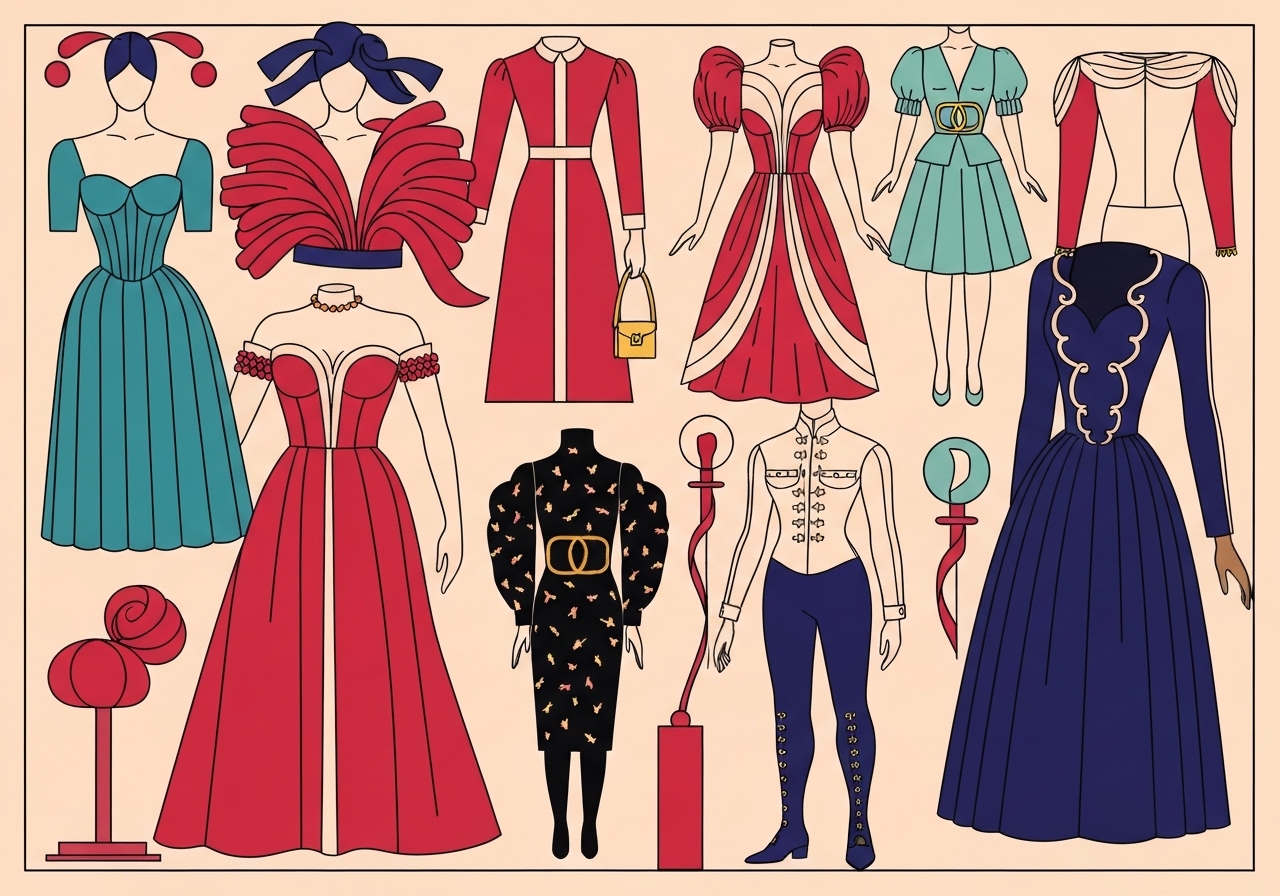
Over the weekend, legendary designer Valentino Garavani died, leaving behind a catalogue of gowns and red‑carpet moments that defined modern glamour. Since founding his label in 1960, Valentino dressed first ladies, royals and film stars—shaping the look of public milestones from the 1970s through the 2010s and beyond. This piece collects the most memorable images and occasions tied to his work and examines what they reveal about his influence on fashion and celebrity. The archive spans Jackie Kennedy to a 2025 Vanity Fair after‑party appearance by Kaia Gerber in vintage Valentino, tracing six decades of high style.
Key Takeaways
- Valentino launched his fashion house in 1960 and became a global reference for couture and red‑carpet dressing.
- He dressed a cross‑generational roster of clients including Jackie Kennedy (1979), Princess Diana (1992), Julia Roberts (2001), and Halle Berry (2000, 2002).
- Iconic show moments included Brooke Shields closing couture in Rome (1981) and Iman sitting front row at the 1984 fall couture show.
- High‑profile festival and awards appearances include Sharon Stone at Cannes (1995), Jennifer Lopez at the Oscars (2003), and Cate Blanchett at the 2005 Oscars.
- Valentino closed his final women’s ready‑to‑wear show in 2007 but remained a frequent collaborator with stars such as Anne Hathaway (2011, 2013).
- The archive includes continued cultural resonance: a vintage Valentino worn by Kaia Gerber at the 2025 Vanity Fair Oscars after‑party.
Background
Valentino Garavani established his eponymous house in 1960 and quickly built a reputation for meticulous couture, romantic silhouettes and an emblematic red. The brand’s technical mastery and consistent aesthetic attracted a client list that blended political figures, royalty and Hollywood, allowing Valentino’s creations to occupy moments of ceremony and spectacle. Couture ateliers like Valentino’s function not only as production sites but as cultural factories that translate private taste into public image; the label became a shorthand for formal elegance.
Through decades of shifting trends, Valentino maintained a presence on the red carpet by aligning with influential stylists and high‑profile clients. Photographers and image agencies repeatedly captured his gowns at major global events—Oscars, Golden Globes, Cannes, Met Gala and state functions—embedding specific looks into public memory. Even after he stepped back from daily creative control, the brand’s archival pieces and signature codes continued to be deployed on major stages, keeping Valentino in the conversation.
Main Event
Crowd‑stopping moments from Valentino’s career are often tied to single photographs: Jackie Kennedy photographed in 1979 in a Valentino gown represents the house’s early entrée into elite American circle. In 1981 Brooke Shields closed a Valentino couture show in Rome, a moment that reinforced the label’s showmanship and its appeal to celebrity faces beyond older elite patrons. Iman’s attendance at the 1984 fall couture show signaled Valentino’s global cachet among the fashion world’s leading models and muses.
The 1990s and early 2000s saw Valentino repeatedly chosen for high‑stakes public appearances. Princess Diana wore Valentino at the 1992 Hong Kong Gala; Sharon Stone was photographed in Valentino at the 1995 Cannes Film Festival. The turn of the millennium included Halle Berry in Valentino at the 2000 Golden Globes and again at the 2002 Golden Globes, and Julia Roberts’s 2001 Oscars gown, each moment reinforcing the designer’s role in career‑defining nights for performers.
In the 2000s Valentino continued to supply major awards looks—Jennifer Lopez at the 2003 Oscars, Keira Knightley at the 2006 Golden Globes, and Cate Blanchett in a 2005 Oscars gown that accompanied her win for supporting actress. Valentino’s last women’s ready‑to‑wear runway as the house’s public face took place in 2007; thereafter he remained a visible figure at red‑carpet events and collaborative moments, including repeated public appearances alongside stars such as Anne Hathaway in 2011 and 2013.
Analysis & Implications
Valentino’s steady presence across decades illustrates how a couture house can exert cultural influence far beyond seasonal collections. His creations functioned as visual punctuation marks at public events: a single gown could shape headlines, magazine covers and the perceived identity of the wearer. That capacity to craft singular images made Valentino a go‑to for milestone moments where a public persona and a private milestone intersected.
Commercially, the brand’s association with red‑carpet success reinforced its desirability and market positioning. Dressing celebrities for award shows and galas created repeated media value that translated into brand equity and sustained interest from clients and collectors. Even as fashion cycles accelerated, Valentino’s archive enabled the house to supply vintage pieces that resonated with contemporary audiences—evident in Kate/Kaia Gerber’s 2025 after‑party appearance in vintage Valentino.
Institutionally, Valentino’s legacy raises questions about stewardship and memory in fashion. How the maison manages archives, couture techniques and brand narrative will shape its future relevance. The death of a founder often crystallizes interest in preservation: museums, auction houses and collectors typically intensify engagement with an archive in the months and years that follow, affecting both scholarship and market prices.
Comparison & Data
| Year | Notable Valentino Moment |
|---|---|
| 1979 | Jackie Kennedy photographed in Valentino |
| 1981 | Brooke Shields closes couture show in Rome |
| 1992 | Princess Diana at Hong Kong Gala |
| 2000–2002 | Halle Berry at Golden Globes (2000, 2002) |
| 2007 | Valentino closes final women’s ready‑to‑wear show |
The table above samples high‑visibility points across Valentino’s career; it is not exhaustive but highlights recurring patterns: public ceremonies, celebrity endorsements and runway milestones. Those recurring appearances contributed to a feedback loop—media images boosted desirability, which drove more clients to the label and generated further press.
Reactions & Quotes
Fashion media and commentators circulated images and reminiscences immediately after the designer’s death, emphasizing his role in shaping how ceremonial dressing is understood.
“the couturier who dominated red carpets”
The Cut (media)
The Cut framed Valentino’s career in terms of public visibility and sustained influence, a characterization echoed across outlets and social posts. Observers noted how singular Valentino gowns became shorthand for formal elegance and contributed to the life‑stories of public figures.
“A designer whose pieces marked personal and public milestones for generations.”
Fashion commentators (aggregate)
That aggregated reaction underlines the common view in fashion circles: Valentino’s work was not merely clothing but a means of staging identity at high‑visibility moments. Industry professionals also highlighted the technical craftsmanship behind those images.
Unconfirmed
- The precise date, time and cause of Valentino Garavani’s death are not detailed here and were described in the source only as “over the weekend.”
- Full information about funeral arrangements, private family statements and estate plans has not been confirmed in the cited piece.
- Specifics about any forthcoming exhibitions, auctions or institutional acquisitions of Valentino archive pieces are not yet publicly verified.
Bottom Line
Valentino Garavani’s career is best read through its public moments: the gowns that accompanied state dinners, film premieres and awards nights that together mapped a language of formal dressing. Those images, repeatedly circulated, amplified the maison’s cultural standing and converted singular looks into enduring references for elegance. His death will likely prompt renewed interest in archival pieces and scholarship about technique, patronage and the role of couture in modern celebrity culture.
For the fashion industry and the public alike, the immediate effect will be archival attention and a reappraisal of how high‑visibility clothing contributes to personal narratives. In the longer term, stewardship decisions by Valentino’s maison, collectors and cultural institutions will determine how the founder’s designs are preserved, shown and studied—shaping the next chapter of an already influential legacy.
Sources
- The Cut — media report and photo archive summary.