
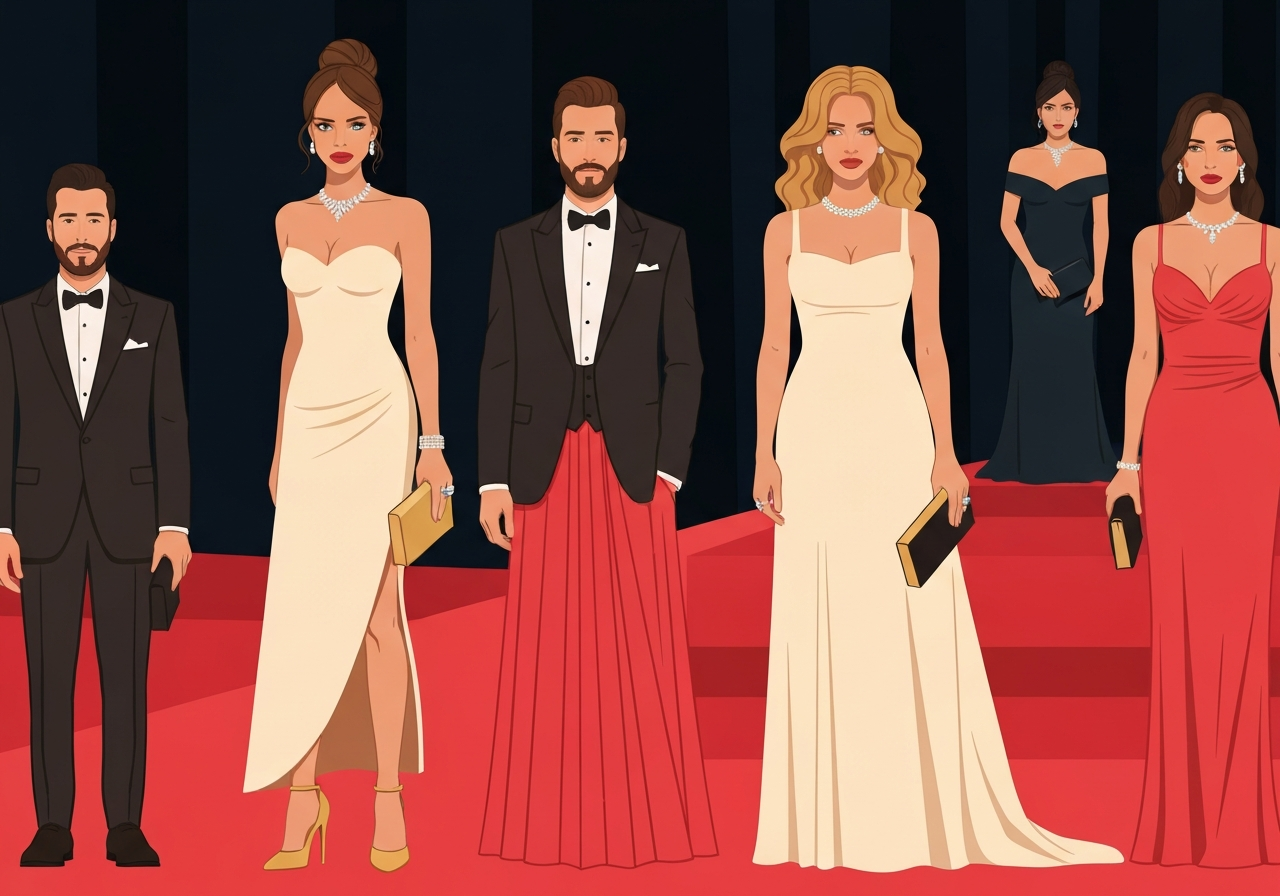
At the Vanity Fair Oscar Party following the 2026 Academy Awards, a wide cross-section of Hollywood arrived in eveningwear to mingle and be photographed. On the carpet and inside the famed Bel Air fête, established stars and rising names alike—including Jessica Alba, Kiernan Shipka and Olivia Rodrigo—posed for images that quickly circulated across outlets and social feeds. Photographers from Getty Images and WireImage documented looks ranging from classic glamour to modern minimalism. The party reinforced the red carpet’s role as both a social highlight and a moment for personal and brand statements.
Key Takeaways
- High-profile attendees included Jessica Alba, Kiernan Shipka, Olivia Rodrigo, Jane Fonda and Kris Jenner, with many looks captured by Getty Images and WireImage.
- Couples and pairs on the carpet included Leslie Mann with Judd Apatow and Nancy Pelosi with Paul Pelosi, reflecting both entertainment and political presences.
- Fashion choices spanned veteran silhouettes (Jane Fonda, Diane von Fürstenberg) and youthful statements (Alix Earle, Troye Sivan), showing intergenerational representation.
- Musicians and TV stars—such as Rita Ora, Emily Ratajkowski and Tracee Ellis Ross—used the event to spotlight polished, camera-ready styling.
- Designers and stylists benefited from post-party visibility as outlets and social platforms circulated high-resolution images and galleries.
- Photographers credited included Getty Images, WireImage and Shutterstock, which supplied most published images from the carpet.
Background
The Vanity Fair Oscar Party has long been the evening capstone to Academy Awards night, attracting talent from acting, music, politics and fashion. Founded as a high-profile industry gathering, the event is as much a networking and celebration space as it is a fashion showcase; editors, agents and creators use the party for press, introductions and informal dealmaking. Over decades the party has become a barometer for red-carpet trends—what designers, silhouettes and grooming looks will gain traction in the months ahead.
In recent years Vanity Fair’s post-Oscars gathering has also reflected broader shifts in Hollywood: a stronger streaming presence, greater attention to diversity and more crossover appearances by figures outside traditional film circles. Organizers, photographers and sponsors coordinate closely to stage the event, and outlets such as Getty Images and WireImage secure exclusive coverage that fuels subsequent media stories and social-media conversation. For 2026, the guest list continued that blend of legacy names and newer influencers, demonstrating the party’s ongoing cultural cachet.
Main Event
Arrival sequences on the carpet mixed formal introductions with quick press photos. Jessica Alba drew attention for a polished look captured by Getty Images for Vanity Fair, while Kiernan Shipka presented a youthful but refined silhouette that photographers highlighted in gallery spreads. Olivia Rodrigo, known for both her music and fashion moments, appeared in a statement outfit that fit the evening’s glamorous tenor.
Seasoned figures such as Jane Fonda and Diane von Fürstenberg received sustained camera attention; both represent enduring red-carpet presences whose choices often inspire commentary about classic versus contemporary styling. Couples and familiar duos—Leslie Mann with Judd Apatow, Nancy and Paul Pelosi—added a social dimension to the carpet, showing how the event blends industry networking with personal accompaniment.
A mix of actors, writers and performers populated the lineup: Matt Bomer, Tracee Ellis Ross, Ewan McGregor and Sarah Paulson were among those photographed, while younger creators and influencers like Alix Earle and Troye Sivan represented the newer wave of high-visibility attendees. Photographers from Getty Images, WireImage and Shutterstock provided the images that outlets syndicated, while Vanity Fair curated the party’s interior guest flow.
Analysis & Implications
The Vanity Fair party functions as both a fashion moment and a strategic visibility platform. For established actors, appearing at the fête reinforces legacy status and maintains relevance across media cycles; for emerging figures, the event offers rapid exposure because red-carpet images circulate widely across entertainment press and social channels. That dynamic helps explain why stylists and PR teams invest heavily in these appearances.
From an industry standpoint, designers see the party as an opportunity to place gowns and suits before a concentrated audience of editors and buyers. A single widely shared photo can trigger orders, media profiles and social engagement that extend beyond the awards weekend. The 2026 carpet again demonstrated the commercial ripple effect: looks photographed at Vanity Fair quickly appeared in fashion coverage and on platforms that measure trend uptake.
Politically notable attendees—such as Nancy Pelosi—underscore the party’s cross-sector draw and the way cultural events serve as informal public-relations spaces. That intersection can elevate the event’s newsworthiness beyond style critique, making it relevant to political and cultural journalists as well. Looking ahead, the continued melding of celebrity, influencer and public-figure attendance will keep the Vanity Fair party central to awards-season narratives.
Comparison & Data
| Celebrity | Notable detail | Photo credit |
|---|---|---|
| Jessica Alba | Polished eveningwear, widely circulated images | Getty Images for Vanity Fair |
| Kiernan Shipka | Youthful, refined look highlighted in galleries | Getty Images |
| Olivia Rodrigo | Statement outfit bridging music and fashion audiences | Getty Images |
| Jane Fonda | Classic red-carpet presence receiving extended coverage | Getty Images |
The short table above illustrates how coverage centered on a selection of attendees and the agencies that distributed their images. Beyond individual names, the visual record—dominated by a handful of major photo agencies—shapes which looks enter wider conversation. That distribution pattern is important for stylists and brands evaluating the value of gifting or loaning garments for awards-season appearances.
Reactions & Quotes
On the carpet and in post-event commentary, observers offered succinct takes that captured both admiration and industry perspective.
Paraphrase: Attendees described the Vanity Fair party as a highlight of the evening that brings together people from across film, fashion and politics.
On-the-record attendees (paraphrase)
Photographers and outlets noted the logistical choreography behind the images that defined coverage that night, from staged arrivals to interior portraits.
Paraphrase: Photographers emphasized the quick turnaround between the carpet shots and editorial galleries that publish within hours.
Photography agencies (paraphrase)
Fashion commentators pointed to a mix of classic and contemporary looks as evidence the industry remains split between heritage houses and newer creative voices.
Paraphrase: Fashion editors saw the evening as a testbed for what will translate into commercial and editorial popularity over the coming months.
Fashion editors (paraphrase)
Unconfirmed
- Reports of specific designers for some celebrities remain unconfirmed in absence of stylist statements or designer credits in gallery captions.
- Any private conversations or deals reportedly struck at the party have not been publicly verified and should be treated as anecdotal unless corroborated.
Bottom Line
The Vanity Fair Oscar Party 2026 reinforced its role as a crossroads for celebrity visibility, fashion signaling and cross-sector networking. High-resolution imagery from agencies such as Getty Images and WireImage ensured that a wide roster of attendees—ranging from legacy stars to newer influencers—received immediate attention in the hours and days after the event.
For industry observers, the evening offered both a snapshot of current style trends and an early indicator of which looks may translate into broader commercial and editorial traction. As awards-season coverage continues, the Vanity Fair carpet will remain a key measure of who is shaping entertainment and fashion narratives.
Sources
- Page Six — Entertainment outlet coverage and photo gallery (media)
- Vanity Fair — Host publication and event curator (media/official)
- Getty Images — Photo agency providing much of the red-carpet imagery (photo agency)