
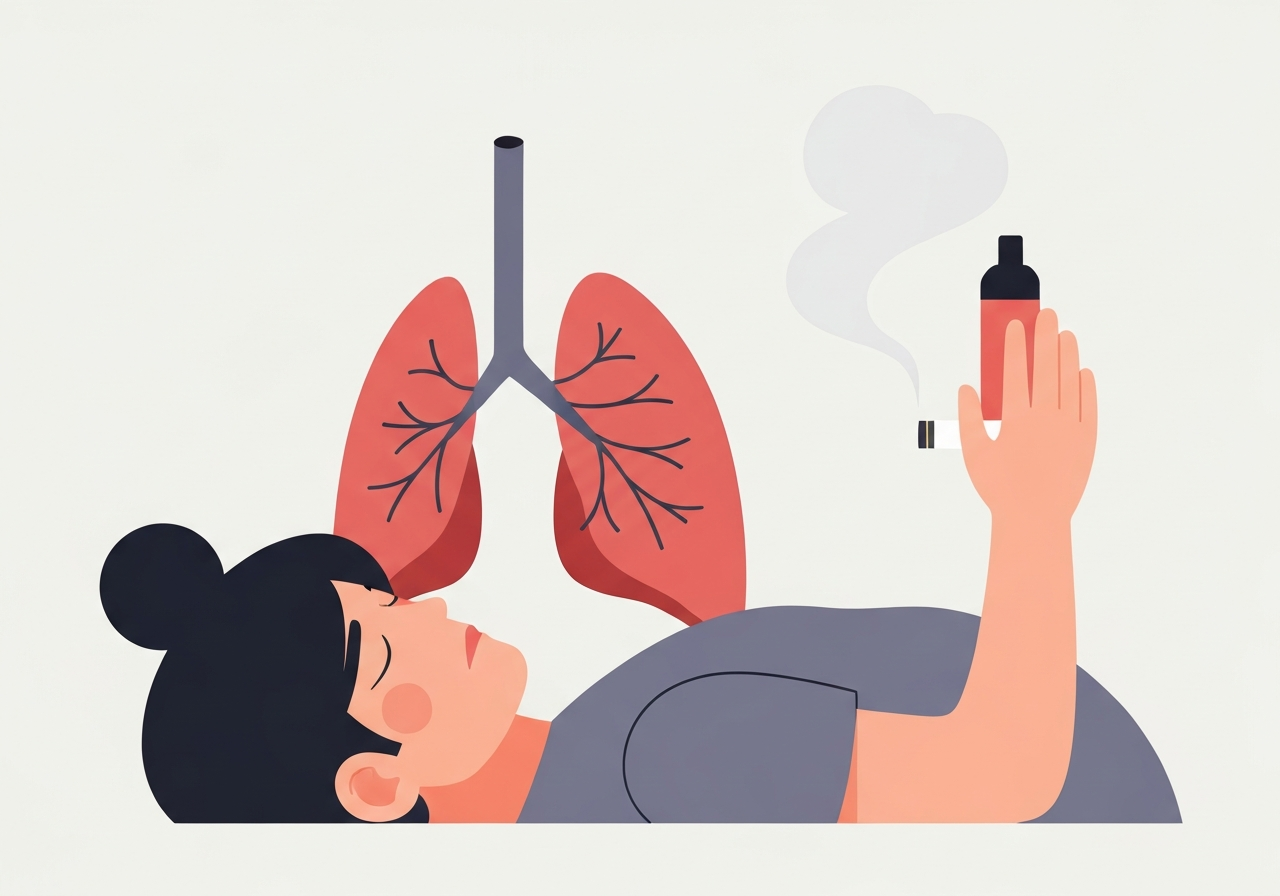
Lead: An Arizona mother in December developed rapidly worsening respiratory failure after catching the flu, and doctors say years of vaping after nearly 30 years of smoking may have left her lungs fragile enough to tear during routine expansion. The 49-year-old, who had used e-cigarettes for four years and typically finished a pod every two days, was placed on a ventilator, flown to a larger hospital and put into a medically induced coma. She was unconscious for about a week, was discharged on January 12, and clinicians now believe she has lasting lung scarring that limits her activity.
Key Takeaways
- The patient is a 49-year-old Arizona woman who smoked cigarettes from age 16 and switched to vaping about four years ago; she reported using a pod roughly every two days.
- Symptoms began in December after she contracted influenza from her eight-year-old child and progressed from shortness of breath to respiratory failure requiring ICU care and mechanical ventilation.
- Hospital clinicians placed her in a medically induced coma for about one week; she was discharged on January 12 and no longer needs supplemental oxygen but reports persistent pain and reduced exercise tolerance.
- Doctors treating her reported severe lung inflammation from the flu combined with fragile lung tissue that clinicians described as having a crispy or brittle quality and which reportedly tore when the lungs expanded.
- Clinicians told the family they believe inhaled residues and oily components from vaping contributed to lung fragility; she now has detectable scar tissue and further diagnostics are planned to assess long-term function.
- Public-health context: an estimated 6% of U.S. adults (about 17 million) vape regularly, with the highest prevalence among 18–24 year olds (over 15%); roughly 1.6 million U.S. middle and high school students also used e-cigarettes, per CDC 2024 data.
- Vape aerosol can contain nicotine, flavorings and volatile organic compounds such as formaldehyde and acetaldehyde, which can injure lung tissue and promote inflammation.
- While cigarette smoking remains the dominant cause of lung cancer, emerging evidence ties vaping to other cardiovascular and pulmonary harms and rare but severe lung injury syndromes.
Background
For decades, clinicians and public-health agencies have framed e-cigarettes as a potential harm-reduction tool for people who cannot quit combustible cigarettes. Many adult smokers switch to vaping believing it carries lower cancer risk than continued smoking, although long-term data remain incomplete. Since 2019 the United States has also grappled with outbreaks of severe vaping-associated lung injury (EVALI) and accumulating research tying some e-cigarette exposures to elevated blood pressure, stroke risk and other cardiopulmonary effects.
Regulatory scrutiny of e-cigarette products has increased as researchers identify a complex mix of chemicals in vape aerosols—nicotine salts, solvents, flavorants and thermal breakdown products. While conventional smoking is the single largest preventable cause of lung cancer and many other diseases, the relative risks of vaping depend on product composition, frequency of use and individual susceptibility. Clinicians caution that viral respiratory infections can unmask or amplify underlying lung damage in people with prior inhalational exposures.
Main Event
The patient, a mother of four who works as a sleep coach, reported developing influenza-like illness in December after exposure to her eight-year-old. Initial breathlessness progressed rapidly over days to severe respiratory distress; her husband took her to a local emergency department where she deteriorated and required transfer to an intensive care unit. Hospital records show she was placed on mechanical ventilation and subsequently flown to a tertiary care center in Phoenix for advanced support.
Treating clinicians described marked lung inflammation consistent with severe viral pneumonia and reported that lung tissue appeared unusually fragile. According to the family, physicians explained that oily residues and other inhaled substances from chronic vaping had deposited on lung surfaces and, when combined with acute inflammation, left tissue prone to tearing during normal expansion. The patient said she has been told she has significant scarring and will need further pulmonary diagnostic testing to clarify long-term damage.
After roughly one week unconscious in a medically induced coma, she regained consciousness, experienced cognitive after-effects such as mild brain fog, and was discharged on January 12. Although she no longer requires supplemental oxygen at rest, she reports pain with deep breaths and a reduced ability to hike and perform previously routine activities.
Analysis & Implications
Clinically, this case illustrates a plausible interaction between an acute respiratory infection and cumulative inhalational injury from e-cigarette use. Viral pneumonia causes inflammation that increases mechanical stress on lung tissue; pre-existing structural weakness from chronic exposure to aerosolized solvents or oils could elevate the risk of barotrauma or spontaneous tearing. That mechanistic hypothesis aligns with prior descriptions of lipoid-type lung injury and other vaping-related pathologies, though causation in an individual requires careful diagnostic confirmation.
Public-health implications hinge on scale and uncertainty. Millions of adults and hundreds of thousands of adolescents vape, and while the absolute risk of catastrophic lung tearing is likely low, even rare severe events matter when prevalence is high. The case underlines the importance of clear cessation messaging: switching to e-cigarettes reduces exposure to many combustion products but does not render the lungs invulnerable to other chemical or inflammatory harms.
From a policy perspective, regulators face a dual challenge—reducing youth uptake while preserving access to evidence-based smoking-cessation tools for adults. Clinicians should screen patients with respiratory symptoms for vaping history, consider vaping-related injury in diagnostic differentials, and advocate for longitudinal research into product constituents that most damage lung tissue.
Comparison & Data
| Measure | Statistic |
|---|---|
| U.S. adults who vape (2024) | ~6% (≈17 million) |
| 18–24-year-old vaping prevalence (2024) | >15% |
| U.S. middle & high school students using e-cigarettes | ≈1.6 million |
| Cigarette smoking and lung cancer | Smoking causes ~9 in 10 lung cancer cases |
These numbers show that while vaping prevalence is lower than lifetime smoking prevalence, millions of people are exposed to aerosolized chemicals. When combined with acute respiratory infections, pre-existing inhalational exposure may change clinical trajectories for a subset of users.
Reactions & Quotes
“I thought I was doing something healthier,” the patient said, describing her motivation to switch from cigarettes to e-cigarettes after decades of smoking.
Patient (Kara Mullins, family report)
The family reports clinicians warned that inflammation from the flu plus prior vaping-related residue likely made her lungs fragile and susceptible to tearing; this explanation is being explored with further testing.
“Vape aerosol can deliver harmful substances deep into the lungs,” a public-health summary notes, pointing to formaldehyde, acetaldehyde and other volatile compounds found in some e-cigarette aerosols.
Centers for Disease Control and Prevention (public health agency)
Unconfirmed
- The precise causal chain linking this patient’s vaping history to the tears described by clinicians is not yet confirmed by biopsy or peer-reviewed publication.
- The family’s characterization that vape “residue” made lungs “crispy” summarizes clinicians’ explanations but lacks a publicly available diagnostic report detailing histologic proof of the proposed residue-related fragility.
- Reports linking specific e-cigarette products to the New Jersey lung-cancer case referenced in media accounts remain under scientific review and are not established as generalizable evidence.
Bottom Line
This case serves as a cautionary example that switching from combustible cigarettes to e-cigarettes is not without risk. Acute respiratory infections can interact with prior inhalational exposures to produce unexpectedly severe outcomes, and clinicians should maintain vigilance for vaping-related contributions to respiratory failure.
For individuals, the pragmatic takeaway is to avoid unregulated or recreational vaping, seek evidence-based cessation support if quitting smoking, and to consult a clinician promptly for persistent respiratory symptoms. For researchers and regulators, the incident reinforces the need for detailed product analysis, longitudinal studies of pulmonary outcomes, and clear communication that reduced harm is not zero harm.
Sources
- Daily Mail — news report of the patient’s account and hospitalization
- Centers for Disease Control and Prevention (CDC) — public health information on e-cigarettes, aerosol constituents and 2024 prevalence data
- CDC: Severe Lung Disease associated with e-cigarette use (EVALI) — public health review of vaping-associated acute lung injury
- National Cancer Institute (NCI) — summary of chemicals in e-cigarette vapor and cancer risk context