
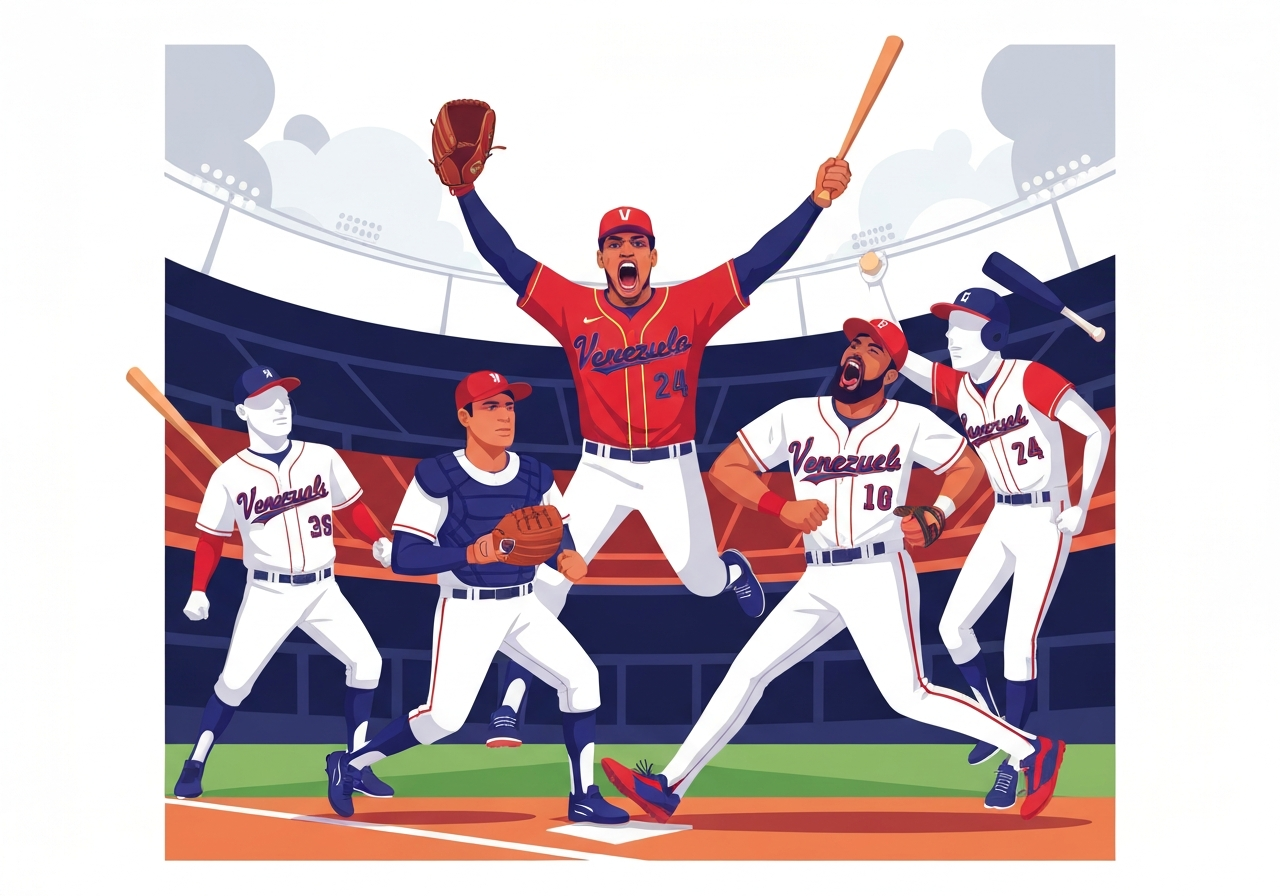
Venezuela defeated Team USA 3-2 in Miami on March 17, 2026, clinching the country’s first World Baseball Classic title after a tense ninth-inning finish. Eugenio Suárez’s go-ahead extra-base hit in the bottom of the ninth and Daniel Palencia’s closing strike sealed the victory after Bryce Harper had tied the game in the eighth. Eduardo Rodríguez set the tone with a dominant 4 1/3-inning start and a fatigued Venezuelan bullpen held firm to deny a powerful U.S. lineup. The final capped a tournament in which Venezuela overcame an early pool loss to the Dominican Republic and a comeback win over Japan en route to the championship.
Key Takeaways
- Final score: Venezuela 3, United States 2 — game played in Miami on March 17, 2026.
- Eugenio Suárez delivered the decisive blow in the bottom of the ninth after Luis Arraez drew a leadoff walk and pinch-runner Javier Sanoja stole second.
- Daniel Palencia closed out the game for Venezuela; Salvador Pérez received the final throw and celebrated visibly.
- Eduardo Rodríguez worked 4 1/3 innings, allowing one hit, one walk and recording four strikeouts to blunt the U.S. attack.
- Bryce Harper hit a 93-mph changeup for a two-run game-tying home run in the eighth inning, but it proved to be the Americans’ only meaningful offensive swing.
- Venezuela earned its first WBC title in the tournament’s sixth edition, joining the U.S., Japan and the Dominican Republic as past champions.
- Maikel Garcia was named tournament MVP, finishing with 10 hits, 1 home run, 7 RBI and 3 stolen bases.
- Team USA did not record a single official at-bat with runners in scoring position during the game.
Background
The World Baseball Classic returned in 2026 as the sixth edition of the global tournament first played in 2006. Venezuela entered with a deep, passionate fan base and a roster mixing established MLB veterans and breakout performers from the international circuit. Earlier in the competition Venezuela lost to the Dominican Republic in pool play but regrouped, producing a comeback victory over Japan that signaled the team’s resilience.
Team USA arrived in Miami with high expectations and a star-studded lineup, but questions about pitcher availability and workload shadowed both finalists. Venezuela’s route to the final featured several unusually long relief appearances — including a 7 2/3-inning total by the bullpen in the semifinal — creating concerns about fresh arms. Tournament rules, MLB clubs’ guidance on pitcher usage, and scheduling all contributed to roster-management dilemmas that shaped both managers’ decisions.
Main Event
The game stayed tight through seven innings as Eduardo Rodríguez kept the U.S. hitters off-balance for much of his 4 1/3-inning outing. Rodríguez allowed one hit and one walk while striking out four batters, including two against Team USA captain Aaron Judge. Venezuela scored twice earlier in the game and carried a 2-0 lead into the eighth.
In the eighth, Andrés Machado yielded a center-cut changeup that Bryce Harper belted into center field for a two-run homer, erasing Venezuela’s advantage and producing a suddenly tense finish. Machado escaped further damage to preserve a tie and hand the game to the late innings. The Venezuelan coaching staff then manufactured the decisive opportunity in the ninth.
Luis Arraez drew a one-out walk to open the ninth and was replaced by Javier Sanoja, whose successful steal of second — upheld after a U.S. challenge — put the go-ahead runner in position. Garrett Whitlock failed to hold the tie, and Eugenio Suárez drove a go-ahead double into left field to score the pinch-runner. Daniel Palencia then retired the side in order in the bottom of the ninth to end the game amid emotional celebration.
Analysis & Implications
Venezuela’s title highlights how international tournaments can hinge on bullpen depth and managerial creativity as much as star offensive performances. While Team USA’s hitters were potent on paper, the Venezuelan staff — starting with Rodríguez and followed by a quartet of relievers — executed matchup after matchup under significant fatigue. The win underscores the value of versatile relievers and the tactical use of pinch-runners and small-ball plays in late-inning international competition.
For Major League clubs and their pitchers, the tournament renews questions about workload control. Venezuela’s bullpen logged innings in the semifinal that forced manager Omar López to consider messages from MLB organizations about resting arms; yet those pitchers were used and produced in the final. The tension between national-team priorities and MLB pitch-count caution is likely to intensify ahead of future Classics unless scheduling or roster rules evolve.
Domestically and geopolitically, the result resonated beyond sport. The matchup between the U.S. and Venezuela carried symbolic weight for many supporters on both sides of the border, and moments from the tournament were picked up in political and social commentary soon after the final. For Venezuelan baseball, the championship could enhance player visibility, accelerate international contracts, and deepen the sport’s cultural standing at home.
Comparison & Data
| WBC Winners (through 2026) | Notes |
|---|---|
| United States | Past champion |
| Japan | Past champion |
| Dominican Republic | Past champion |
| Venezuela (2026) | First title |
The 2026 final differed from many MLB regular-season games in its lower run total and emphasis on small-ball and pitching matchups. Venezuela’s path, including a pool-play loss and a high-relief workload in the semifinal, mirrors several past international champions who peaked late in tournament play. The championship also marks the first time Venezuela has won in six editions of the event.
Reactions & Quotes
Venezuelan manager Omar López and players expressed relief and pride while acknowledging the physical toll of the tournament. López highlighted the constant pressure on pitching decisions in the days leading to the final.
“I woke up to three text messages from different MLB organizations,”
Omar López, Venezuela manager (postgame remark)
Salvador Pérez, the longtime catcher who received the final out, spoke to the personal meaning of the moment amid tears and celebration in the clubhouse.
“Now I feel like I can retire,”
Salvador Pérez, Venezuela catcher
Baseball analysts noted that the tactical use of pinch-runners, steal attempts and matchup pitching were decisive. Many observers said the final was a reminder that international baseball often rewards team execution over individual star power.
Unconfirmed
- Whether every MLB organization’s request to limit their pitchers’ appearances was honored in full remains unclear from public statements.
- The degree to which political events and recent U.S. government actions directly influenced players’ mental states during the game has not been independently verified.
Bottom Line
Venezuela’s 3-2 win over Team USA in the 2026 World Baseball Classic final is a milestone for the nation’s baseball history and for the tournament itself. The victory was built on timely hitting, a deep and resilient pitching staff, and decisive late-inning strategy — elements that often decide international championship games.
Looking ahead, the outcome will feed discussions about pitcher usage, roster rules and the WBC’s place on the baseball calendar. For Venezuelan baseball, the title will likely boost player profiles globally and deepen the sport’s national significance; for Team USA, it will prompt offseason reflection about lineup construction and late-game execution.