
Lead
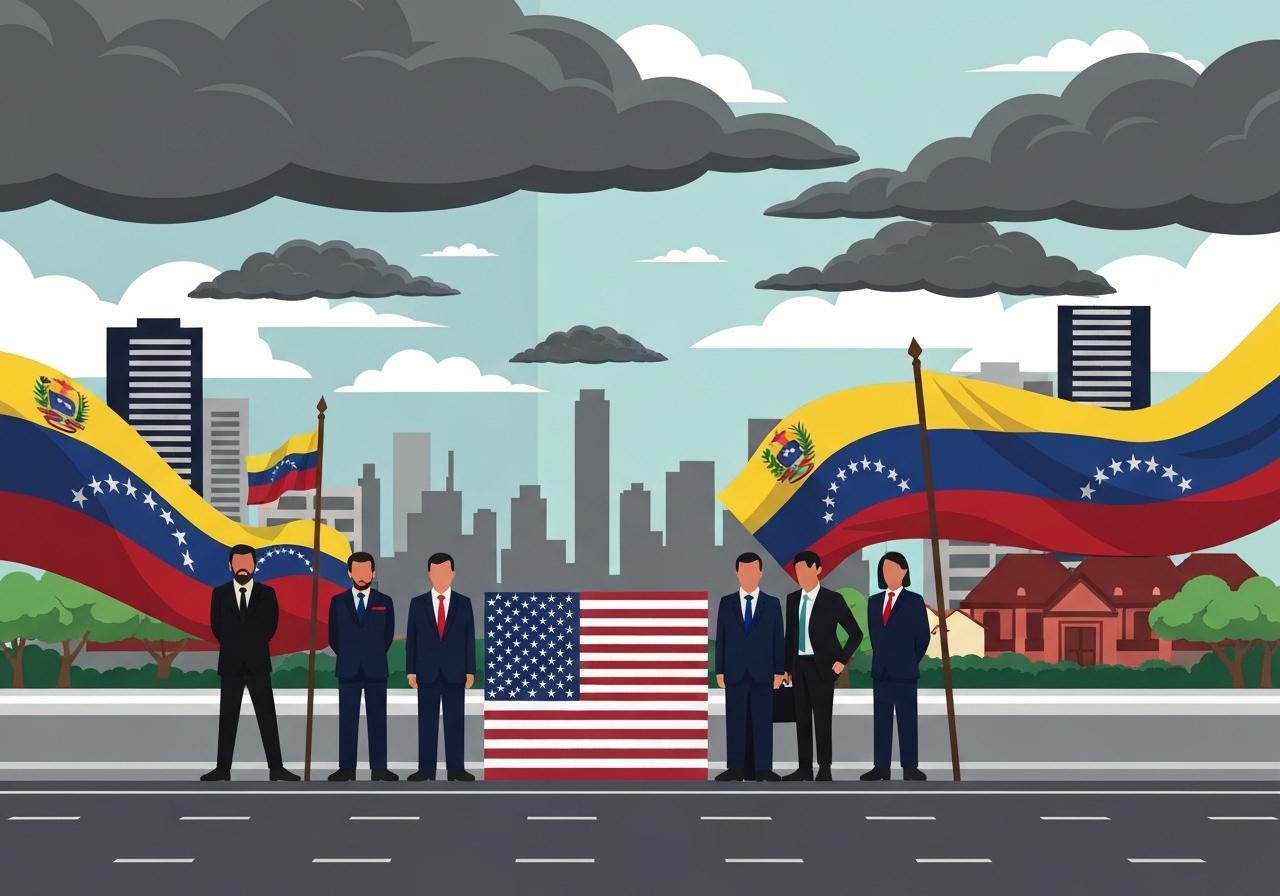
Since the launch of a U.S. military and economic pressure campaign against Caracas, Venezuelan authorities have detained multiple American citizens, U.S. officials said on Dec. 31, 2025. The recent arrests include three Venezuelan‑American dual passport holders and two U.S. citizens with no known ties to Venezuela. Some detainees face credible criminal charges, while U.S. authorities are evaluating at least two cases for possible designation as wrongfully detained. The developments follow a months‑long shift from diplomacy to pressure by the U.S. government.
Key Takeaways
- At least five U.S. citizens have been detained in Venezuela in recent months: three dual Venezuelan‑American passport holders and two U.S. citizens with no clear Venezuelan ties.
- The U.S. previously negotiated releases of 17 Americans and permanent residents after envoy Richard Grenell engaged with Caracas during the early weeks of the U.S. administration’s second term.
- Prisoner releases effectively stopped after Washington shifted from talks to a military and economic pressure campaign against President Nicolás Maduro.
- U.S. officials say the uptick in detentions began in the fall of 2025 and coincided with a U.S. naval deployment in the Caribbean and airstrikes on vessels accused of drug trafficking.
- U.S. authorities are considering designating at least two detainees as wrongfully held, a step that can mobilize diplomatic and legal resources for their release.
- Venezuelan state behavior has historically included holding foreigners in high‑profile cases that carry diplomatic leverage.
Background
Relations between Caracas and Washington have been adversarial for years, marked by mutual sanctions, accusations of interference, and episodic diplomacy. In the early weeks of the U.S. administration’s second term, a limited diplomatic channel produced the release of 17 U.S. citizens and permanent residents after envoy Richard Grenell traveled to Venezuela to negotiate. That outcome was presented by U.S. officials as a priority achievement in securing Americans abroad.
In the months that followed, the U.S. shifted strategy toward economic and military pressure against President Nicolás Maduro’s government. Washington has publicly blamed Maduro’s inner circle for enabling regional drug trafficking and has authorized targeted strikes on vessels it says move drugs on Maduro’s orders. Venezuelan authorities have long used detention of foreigners and dual nationals as leverage in confrontations with the United States, according to multiple past incidents and diplomatic reporting.
Main Event
According to a U.S. official who spoke on the record to reporters via an intermediary on Dec. 31, 2025, Venezuelan security forces detained several Americans after the policy shift away from negotiations. The official attributed the increase in detentions to the fall months of 2025, a period that also saw intensified U.S. maritime and air operations in the Caribbean region.
The detained group includes three individuals who hold both Venezuelan and U.S. citizenship and two Americans with no documented connections to Venezuela, the U.S. official said. The official added that some of the detainees face what Venezuelan authorities describe as legitimate criminal charges, while U.S. agencies are probing the circumstances of at least two cases for possible wrongful detention designation.
U.S. officials described an operational environment in which Caracas can calibrate arrests in response to external pressure, treating detainees as bargaining chips in broader diplomatic disputes. After the earlier prisoner releases, U.S. negotiators suspended formal talks as the administration moved to a tougher posture that included economic sanctions and limited military action aimed at disrupting drug flows.
Venezuelan government statements about the recent detentions were limited in the public record as of Dec. 31, 2025. Venezuelan state media and official spokespeople have historically framed such arrests as law‑enforcement actions against criminality or espionage, while U.S. and family statements often contest those explanations in high‑stakes cases.
Analysis & Implications
The uptick in detentions complicates U.S. efforts to protect citizens abroad while signaling to Caracas that pressure tactics carry diplomatic and human costs. Designating individuals as wrongfully detained would elevate bilateral tensions and could trigger intensified advocacy, sanctions, and legal moves by Washington. Such designations are significant because they mobilize specialized diplomatic channels and resources focused on wrongful imprisonment cases.
For Venezuela, holding U.S. citizens affords leverage as Maduro’s government navigates international isolation and internal political pressures. Detentions can be used to extract concessions, win publicity, or deter further U.S. actions; however, they also risk hardening U.S. resolve, drawing more punitive measures and limiting room for negotiation.
The situation underscores a broader policy trade‑off for the U.S.: whether sustained pressure will produce regime change or compel concessions, or whether it will provoke tit‑for‑tat tactics that imperil civilians and dual nationals. Regionally, increased U.S. maritime enforcement and strikes against suspected drug shipments raise the stakes for neighboring states and shipping lanes, potentially escalating incidents that spill into diplomatic crises.
Comparison & Data
| Event | Count / Note |
|---|---|
| Americans released after early talks | 17 individuals |
| Recent known new detainees (reported) | 5 individuals (3 dual nationals, 2 U.S. only) |
| Period of detainee increase | Fall 2025 (per U.S. official) |
The table summarizes verifiable counts reported by U.S. officials and press accounts: a known release of 17 Americans following negotiations, and at least five recent detentions reported in late 2025. The data demonstrate a reversal in the trend of releases after Washington adopted a harder posture. Publicly available figures remain limited and are largely derived from U.S. official statements and media reporting.
Reactions & Quotes
U.S. officials have framed the detentions as both law‑enforcement matters and, in some cases, potential diplomatic abuses. Families of detainees and advocacy groups have urged greater U.S. engagement to secure releases, while Venezuelan authorities have offered limited public comment.
“Some of the detainees face legitimate criminal charges.”
U.S. official (anonymized), cited by The New York Times
This remark was provided by a U.S. official to clarify that not all recent arrests are being viewed as arbitrary; it was delivered under the condition of anonymity because the official was not authorized to speak publicly.
“The U.S. government is considering designating at least two prisoners as wrongfully detained.”
U.S. official (anonymized), cited by The New York Times
Designation as wrongfully detained would change Washington’s response options and elevate diplomatic resources dedicated to those cases. Such a move typically signals a belief in an improper judicial process or politically motivated detention.
Unconfirmed
- Whether the recent detentions were directly ordered as retaliation for U.S. military and economic moves—correlation has been reported, but causation is not independently verified.
- The full number of Americans currently detained in Venezuela may be higher than public reports indicate; official tallies have not been released comprehensively.
- Specific evidentiary bases for the criminal charges Venezuela has asserted against some detainees have not been publicly disclosed or independently verified.
Bottom Line
The detention of U.S. citizens in Venezuela in late 2025 highlights the risks that accompany a shift from negotiation to pressure in bilateral relations. While some arrests appear tied to prosecutable offenses, at least two cases are under consideration as potentially wrongful, a designation that would intensify U.S. diplomatic action.
Policymakers must weigh the potential gains of military and economic pressure against the certainty that such steps can provoke retaliatory detentions and complicate secure channels for consular access. For families and advocates, the immediate priority is clarity on case facts and accelerated consular intervention where appropriate.
Sources
- The New York Times (U.S. media report citing anonymous U.S. official)