
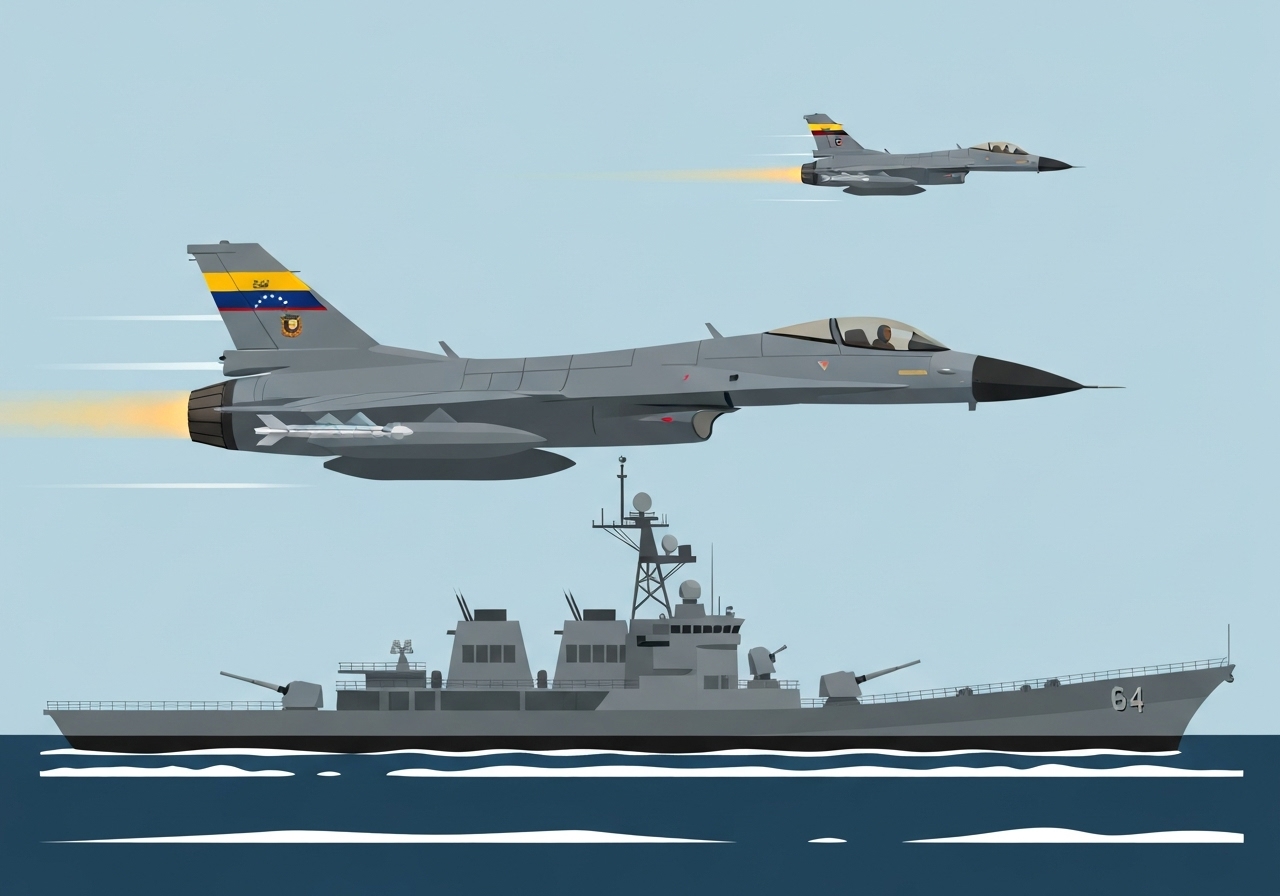
Two armed Venezuelan fighter jets flew over the USS Jason Dunham on Sept. 4, 2025, in international waters off Venezuela in what U.S. defense officials described as a deliberate ‘show of force’ amid a U.S. naval deployment targeting drug networks.
Key takeaways
- Two Venezuelan aircraft reportedly flew near the guided‑missile destroyer USS Jason Dunham on Sept. 4, 2025.
- The Jason Dunham is part of a U.S. flotilla deployed to disrupt criminal organizations and alleged narco‑terrorism.
- The Pentagon called the action highly provocative and said it interfered with counter‑narcotics operations.
- CBS News could not independently confirm how the destroyer responded to the flyover.
- The incident occurs as tensions rise between the U.S. and President Nicolás Maduro’s government.
- The U.S. claims it struck a drug boat this week, saying 11 people tied to Tren de Aragua were killed; those claims remain contested.
- Washington has offered a $50 million reward for Maduro’s arrest; Caracas denies the allegations and has mobilized its own forces.
Verified facts
According to multiple Defense Department officials, two Venezuelan fighter jets made a low‑altitude pass near the USS Jason Dunham, an Aegis‑equipped guided‑missile destroyer, on Sept. 4, 2025. The Pentagon later confirmed on its X account that Venezuelan aircraft ‘flew near a U.S. Navy vessel in international waters.’ The department characterized the action as intended to disrupt U.S. counter‑narcotics operations.
The Jason Dunham is operating as part of a group of U.S. warships the Pentagon says were dispatched to the waters off Venezuela to target criminal organizations and narco‑terror threats. U.S. officials have linked recent deployments to an intensified effort to interdict drug shipments and gang activity they say originate in or transit through Venezuela.
U.S. officials said they carried out a strike this week on a boat they allege was transporting drugs from Venezuela, and that 11 people aboard were killed; the U.S. has identified those killed as members of Tren de Aragua, according to statements from President Trump and Secretary of State Marco Rubio. Venezuelan authorities deny U.S. allegations of collusion with criminal networks and have condemned the naval presence.
Context & impact
The flyover comes amid heightened U.S.-Venezuela tensions. The Trump administration recently increased a reward for information leading to Nicolás Maduro’s arrest to $50 million, and has publicly accused the Venezuelan government of enabling drug trafficking. Caracas has rejected those claims and described the U.S. naval buildup as a ‘criminal and bloody threat,’ deploying its own patrol ships and drones along the coast.
Operationally, close passes by military aircraft over naval vessels can complicate counter‑narcotics missions and increase the risk of miscalculation. Diplomatically, the incident is likely to further strain relations and could prompt additional U.S. naval posturing or coordinated multinational patrols in the region.
- Potential short‑term outcomes: increased naval tracking and communication between ships in the area.
- Possible medium‑term effects: diplomatic protests, public warnings from both sides, or further maritime encounters.
Official statements
“This highly provocative move was designed to interfere with our counter narco‑terror operations,” the Pentagon said, noting the aircraft flew near a U.S. Navy vessel in international waters.
U.S. Department of Defense (X post)
Unconfirmed
- Exactly how close the Venezuelan aircraft came to the Jason Dunham and whether any evasive or defensive measures were taken by the U.S. ship.
- Independent verification of the U.S. claim that 11 people killed in this week’s boat strike were Tren de Aragua members.
- The precise intent of the Venezuelan pilots beyond what U.S. officials described as a show of force.
- Any direct orders from Venezuelan President Nicolás Maduro authorizing the flyover.
Bottom line
The Sept. 4 flyover is a salient example of rising maritime friction between the United States and Venezuela as Washington escalates counter‑narcotics operations near Venezuelan waters. While the Pentagon frames the incident as interference with lawful operations, many details remain unverified; both sides’ next moves will shape whether this encounter remains a signaling incident or escalates into sustained confrontation.