
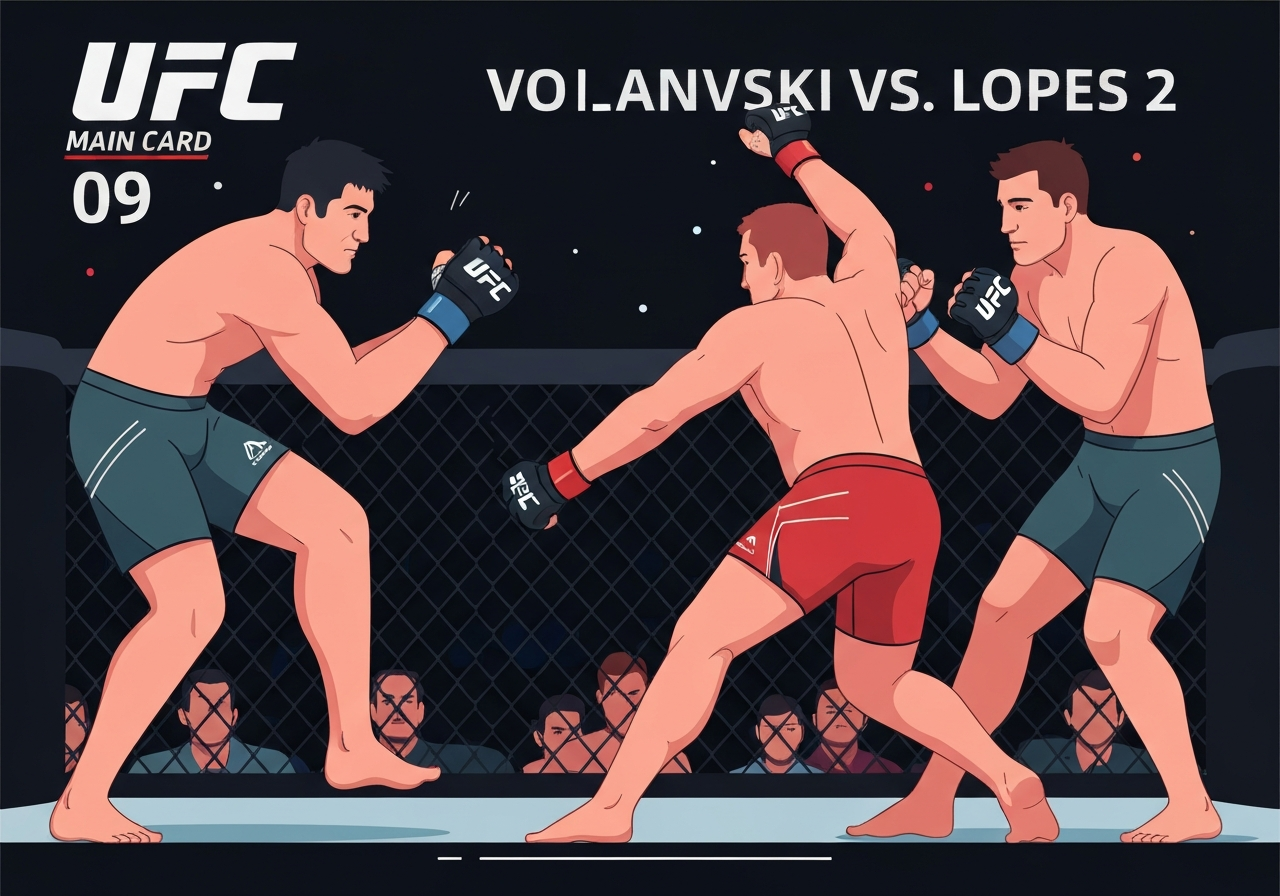
Lead: On Jan. 31, 2026, UFC 325 took place at Qudos Bank Arena in Sydney, Australia, staging the promotion’s second numbered card in two weeks. The event’s headliner was a rematch for the featherweight title: champion Alexander Volkanovski again faced Diego Lopes, after winning their first meeting by unanimous decision at UFC 314 nine months earlier. The card also featured rising lightweight Benoît Saint Denis versus Dan Hooker in the co-main slot and a lightweight clash between Mauricio Ruffy and Rafael Fiziev. The show followed UFC 324 at T-Mobile Arena in Las Vegas, marking the first back-to-back numbered stretch for the UFC since 2021.
Key Takeaways
- Event date and venue: UFC 325 occurred on Jan. 31, 2026, at Qudos Bank Arena in Sydney, Australia.
- Main event rematch: Alexander Volkanovski defended his featherweight title in a rematch against Diego Lopes; Volkanovski had won the initial meeting by unanimous decision at UFC 314 nine months earlier.
- Co-main storyline: Benoît Saint Denis, a rising lightweight, faced fan-favorite Dan Hooker in a bout with potential ranking implications in the 155-pound division.
- Notable lightweight bout: Mauricio Ruffy met Rafael Fiziev on the card, adding depth to the lightweight landscape ahead of the next title cycle.
- Scheduling note: UFC 325 followed UFC 324 in Las Vegas, the first time since 2021 the promotion held consecutive numbered events.
- Broadcast window: Commentary and live analysis began around 7 p.m. ET, with ESPN staff providing event coverage.
Background
The UFC returned to Australia with UFC 325 after a string of international dates and a recent Las Vegas card, signaling continued emphasis on a global schedule. Holding two numbered events within seven days is notable for the promotion; the last instance of consecutive numbered cards occurred in 2021, and the compressed run places strain on matchmaking and athlete logistics. For Sydney, the promotion stacked a headline rematch while populating the rest of the card with lightweight bouts designed to influence divisional rankings.
Alexander Volkanovski entered as the established featherweight champion, bringing the narrative of a previous unanimous-decision victory over Diego Lopes at UFC 314. Lopes, positioned as the top challenger, sought to reverse that outcome and claim the belt. Meanwhile, the lightweight division featured Benoît Saint Denis as a rising contender, and his matchup with Dan Hooker carried both stylistic intrigue and career consequences.
Main Event
The rematch carried straightforward stakes: Volkanovski’s featherweight title versus Lopes’s chance for redemption. Their first encounter—decided by unanimous decision at UFC 314—set the template for a tactical chess match, and build-up emphasized adjustments both teams would attempt in the second meeting. Matchmakers framed the bout as a test of Volkanovski’s consistency against Lopes’s evolving skill set.
Fight-week coverage highlighted corner strategies, conditioning, and any minor injury reports affecting preparation. Coaches and camps typically adjust game plans after a first meeting, so observers expected changes in pacing, leg-kick frequency, and takedown timing. The championship context amplified scrutiny on every round and on the judges’ eventual interpretation of close exchanges.
The co-main between Benoît Saint Denis and Dan Hooker was widely viewed as pivotal for lightweight pecking order. Saint Denis’s rise has been methodical, while Hooker remains a high-profile opponent with a history of fan-pleasing performances. The Fiziev–Ruffy matchup offered additional high-level lightweight intrigue, with both fighters aiming to maintain or improve their proximity to top-10 contention.
Analysis & Implications
Title rematches often crystallize question marks left by the initial meeting. If Volkanovski maintained his belt, it would reinforce his durability and strategic consistency in the featherweight division, likely preserving his pathway to superfights or defense obligations. A Lopes victory would immediately reshuffle title plans and create new matchmaking dilemmas for the division, potentially accelerating rematch clauses or mandating interim arrangements.
For the lightweight contenders, results at UFC 325 had direct ranking consequences. A win for Benoît Saint Denis over Hooker would be a significant credential, accelerating his ascent toward top-10 opponents and title-elimination fights. Conversely, a Hooker victory would revive his case for high-profile matchups and reinforce his status as a gatekeeper to the elite tier.
More broadly, the back-to-back numbered cards strategy affects athlete availability and promotional momentum. Running consecutive big events reduces the buffer for replacing late withdrawals and compresses the recovery window for fighters. From a business standpoint, consecutive shows can sustain subscription and pay-per-view engagement across regions, but they also test the depth of the roster and medical oversight systems.
Comparison & Data
| Event | Date | Venue | Headliner / Known result |
|---|---|---|---|
| UFC 314 | (~9 months before Jan. 31, 2026) | — | Volkanovski def. Diego Lopes (unanimous decision) |
| UFC 324 | Jan. 2026 (one week prior) | T-Mobile Arena, Las Vegas | Main card held in Las Vegas; served as the preceding numbered event |
| UFC 325 | Jan. 31, 2026 | Qudos Bank Arena, Sydney | Main event: Volkanovski vs. Lopes (rematch) |
The table places UFC 325 in immediate chronology with UFC 314 and UFC 324. The known, preserved fact is the UFC 314 outcome: Volkanovski’s unanimous-decision win, which framed the rematch at UFC 325. Comparing venues highlights the promotion’s geographic swing from Las Vegas to Sydney within a single week.
Reactions & Quotes
“This is the first time since 2021 the UFC has fielded back-to-back numbered events.”
ESPN (sports media overview)
“Volkanovski puts his belt on the line in a rematch with Diego Lopes.”
UFC official event description (promotional)
Unconfirmed
- Official judge scorecards and full result breakdowns for every bout at UFC 325 remain pending final posting from the relevant athletic body or promotion if not yet released.
- Any last-minute medical suspensions or commission rulings following the event are not confirmed here and should be checked against athletic commission releases.
Bottom Line
UFC 325 in Sydney was structured around a high-stakes rematch that naturally invited questions about adaptation and title legitimacy. The card also served as an important waypoint for lightweight contenders, with several outcomes carrying direct consequences for rankings and future matchmaking. From an operational perspective, the consecutive numbered-event format represents a notable push by the promotion to keep global audiences engaged, but it increases demands on fighter availability and medical oversight.
Readers should watch for official scorecards, commission notes, and follow-up medical reports to fully understand the sporting and logistical implications of UFC 325. The results will shape both divisional trajectories—particularly at featherweight and lightweight—and the UFC’s near-term scheduling choices as it balances global expansion with athlete health and competitive integrity.