
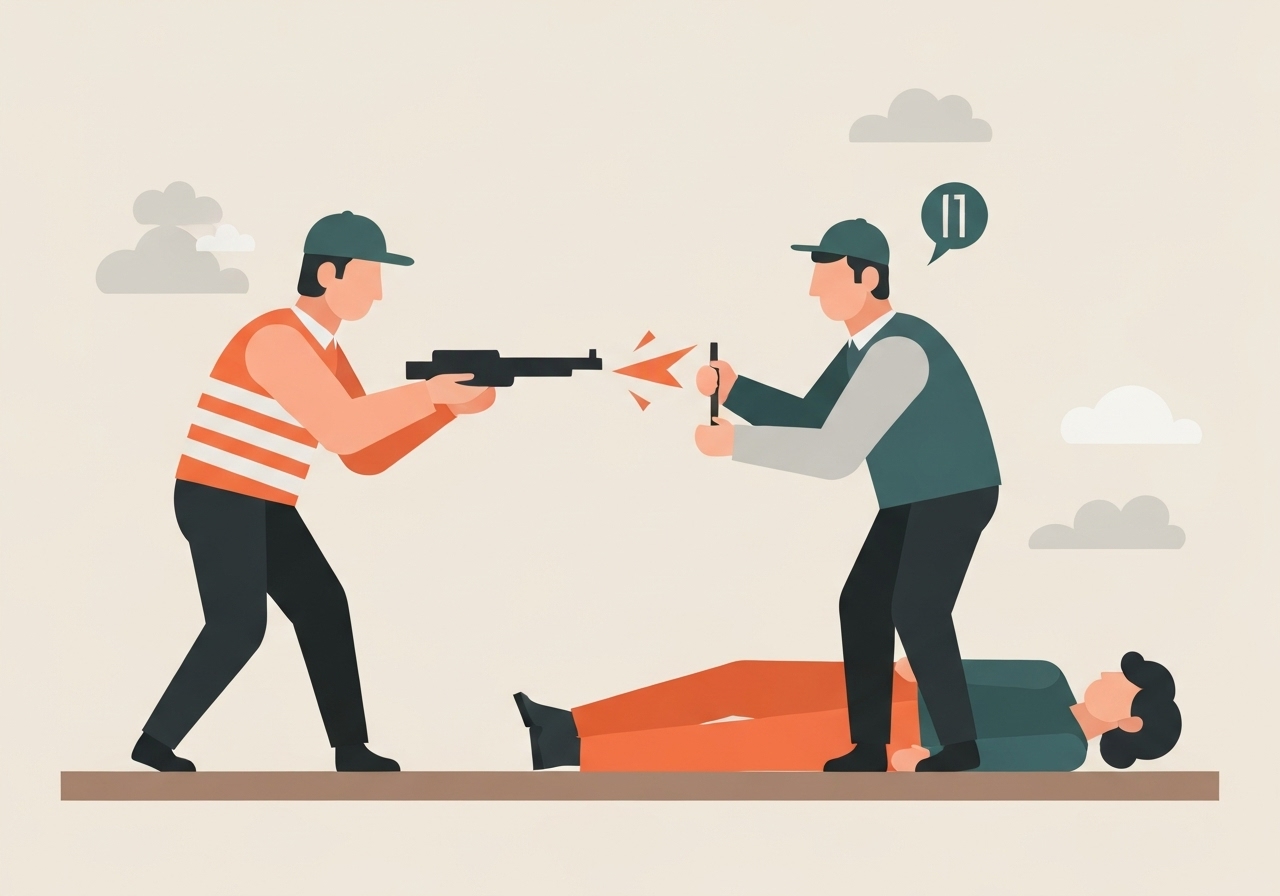
On 14 June in Salt Lake City, a safety volunteer, Matthew Scott Alder, 43, has been charged with one count of manslaughter after he fired at a man carrying a rifle at a No Kings protest and a bystander was killed. Alder told investigators he believed the armed man, identified as 24-year-old Arturo Gamboa, was about to carry out a mass shooting; Alder fired three rounds that wounded Gamboa and fatally struck Arthur “Afa” Ah Loo, who was filming the demonstration. The Salt Lake County district attorney, Sim Gill, announced the criminal filing on Wednesday and emphasized limits on the reckless use of deadly force. If convicted, Alder faces up to 15 years in prison and a maximum $10,000 fine.
Key takeaways
- Charge: Matthew Scott Alder, 43, was charged on Wednesday with one count of manslaughter for the June 14 shooting at a Salt Lake City No Kings protest.
- Incident: Alder fired three shots after seeing Arturo Gamboa, 24, carrying a rifle; Gamboa was wounded and bystander Arthur “Afa” Ah Loo was killed while recording the protest.
- Detentions: Gamboa was detained by police on the day of the protest and held for about a week but was not charged; Alder was not arrested immediately.
- Legal context: Salt Lake County DA Sim Gill declined to charge Gamboa, citing Utah law that permits carrying firearms in public spaces.
- Potential penalty: Manslaughter in this case carries up to 15 years in prison and a $10,000 fine if a jury convicts Alder.
- Background pattern: Local reporting indicates Gamboa had previously brought an AR‑15‑style rifle to multiple demonstrations, including events in 2020.
- Victim: Arthur “Afa” Ah Loo was a bystander recording the protest when he was struck and later died of his wounds.
Background
No Kings rallies have drawn participants and counter‑protesters in Salt Lake City, and some public events there have included attendees who openly carry long guns. In Utah, state law broadly allows the public carry of firearms, a factor county prosecutors cited when deciding not to press charges against those openly armed at demonstrations. Over recent years, the presence of armed attendees at protests has prompted debates about the roles of volunteer safety teams and the boundaries of civilian intervention.
Arturo Gamboa, 24, is reported to have attended a number of public protests carrying an AR‑15‑style rifle, including earlier demonstrations in 2020 against police violence. Friends and a former roommate have said he carried the weapon both for his own protection and to deter or respond to counter‑protesters. Those patterns contributed to the situation on 14 June, when another volunteer perceived a threat and used lethal force; that perception is now a central issue in the criminal case against Alder.
Main event
On 14 June, during the No Kings demonstration in downtown Salt Lake City, volunteers were monitoring streets as the protest unfolded. Alder observed Gamboa with a rifle and later told investigators he believed Gamboa was about to open fire on the crowd. Alder fired three shots; police reports indicate Gamboa was wounded by at least one of those rounds and a bystander, Arthur “Afa” Ah Loo, was hit and later died.
Ah Loo had been recording protesters in the street when he was struck. Medical responders transported him to a hospital, where he succumbed to his injuries. Police detained Gamboa at the scene and held him for about a week before releasing him without charges; prosecutors cited Utah’s firearm statutes in declining to prosecute him.
Alder was not arrested at the protest itself. Following an investigation that included witness statements, video review and interviews, Salt Lake County District Attorney Sim Gill announced a manslaughter charge against Alder on Wednesday, stressing that a legal right to use force does not permit reckless conduct that endangers others.
Analysis & implications
The charge places the legal focus on whether Alder’s use of lethal force was reasonable and whether it was used recklessly given the surrounding circumstances. Utah law permits carrying firearms in public, which complicated initial police handling of the incident and explains why prosecutors did not bring charges against Gamboa. Prosecutors must now demonstrate that Alder’s belief of imminent mass harm did not justify the particular shooting that killed an uninvolved bystander.
This case illuminates tensions about volunteer safety teams at protests. Volunteers are often expected to de‑escalate and report threats, but when volunteers are armed or choose to use force the line between protection and vigilantism becomes legally and morally fraught. A conviction could establish a local precedent that narrows the practical leeway for armed civilians to act on perceived threats at public gatherings.
There are also potential civil‑law consequences separate from criminal exposure: families of victims may pursue wrongful‑death suits that rely on a different burden of proof. Politically, the charge may reignite debate in Utah over open‑carry norms, protest safety policies, and whether formal law enforcement protocols should be expanded to limit armed intervention by volunteers.
Comparison & data
| Person | Age | Role | Immediate legal status |
|---|---|---|---|
| Matthew Scott Alder | 43 | Safety volunteer — shooter | Charged with one count of manslaughter |
| Arturo Gamboa | 24 | Armed protest attendee | Wounded; detained then released, no charges |
| Arthur “Afa” Ah Loo | — | Bystander/recorder | Killed at scene |
The table above summarizes facts confirmed by prosecutors and reporting: charge against Alder, no criminal filing for Gamboa, and the victim status of Ah Loo. Prosecutors have tied their decision to local statutes and the sequence of events reconstructed from footage and interviews; those elements will be tested in any trial and in possible civil litigation.
Reactions & quotes
Salt Lake County’s top prosecutor framed the filing as constrained by both law and public safety considerations, underlining the difference between lawful self‑defense and reckless use of force. The prosecutor’s statement sets the legal posture the office will take while pursuing the manslaughter charge.
“While you may have a right to use lethal force, that doesn’t mean that lethal force can be used in a reckless manner.”
Sim Gill, Salt Lake County District Attorney (official statement)
The victim’s family called the charge a meaningful step toward accountability and for safer public gatherings. They urged courts and communities to consider how armed responses at demonstrations affect bystanders and overall public safety.
“Filing this charge is a significant first step toward establishing a precedent that could make public gatherings safer.”
Laura Ah Loo (widow of Arthur Ah Loo)
Gamboa’s attorney provided a different factual frame, asserting the rifle was not pointed at others and was not loaded when the shooting occurred. That claim forms part of the factual disputes that prosecutors and defense counsel will address in court.
“Our client’s weapon was not loaded and was angled downward when he was shot.”
Attorney for Arturo Gamboa (legal representative)
Unconfirmed
- Whether Gamboa intended to use his rifle offensively that day remains contested and was not established by prosecutors when they declined to charge him.
- Assertions about the rifle’s condition at the exact moment—loaded versus unloaded, muzzle orientation—are based on competing accounts and have not been independently verified in court.
- Details about what Alder perceived in the seconds before he fired—his vantage point, exact verbal warnings given, or alternative de‑escalation possibilities—remain under investigation.
Bottom line
The manslaughter charge against Matthew Scott Alder turns a tragic protest‑day shooting into a test case about the limits of civilian use of deadly force at public demonstrations. Prosecutors will need to prove that Alder’s belief in an imminent mass shooting did not justify firing in a manner that recklessly endangered others; the defense will contest that assertion and highlight the legal right to repel threats.
Beyond the courtroom, the case is likely to influence discussions in Utah about protest safety, the role of volunteer monitors, and how open‑carry laws play out in crowded public events. Observers should watch for possible civil suits, prosecutorial filings, and any policy responses from local authorities and community organizations as this matter proceeds.
Sources
- The Guardian (U.S. news — original report)
- The Salt Lake Tribune (local newspaper reporting referenced for background)
- Salt Lake County District Attorney’s Office (official statements/press releases)