
Lead
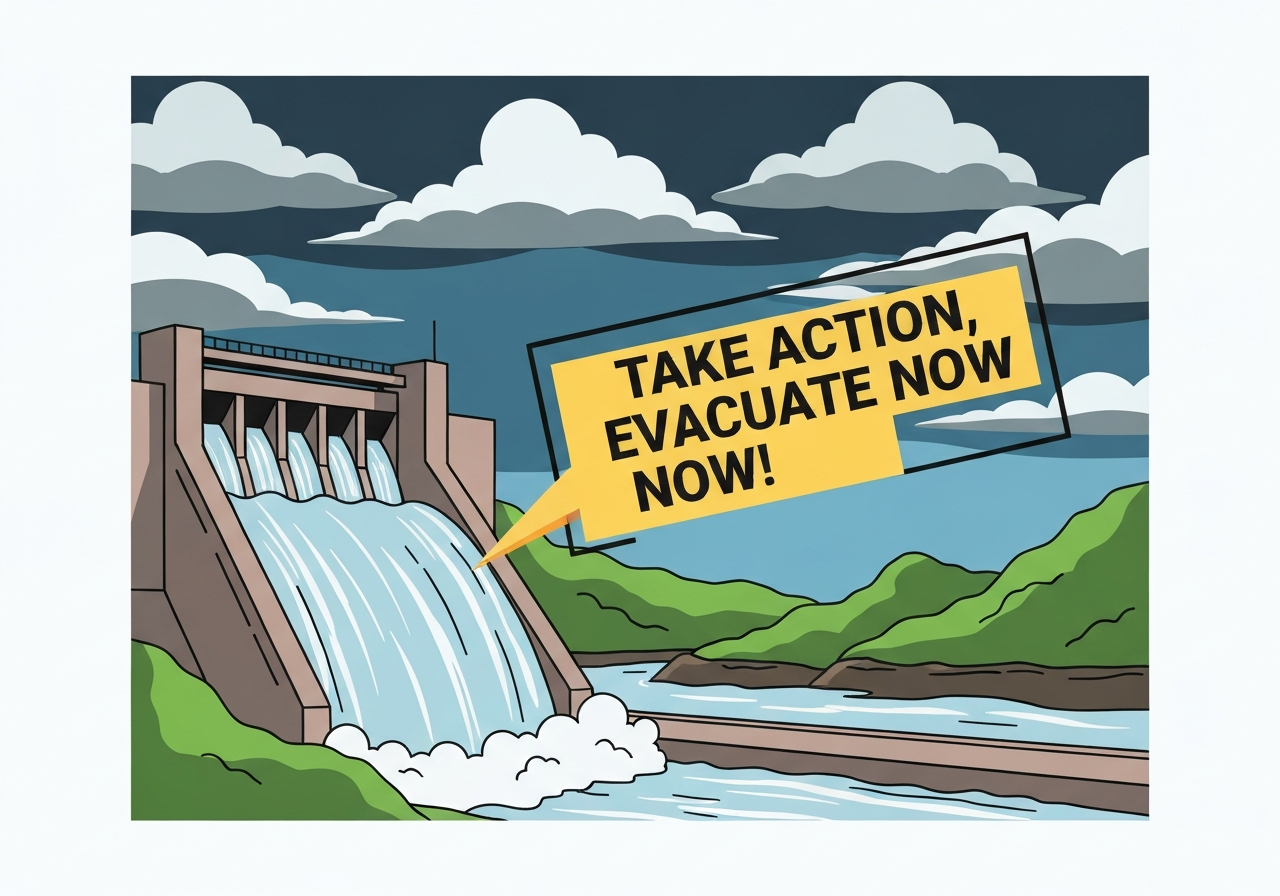
Honolulu city officials issued an immediate evacuation order on the morning of March 20, 2026, for neighborhoods downstream of the Wahiawa Dam after the Department of Emergency Management (DEM) warned the structure is at imminent risk of failure. The DEM said at 9 a.m. the dam had not failed but rising water from a second Kona Low storm could produce life‑threatening flooding below the reservoir. The evacuation covers all of Haleiwa between Puuiki Street and Kamehameha Highway and portions of Waialua from Kukea Circle to Otake Camp. Residents were urged to leave without delay and use city assembly areas and shelters if needed.
Key Takeaways
- The DEM announced at 9 a.m. on March 20, 2026, that Wahiawa Dam was at imminent risk of failure; no breach had occurred at that time.
- Mandatory evacuation zone: Haleiwa (Puuiki St to Kamehameha Hwy) and Waialua (Kukea Circle to Otake Camp); downstream flooding is considered life‑threatening.
- City shelters and assembly areas listed include Leilehua High (1515 California Ave, Wahiawa), Nanakuli High (89‑890 Nanakuli Ave), Kahuku Elementary (56‑170 Pualalea St), and George Fred Wright Wahiawa District Park (1139 Kilani Ave); most sites are pet friendly.
- Waialua High and Intermediate was removed as an evacuation shelter; shelter locations are being updated at p.veoci.com/hnlshelter.
- Transportation disruptions: TheBus route 521 suspended; route 52 suspended north of Wahiawa; route 60 suspended between Haleiwa and Kahaluu; route 403 suspended on Paakea Road; Handi‑Van operating with possible service gaps on the North Shore and East Oahu.
- City parks closures include Hanauma Bay Nature Preserve and all Honolulu Botanical Gardens through the weekend; permitted camping suspended through March 26, 2026.
- Officials warned of heavy traffic and asked residents to carpool where possible and to call 911 only for true emergencies to keep lines clear.
Background
The Hawaiian Islands are experiencing a second wave of Kona Low storms in March 2026, a weather pattern known to produce prolonged heavy rain, strong surf, and localized flooding on Oahu. Last week’s Kona Low already pushed water levels at Wahiawa Dam close to critical thresholds, leaving nearby communities on heightened alert as additional rainfall continued over the watershed. The dam serves downstream communities on Oahu’s North Shore; a failure or uncontrolled release would place populated valleys and coastal areas at risk of rapid inundation.
Honolulu’s Department of Emergency Management coordinates evacuation orders, sheltering, and public alerts across city agencies, including Parks and Recreation and Transportation Services. The city has stated it is actively monitoring all dams on Oahu and will issue further warnings through its HNL Alert system as conditions evolve. Local infrastructure — roads, parks, and transit — is already strained by closures and suspensions aimed at reducing risk to residents and responders.
Main Event
On March 20, 2026, at 9 a.m., the DEM told the public that Wahiawa Dam had not yet failed but was at imminent risk, and that downstream flooding would be life‑threatening if the dam gives way. Officials ordered immediate evacuation for specified sections of Haleiwa and Waialua, and advised anyone who felt unsafe at any time to move to higher ground even if not explicitly ordered to evacuate. The city emphasized avoiding roads when possible and warned that traffic volumes would be heavy in evacuation corridors.
City-operated assembly areas and evacuation shelters were activated to receive affected residents and visitors. The list of available sites and their status is being updated online at p.veoci.com/hnlshelter; the city confirmed several sites are pet friendly to accommodate families with animals. Simultaneously, Parks and Recreation announced closures of high‑use public areas, including Hanauma Bay and botanical gardens, and suspended permitted camping through March 26, 2026, to free staff for emergency operations.
Transportation Services reported multiple bus route suspensions and localized service interruptions that will affect travel on the North Shore and East Oahu. Officials said Handi‑Van remains operational but trips beginning or ending between Waialua and Kahaluu may not be completed. Drivers were told to treat malfunctioning traffic signals as four‑way stops and to avoid nonessential travel to keep lanes open for evacuations and emergency vehicles.
Analysis & Implications
The DEM’s declaration of imminent risk reflects both the immediate danger from increased inflow to the Wahiawa reservoir and the limited window for safe, organized evacuations in densely populated downstream areas. If the dam fails or must be intentionally released, floodwaters could arrive quickly in low‑lying communities, making early evacuation essential to reduce casualties. The order also underscores systemic vulnerability: aging water infrastructure combined with extreme rainfall events increases risk across the islands.
There are cascading impacts beyond immediate flood risk. Road closures and transit suspensions complicate evacuation logistics and may disproportionately affect residents without private vehicles. City guidance to carpool and conserve 911 lines attempts to reduce secondary hazards, but congested routes could slow emergency response and shelter access. The temporary suspension of recreational services and park closures is intended to reallocate staff and facilities for life‑safety operations.
Economically, repeated Kona Low events raise recovery costs for households and the city. Damage to homes, farms, and tourist infrastructure on the North Shore can have lasting effects on local businesses and the broader Oahu economy. In the medium term, this incident may prompt renewed investment discussions on dam monitoring, spillway capacity, and watershed management to mitigate future failure risk as storms intensify under changing climate patterns.
Comparison & Data
| Shelter / Assembly Area | Address | Pet Friendly |
|---|---|---|
| Leilehua High (assembly area) | 1515 California Ave, Wahiawa | Yes |
| Nanakuli High and Intermediate | 89‑890 Nanakuli Ave, Waianae | Yes |
| Kahuku Elementary | 56‑170 Pualalea St, Kahuku | Yes |
| George Fred Wright Wahiawa District Park | 1139 Kilani Ave, Wahiawa | Yes |
| Waialua High and Intermediate | — | No (no longer a shelter) |
The table lists active shelter locations publicized by the city with pet policies noted; Waialua High and Intermediate was removed from the list. These sites are being maintained as operational alternatives for those displaced by flooding or needing refuge while transport routes remain limited. City updates are being posted to the shelter portal and through HNL Alert, and the list may change as conditions and capacity evolve.
Reactions & Quotes
The dam has not failed, but it is at imminent risk of failure with potential life‑threatening flooding of downstream areas; evacuate now if you are in the identified zones.
Honolulu Department of Emergency Management (official statement, 9 a.m., March 20, 2026)
The DEM’s statement framed the order as urgent and precautionary, intended to move residents out of harm’s way before conditions deteriorate. Officials repeated that public alerts and shelter information would be distributed through HNL Alert and city channels.
These assembly areas and evacuation shelters are available throughout the storm; they are pet friendly and ready to serve residents and visitors who need a safe place to go.
City Department of Parks and Recreation (shelter announcement)
Parks and Recreation clarified which facilities are closed and which are repurposed to support emergency operations, highlighting the tradeoff between public amenities and emergency response capacity during severe weather.
Unconfirmed
- The exact reservoir elevation and gate settings at Wahiawa Dam at the time of the 9 a.m. DEM announcement were not provided publicly and remain unconfirmed.
- No official timeline was released for how long the dam would remain at imminent risk or a specific window for possible failure; those details have not been confirmed.
Bottom Line
The immediate priority is life safety: authorities have ordered or urged evacuation for clearly defined downstream zones because of an imminent failure risk at Wahiawa Dam as of 9 a.m. on March 20, 2026. Residents in the designated areas should leave now for higher ground or proceed to listed assembly areas and shelters, which the city has activated and marked as pet friendly in many cases.
In the coming days, officials will monitor the dam, adjust shelter availability, and update transit and park services as conditions change. Beyond this event, the episode highlights the need for sustained investment in dam monitoring, clearer public communications on reservoir conditions, and broader resilience planning as extreme weather events become more frequent.
Sources
- Hawaii News Now (local news report)
- City of Honolulu shelter portal (official/local government shelter list)