
Lead
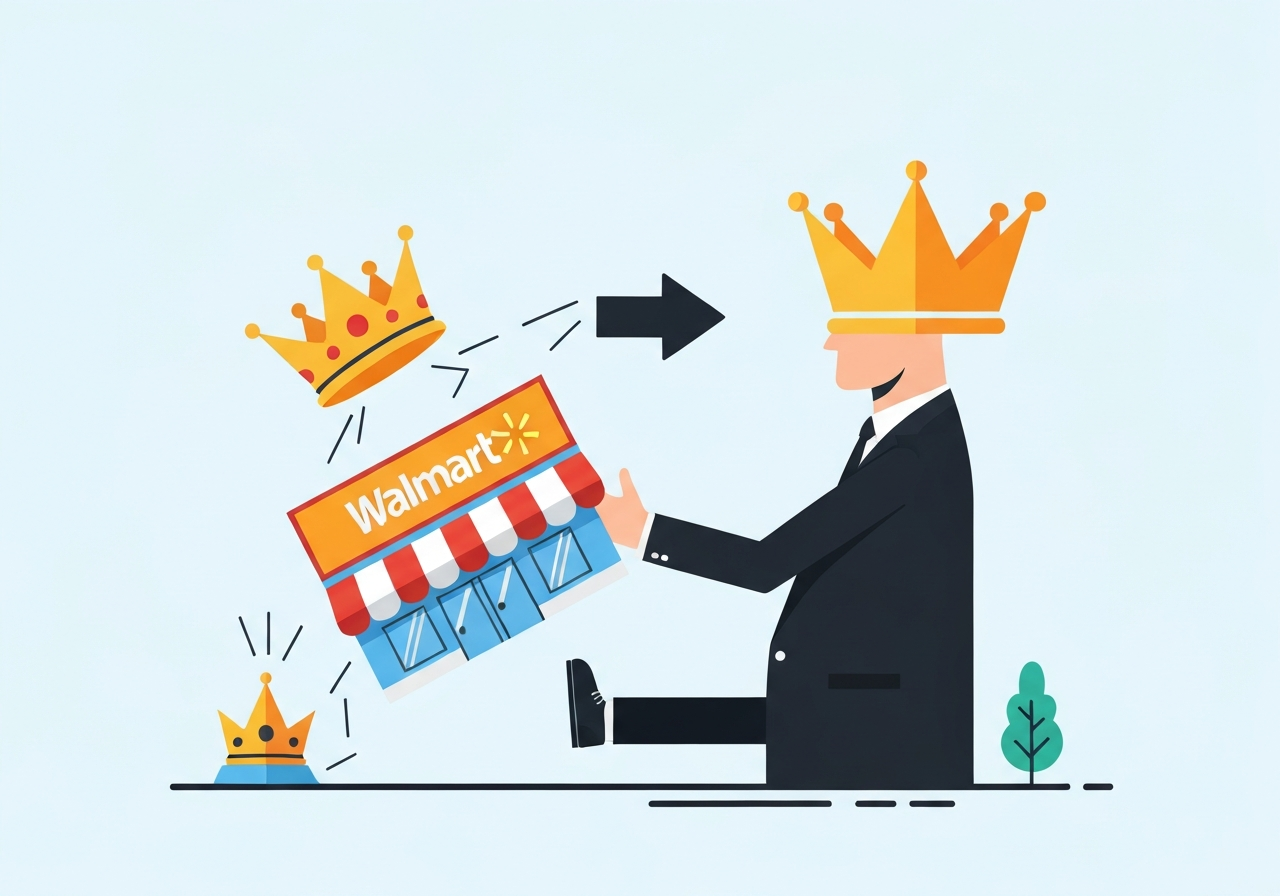
According to a Financial Times report, Amazon has overtaken Walmart as the largest retailer by sales even though Walmart posted record revenues in its most recent reporting period. The shift marks a notable milestone in the global retail hierarchy and highlights accelerating changes in online and omnichannel commerce. Executives, analysts and suppliers are reassessing strategy as market share dynamics evolve. The report frames the development as both a competitive victory for Amazon and a signal of structural change across retail.
Key Takeaways
- Financial Times reports Amazon now ranks ahead of Walmart on retail sales, reversing a long-standing order of the world’s largest retailers.
- Walmart recorded its highest-ever revenue in the latest period, underscoring strong performance in stores and omnichannel operations despite losing the sales lead.
- Amazon’s faster growth in online categories and international markets was a decisive factor in its rise, according to analysts cited by FT.
- Suppliers and consumer-packaged-goods firms face new pricing and promotional pressures as Amazon’s share expands across categories.
- Investors are recalibrating expectations for operational priorities — with more emphasis on e-commerce margins, logistics investment and subscription services.
- Regulatory scrutiny and labor costs remain risk factors that could shape both companies’ near-term strategies.
Background
For decades Walmart held the top position among global retailers by sales, supported by an extensive physical store footprint and a broad assortment of merchandise. In the 2010s and 2020s, Amazon’s rapid expansion of online retailing, cloud-backed logistics and marketplace services steadily closed the gap. The pandemic accelerated e-commerce adoption, prompting incumbents to invest heavily in their digital and fulfillment capabilities.
Walmart responded with investments in pickup, delivery, price competitiveness and integration of online and offline channels; those moves helped drive the company to record revenues in its latest results. Still, Amazon’s scale in pure e-commerce, plus growth in advertising and subscription services, altered the comparative sales profile that rankings use. The shift reflects both structural industry trends and company-specific execution over multiple reporting cycles.
Main Event
The Financial Times article synthesizes company filings and market data to report that Amazon now leads Walmart on measured retail sales. The FT frames the development as a notable change in ranking rather than a sudden collapse by Walmart: the latter’s revenue high point shows continued strength. The reporting indicates the crossover resulted from a combination of Amazon’s accelerating online sales and the differing ways firms report or allocate certain revenue streams.
On the ground, the change has prompted immediate reactions from investors and industry participants. Suppliers told FT they are reviewing terms and channel strategies as Amazon’s share grows in categories where Walmart historically dominated. Retail analysts cited in the piece point to the growing importance of digital ad revenues, platform fees and marketplace services in bolstering Amazon’s top-line position.
The story also highlights operational contrasts: Walmart’s sprawling store network continues to underpin foot-traffic sales and grocery strength, while Amazon’s investments in logistics, subscriptions and third-party marketplace economics amplify transactional volume without matching the same in-store footprint. The net result, according to reporting, is a reordering of which company registers higher sales when common metrics are applied.
Analysis & Implications
The ranking change matters beyond headline symbolism because large retailers set terms for suppliers, shape consumer expectations and influence logistics investment across the sector. Amazon’s expanded sales footprint increases its bargaining leverage with consumer goods manufacturers and could drive more promotional activity and fee pressure on brands that rely on its channels.
For Walmart, record revenues show the company’s core proposition remains resilient: low prices, grocery dominance and a dense physical network still attract consumers. The company’s challenge is converting that strength into faster online growth and higher-margin services, an area where Amazon currently benefits from scale economies in cloud, advertising and subscription models.
Policy and regulatory attention will likely intensify as market power shifts. Antitrust and labor debates focus on how market concentration affects prices, working conditions and competition. If Amazon’s share continues to expand, regulators in multiple jurisdictions may revisit how digital platforms and retail incumbents are governed.
Strategically, expect both firms to double down in different domains: Walmart on integrating stores with faster delivery and assortment expansion, and Amazon on broadening marketplace services, advertising and global retail penetration. The near-term commercial battleground will include grocery, consumer electronics, household staples and third-party seller economics.
Comparison & Data
| Metric | Amazon (qualitative) | Walmart (qualitative) |
|---|---|---|
| Recent sales trajectory | Faster e-commerce growth | Record overall revenues |
| Primary strength | Marketplace scale, digital services | Physical footprint, grocery & omni-channel |
| Margin drivers | Subscriptions, advertising, third-party fees | High-volume, low-margin retail & operational efficiency |
| Regulatory focus | Platform power, marketplace rules | Labor practices, competition in grocery |
The table provides a qualitative side-by-side to place the FT report in context: Amazon’s advantages are concentrated in digital scale and adjacent services, while Walmart’s strengths remain rooted in physical distribution and grocery. Precise sales figures, reporting conventions and accounting details determine whether a firm is listed first in specific rankings; those technicalities are discussed further below and flagged where confirmation is needed.
Reactions & Quotes
The following short excerpts summarize responses reported by the Financial Times and public commentary; they are paraphrased summaries of the FT coverage.
“Walmart recorded a record revenue total in the latest period but acknowledged the market is shifting toward online channels.”
Summary of Financial Times coverage of company commentary
“Amazon’s expansion into advertising and marketplace services helped push its sales profile ahead of traditional retail comparisons.”
Summary of analyst comments reported by Financial Times
“Suppliers are revisiting distribution and promotional strategies as online share grows across multiple categories.”
Summary of supplier reaction reported by Financial Times
Unconfirmed
- The precise sales figures and the exact reporting period used by FT to declare Amazon ahead are not reproduced here and should be checked in the original filings or the FT article.
- Company-specific, verbatim statements from Walmart and Amazon referenced in FT are summarized; full quotations and SEC filings should be consulted for legal or financial decision-making.
- Any implication that the ranking reflects long-term superiority rather than a measured crossover within specific metrics remains subject to further verification.
Bottom Line
The Financial Times report that Amazon has overtaken Walmart in a sales-based ranking is a meaningful indicator of how e-commerce and platform services are reshaping retail leadership. Walmart’s record revenues demonstrate it remains commercially robust, but the nature of competitive advantage is shifting toward firms that combine retail transactions with high-margin digital services.
For stakeholders — from suppliers to policymakers — the immediate takeaway is that channel power and negotiating leverage will continue to evolve. Monitoring detailed filings and the methodologies behind published rankings is essential to understand whether this event represents a durable realignment or a metric-specific crossover.
Sources
- Financial Times — coverage of retail rankings and company results (media report)
- Walmart Corporate — investor relations and official announcements (company / official)
- Amazon Investor Relations — financial results and company filings (company / official)