
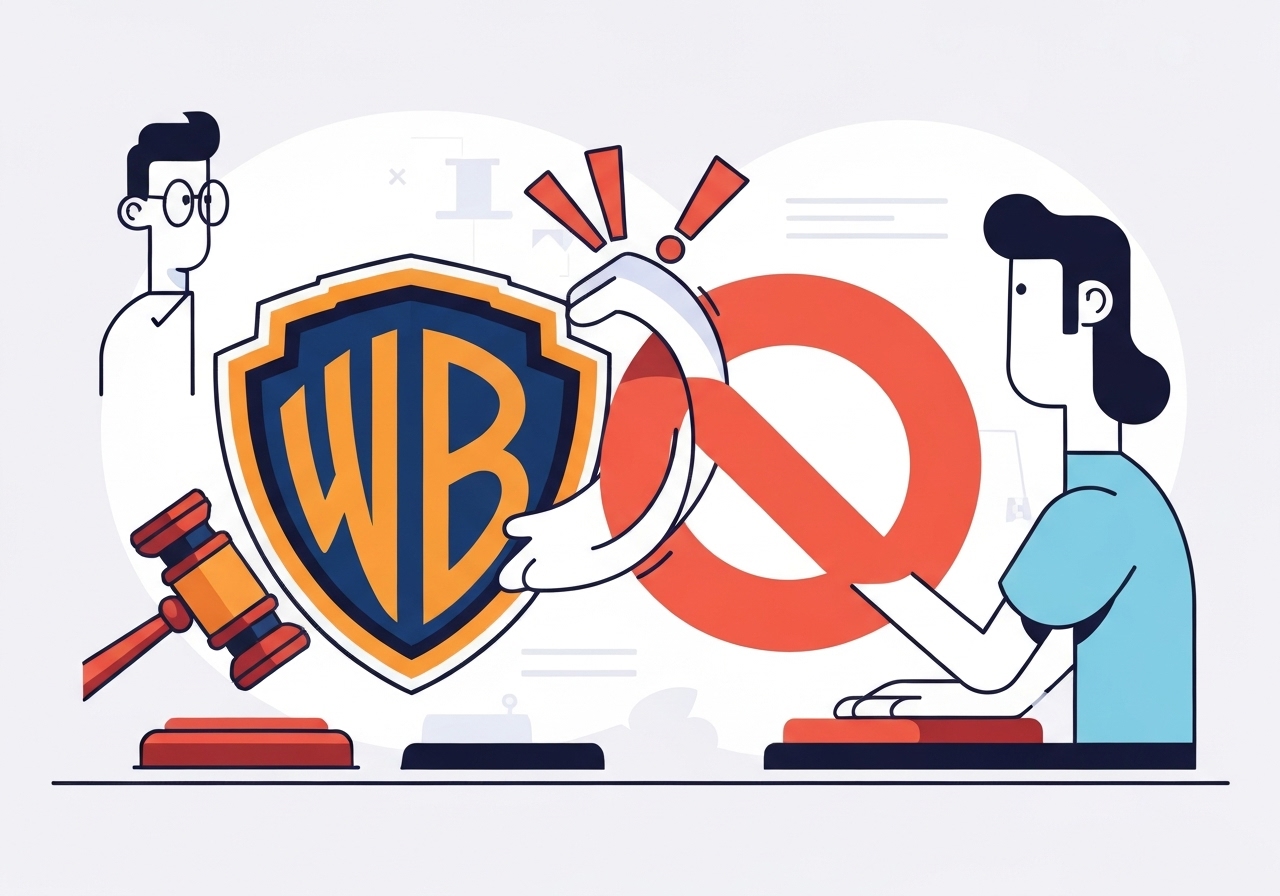
Lead: On September 4, 2025, Warner Bros. Discovery filed a federal lawsuit in California accusing AI image generator Midjourney of using the studio’s films and TV shows to train its models and of producing near-identical images of copyrighted characters, seeking damages and an accounting of profits.
Key Takeaways
- Warner Bros. Discovery sued Midjourney on Sept. 4, 2025 in U.S. federal court for alleged mass copyright infringement.
- The complaint cites Midjourney outputs resembling characters such as Batman, Bugs Bunny, Rick and Morty, and other IP owned by the studio.
- Warner seeks either Midjourney’s attributable profits or statutory damages of up to $150,000 per infringed work.
- Disney and NBCUniversal have publicly supported the suit; Disney and Universal previously sued Midjourney earlier this year.
- Midjourney offers paid tiers from about $10 to $120 per month; the company has not publicly answered this complaint.
- The case will hinge in part on whether use of copyrighted works in AI training qualifies as fair use; related rulings (e.g., the Anthropic matter) offer mixed signals.
Verified Facts
Warner Bros. Discovery’s complaint, filed in a California federal court on September 4, 2025, alleges that Midjourney built its service by ingesting large amounts of internet content that included the studio’s copyrighted films and television images. The studio provided side-by-side comparisons in the filing showing Midjourney outputs next to stills or promotional images for characters including DC heroes, Looney Tunes, Cartoon Network titles and other franchises it owns.
The complaint asserts that simple prompts such as “classic comic book superhero battle” can produce images that closely mirror proprietary character designs, citing a returned image described as matching Christian Bale’s Batman costume from The Dark Knight and a 3D Bugs Bunny matching the Space Jam: A New Legacy design. These examples are offered as evidence that the model was trained on Warner-owned materials.
Warner seeks remedies including disgorgement of profits attributable to the alleged infringement or, alternatively, statutory damages of up to $150,000 per work. The studio also intends to use discovery to probe how Midjourney collected and used movie and TV content in model training.
Context & Impact
This filing intensifies an industrywide legal push against generative AI companies that have trained models on copyrighted material without licensing. Earlier in 2025, Disney and Universal joined forces in litigation against Midjourney, and other rightsholders including authors, record labels and news organizations have launched suits against various AI developers.
The outcome could reshape how image-generation systems are built and how studios protect derivative markets such as posters, prints and licensed merchandise. If courts limit or curtail unlicensed training, AI firms may face higher compliance costs, new licensing requirements, or significant damage awards depending on discovery findings.
Legal precedent is mixed. A federal judge earlier this year found aspects of a separate AI training claim to be transformative while allowing other claims to proceed toward trial; that decision helped establish that training-related issues will be vigorously litigated and can result in sizable exposures.
Official Statements
“The heart of what we do is develop stories and characters to entertain our audiences,” a Warner Bros. Discovery spokesperson said, noting that the company filed suit to protect its content, partners and investments.
Warner Bros. Discovery spokesperson
Disney said it was “committed to protecting our creators and innovators” and welcomed Warner Bros. Discovery’s action. NBCUniversal emphasized that it stands for protecting creative artists and intellectual property.
Disney, NBCUniversal statements
Unconfirmed
- Precisely which Warner Bros. Discovery files or datasets Midjourney ingested remains unproven; the company’s training corpus specifics will be tested in discovery.
- The scale of any subscriber draw specifically because of copyrighted-character outputs is alleged but not yet quantified.
- Whether Midjourney will settle, alter its training methods, or change subscription features is not confirmed.
Bottom Line
This suit marks a major escalation in studios’ legal strategy against generative AI firms and could set important precedents about training data, platform liability, and remedies. Expect extensive discovery to focus on how Midjourney built its models and on whether unlicensed use of film and TV images displaces commercial markets for studio-owned art and merchandise.