
Lead
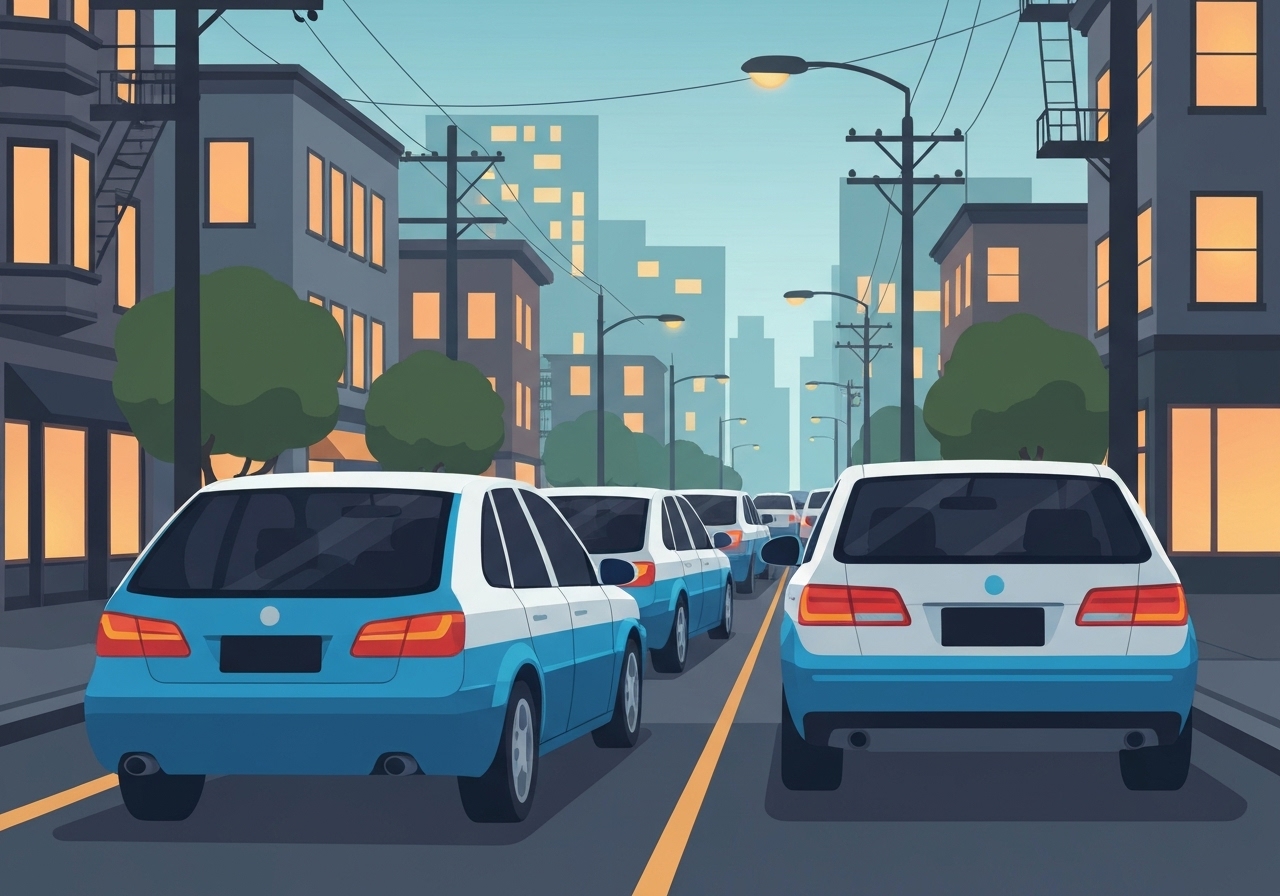
On Saturday, a citywide power outage in San Francisco left roughly 130,000 customers without electricity at its peak and coincided with a separate traffic headache: multiple Waymo autonomous SUVs came to a halt in public streets, contributing to congestion. The outage followed a fire at a five-story power substation and prompted Pacific Gas and Electric Company (PG&E) to dispatch repair crews; by 2:00 p.m. PT the utility reported about 114,000 customers restored. Waymo temporarily suspended its ride-hailing service in the Bay Area, citing safety and the need to keep routes clear for emergency personnel, and said it later began resuming operations after coordinating with city officials.
Key Takeaways
- Peak customers affected: PG&E reported about 130,000 customers lost power at the outage’s height.
- Partial restoration: PG&E said roughly 114,000 customers had power restored by 2:00 p.m. PT while repairs continued.
- Waymo pause: The autonomous ride-hailing operator temporarily suspended San Francisco service during the outage to prioritize rider safety and emergency access.
- Street blockage: Social media posts and videos showed multiple Waymo SUVs stopped in lanes, adding to localized traffic jams across the city.
- Possible causes: Observers and prior incidents point to interrupted cellular connectivity and nonfunctional street infrastructure as likely contributors to vehicles entering a wait-for-assistance state.
- Human backup reliance: Waymo’s system sometimes requests remote human assistance and can pause until an agent responds, a process that may be limited by bandwidth during outages.
- Company audit: In November, Waymo said it passed a third-party Tüv Süd audit of its remote assistance program, a point the company cites when discussing operational safeguards.
Background
San Francisco’s outage began Saturday after a fire at a five-story power substation, a failure that disrupted traffic signals, transit services and large swaths of the city’s connectivity. Urban mobility systems increasingly depend on a mix of local infrastructure and cloud-connected services; when that infrastructure fails, automated systems can face degraded inputs and missing remote resources. Waymo operates a fleet of Jaguar I-Pace and other autonomous SUVs that rely on onboard sensors plus networked services for edge cases and human oversight. The company has previously documented scenarios where a vehicle requests remote assistance when it encounters an unusual interaction or ambiguous roadway condition.
Autonomous vehicles are designed with conservative fallback behaviors: when sensors or rules produce uncertainty, cars may stop and request human guidance rather than proceed with elevated risk. That design choice protects passengers and road users but can create complications when many vehicles simultaneously enter that fallback mode. City agencies, utilities and mobility operators therefore have overlapping responsibilities in outage scenarios—managing power restoration, restoring traffic control devices and coordinating on public safety priorities.
Main Event
The blackout’s immediate effect included dark intersections and disrupted transit, and within that environment social media users began posting videos showing Waymo SUVs stationary in traffic lanes. Observers noted clusters of frozen vehicles in central neighborhoods, leading to friction with regular traffic and localized gridlock. Some footage contrasted Waymo’s halted cars with Tesla vehicles reportedly using FSD to continue driving; Tesla’s CEO later said on social media that Tesla robotaxis were unaffected, a claim tied to Tesla’s different reliance on local/vehicle-based systems.
Waymo sent a statement saying it had suspended ride-hailing services during the outage to protect rider safety and to ensure emergency crews had clear access. The company later issued an evening update saying it was resuming service and that it had coordinated closely with San Francisco officials while assessing lessons from the event. Company sources emphasized that the outage represented a significant utility infrastructure failure that produced citywide impacts beyond any single operator.
Exact technical reasons why individual Waymo vehicles stopped remain unconfirmed publicly. Analysts and prior footage point to two proximate issues: intermittent or overloaded cellular networks limiting remote-assist bandwidth, and the absence of functioning traffic signals or streetlights that produce atypical interactions requiring human clarification. Waymo’s platform can display live camera feeds and 3D sensor maps to remote agents, but those streams consume bandwidth that may be scarce during a large outage.
Analysis & Implications
The incident highlights a tension in autonomous vehicle design between safety-first fallbacks and the systemic effects of many vehicles simultaneously invoking those fallbacks. When one vehicle stops because it lacks clarity, the consequence is limited; when dozens do so in concentrated corridors, the city experiences added congestion during an emergency. That risk suggests city planners and mobility providers need joint contingency plans that cover both grid failures and their cascading mobility impacts.
Operationally, reliance on remote human assistance creates a dependency on communications infrastructure that is vulnerable during wide-area outages. If remote agents are fewer in number or if cellular networks are overloaded, response latency rises and more vehicles may remain paused longer. A combination of increased local autonomy for low-bandwidth decision-making and prioritized emergency communications for mobility operators could reduce these failure modes.
There are policy implications too: municipalities may need to define expectations for automated fleets during civic emergencies, including channels for rapid coordination and rules for where paused vehicles may safely stop. Regulators may also look at minimum resilience standards for connectivity-dependent functions and whether backup modes should allow controlled relocation to lay-bys rather than remain in travel lanes.
Comparison & Data
| Metric | Reported value |
|---|---|
| Peak customers without power | ~130,000 |
| Customers restored by 2:00 p.m. PT | ~114,000 |
The table above captures the utility figures disclosed during the outage: PG&E reported a peak outage impact of about 130,000 customers, with incremental restorations bringing the count of customers without service down by the early afternoon. Those numbers are helpful for gauging the scale of the grid failure and its likely impact on cellular towers, traffic signal controllers and other dependent systems.
Reactions & Quotes
City officials and operators emphasized safety and coordination as immediate priorities while the outage unfolded. Below are representative statements and context.
We temporarily suspended ride-hailing to keep riders safe and to ensure emergency personnel could access streets unimpeded.
Waymo spokesperson (statement)
Waymo framed the suspension as a precautionary measure tied to both passenger safety and the need to clear routes for emergency responders. The company later said it was resuming operations after communicating with city officials and reviewing the outage’s operational impact.
Tesla robotaxis remained operational in San Francisco during the outage, according to social media comments from the company’s CEO.
Elon Musk (social media)
Elon Musk posted that Tesla vehicles were unaffected, a claim that reflects different technical approaches between manufacturers—Tesla’s greater on-vehicle autonomy versus Waymo’s queued remote assistance in specific edge cases. The two statements are not directly comparable without technical logs detailing the incidents.
When a vehicle needs help, it requests a remote agent and waits; bandwidth constraints can lengthen those pauses.
Former employee (online reply, paraphrased)
Online accounts from a person identifying as a former Waymo employee have described the remote-assist workflow: a vehicle presents live camera and sensor views to a remote operator and generally waits for guidance before proceeding. Those workflows presume available network capacity and agent availability.
Unconfirmed
- Whether overloaded or offline cell towers were the sole cause of paused Waymo vehicles remains unverified by Waymo or telecom carriers.
- The exact number of Waymo vehicles that entered a remote-assistance wait state during the outage has not been released publicly.
- No public timeline or technical log has been published explaining whether vehicles paused due to sensor ambiguity, network loss, or explicit policy to avoid moving through dark intersections.
Bottom Line
The San Francisco outage showed how interdependent urban systems are: a utility failure can cascade into mobility and communications problems that disrupt both human-driven and automated transport. Waymo’s conservative fallback behavior likely reduced immediate safety risks for passengers and pedestrians, but it also created secondary congestion when multiple vehicles adopted the same pause behavior.
For cities and mobility providers, this episode underlines the importance of joint contingency planning, resilient communications, and policies that specify how automated fleets should behave during civic emergencies. Operators should document response metrics, improve low-bandwidth autonomy for safe repositioning, and work with municipalities to create rapid coordination channels to prevent paused vehicles from becoming public-safety impediments.
Sources
- The Verge — media report summarizing events and company statements
- Pacific Gas and Electric Company (PG&E) — official utility outage updates and restoration notices
- Waymo Blog/Statements — company explanations of remote assistance and program audits (official)