
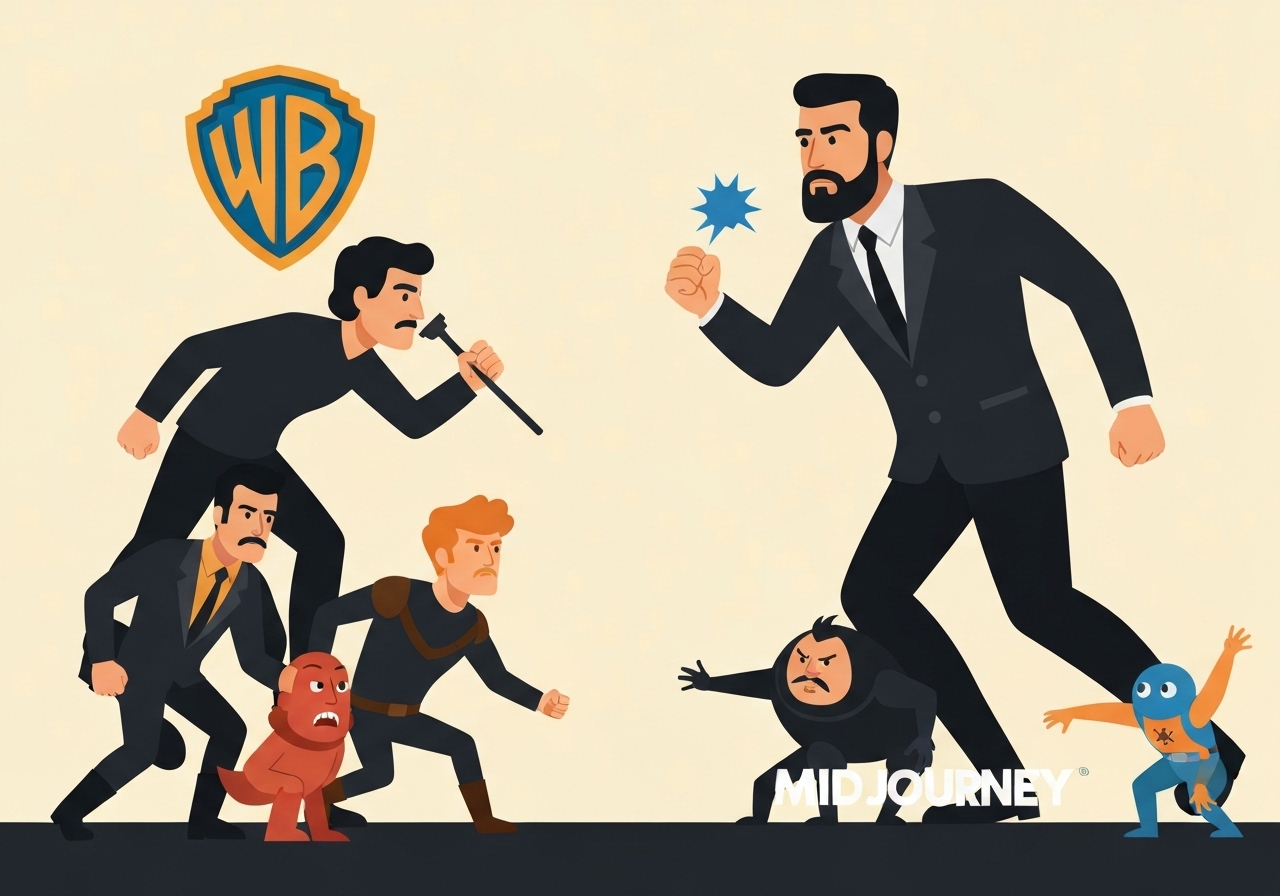
Warner Bros. Discovery filed a lawsuit on Sept. 4, 2025, in U.S. court accusing AI image generator Midjourney of producing and distributing thousands of unauthorized images and videos that replicate its copyrighted characters — including Superman, Batman, Bugs Bunny and Scooby-Doo — and asking the court for damages and an order to stop the alleged copying.
- Warner Bros. Discovery alleges Midjourney generated “countless” unauthorized images and derivatives of its characters.
- Examples cited include Superman, Batman, Wonder Woman, Bugs Bunny, Tweety, Scooby-Doo, the Powerpuff Girls, Flash and others.
- The complaint says infringement occurred even when prompts did not name specific characters (e.g., “classic comic book superhero battle”).
- WBD seeks damages, an injunction blocking Midjourney from copying or distributing its IP, and requirements for copyright-protection measures.
- Similar lawsuits have been filed by Disney and Universal against Midjourney over AI-generated images.
- Midjourney has not issued a public response in the filing; the lawsuit characterizes the conduct as deliberate exploitation to attract subscribers.
Verified facts
The complaint was filed by Warner Bros. Discovery on Sept. 4, 2025. It names Midjourney as the defendant and presents examples that the studio says show the service producing close visual copies or obvious derivatives of its copyrighted characters.
Warner Bros. Discovery identified a range of characters allegedly reproduced by Midjourney’s models, from DC superheroes (Superman, Batman, Wonder Woman, Flash) to classic and animated franchises (Bugs Bunny, Tweety, Scooby-Doo, the Powerpuff Girls). Those names and the date of filing are stated in the complaint.
The studio asserts that the platform produces infringing images both when users specifically prompt character names and when prompts are generic. The complaint alleges the company distributes downloadable files and profits by offering access to the generated material.
WBD is asking the court for monetary damages and injunctive relief that would bar Midjourney from copying, displaying or distributing Warner Bros. Discovery’s copyrighted works and require the company to implement copyright-protection measures for its tools.
Context & impact
This case follows similar legal actions from major rights holders. Disney and Universal previously filed lawsuits accusing Midjourney of operating a “virtual vending machine” that produces unauthorized copies of copyrighted works.
If the court grants the relief WBD seeks, the ruling could force AI image platforms to change model training practices, tighten prompt filtering, and add mechanisms to detect and block outputs that replicate protected characters or copyrighted material.
Potential short-term impacts include restrictions on what users can generate, new developer obligations for safety filters, and greater scrutiny of dataset sourcing across the industry. Longer-term outcomes could influence licensing deals between studios and AI companies.
Official statements
“It is hard to imagine copyright infringement that is any more willful than what Midjourney is doing here,” the complaint states, alleging purposeful exploitation of WBD’s intellectual property to attract subscribers.
Warner Bros. Discovery complaint (Sept. 4, 2025)
Unconfirmed
- The complaint alleges Midjourney “refuses to protect copyright holders”; whether Midjourney had specific policy or technical notices about these characters at the time is not independently confirmed here.
- The precise volume described as “countless” by WBD is a legal claim in the suit and has not been quantified in public records cited in this summary.
Bottom line
Warner Bros. Discovery’s lawsuit adds to mounting legal pressure on generative AI firms over copyright and dataset practices. The case could prompt broader changes in how image models are trained and policed and may determine whether studios can block platforms from producing recognizable depictions of their characters without licenses.
- Next steps: the court will need to evaluate the complaint’s examples, the models’ training sources and applicable copyright law before deciding on injunctions or damages.