
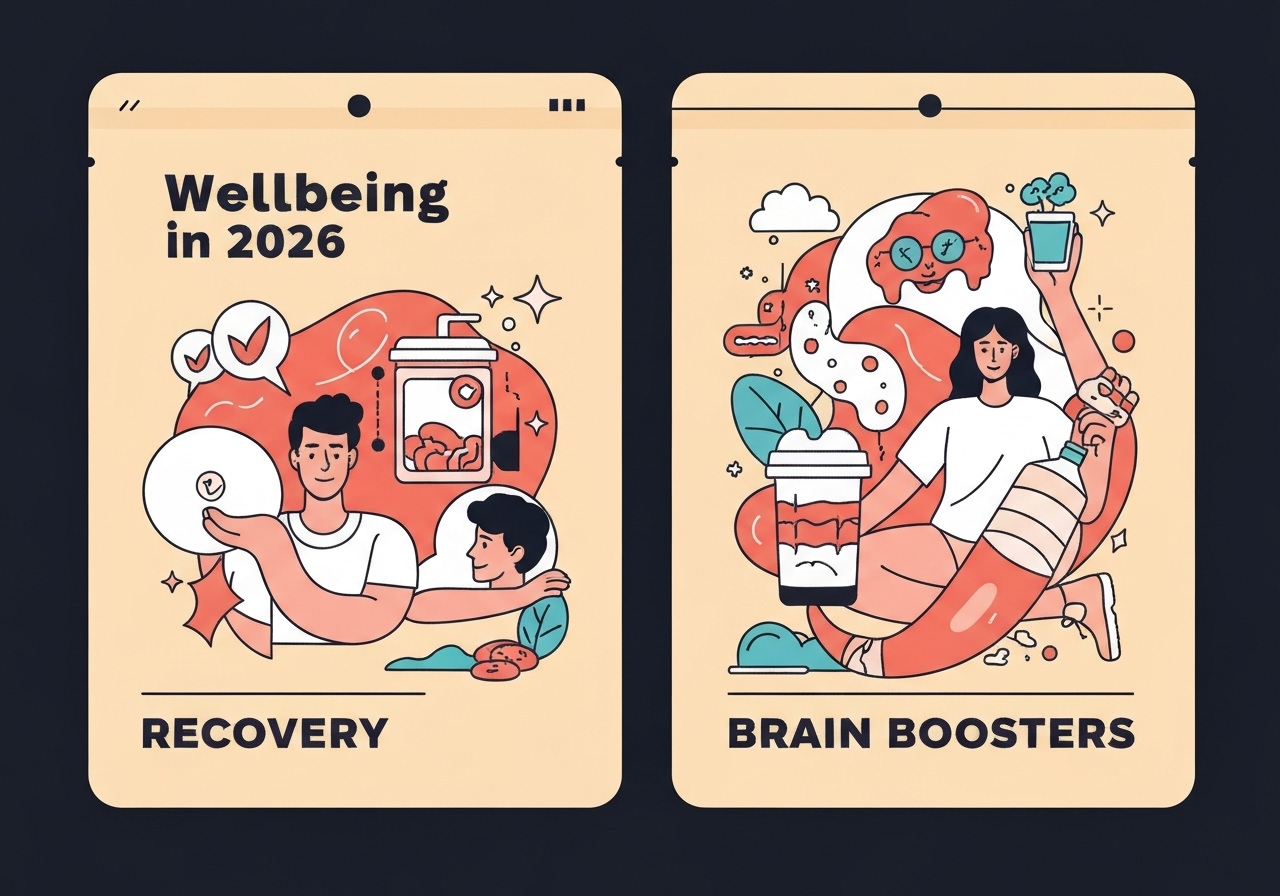
Lead
In 2026 the global wellbeing trend has shifted from relentless performance to deliberate recovery, with experts highlighting rest, the rise of JOMO (Joy Of Missing Out), and renewed interest in cognitive supplements and vagus-nerve techniques. Wearable data and behavioural coaching are reframing rest as part of fitness, while younger consumers drive demand for nootropics and brain-training apps. This comes alongside more than one million people privately accessing weight-loss drugs, reshaping how many approach diet and exercise. The broad result: an industry that blends tech, preventive health and lifestyle choices — and faces questions about evidence, regulation and long-term impact.
Key Takeaways
- More than 1,000,000 people have paid privately for weight-loss drugs, changing public appetite for medical and lifestyle interventions.
- Where 2025 emphasised maximal output at the gym, 2026 centres on recovery: rest days and data-driven rest scheduling are mainstream.
- Smartwatches and wearables now inform rest needs by tracking heart rate and activity, identifying overtraining and peak-performance days.
- JOMO, the Joy Of Missing Out, is gaining traction as a mental-health strategy countering social-media-driven FOMO first noted in 2004.
- Nootropics market projections suggest an $11bn (about £8bn) slice by 2030 for ingredients like lion’s mane, ashwagandha and L-theanine, driven largely by Gen Z interest.
- Brain health behaviours — sleep, cardiovascular fitness and metabolic control — remain the strongest evidence-backed protections against cognitive decline.
- Vagus-nerve techniques (breathing patterns, cold exposure, devices) are promoted to improve stress resilience, though device efficacy and safety vary.
Background
The wellbeing sector has ballooned into a multi-trillion-dollar global industry combining supplements, apps, wearables and private medical services. In recent years consumers have layered new tools onto traditional advice: alongside gym regimes and diets, many now use AI chat assistants for personalised plans and, in some markets, pay privately for prescription weight-loss medicines.
In 2025 the cultural narrative celebrated pushing limits — faster runs, heavier lifts and quantified progress. That emphasis was fuelled by social media norms and a broader productivity ethos. Wearable technology, however, has started to change that narrative by offering continuous physiological data that reframes rest as part of optimal performance rather than downtime.
Concurrently, younger generations report higher engagement with preventive health measures, from supplement stacks to brain-training apps, while public debate intensifies over the evidence base and regulation of many of these products and services.
Main Event
Industry leaders say recovery is now a priority. A growth director at a global fitness brand told reporters that the prevailing mindset has shifted from ‘no pain, no gain’ to strategic recovery guided by data from smartwatches and trackers. Those devices flag elevated heart rates, insufficient recovery and windows when fitness peaks, prompting scheduled rest days rather than ad-hoc breaks.
Retailers report booming demand for cognition-focused supplements. A product director at a major health retailer described customers seeking ‘boosting’ solutions for memory, concentration and stress, with younger buyers especially interested in preventative brain care. The response includes both single-ingredient products and ‘stacks’ used across the day, for example combining magnesium with mushroom extracts.
Clinicians voice caution. A lifestyle GP recommends prioritising sleep, diet and cardiovascular exercise as the most reliable routes to better brain health, noting limited evidence for many nootropics in healthy populations. He warns that supplements rarely address underlying causes such as sleep deprivation or metabolic dysfunction.
Meanwhile, attention to the nervous system has increased. A television GP and practising clinician highlighted simple vagus-nerve activation techniques — particular breathing patterns and cold-water exposure — that can quickly lower heart rate and increase parasympathetic tone. Wearable stimulators that clip to the ear or sit at the neck are entering the consumer market, marketed to improve stress resilience.
Analysis & Implications
Economically, a projected multi-billion-dollar marketplace for cognitive supplements and devices presents both opportunity and regulatory challenges. If the projected $11bn segment materialises by 2030, it will attract more product innovation and marketing, but also raise questions about quality control, claims verification and consumer protection across jurisdictions.
From a public-health perspective, the shift toward recovery and vagal techniques could be beneficial if it reduces burnout and overtraining. However, the popularity of supplements and device-led interventions risks diverting attention and spending from proven population-level measures such as sleep promotion, accessible exercise infrastructure and cardiovascular-risk reduction.
Generational differences matter. Gen Z’s heightened preventive focus could foster long-term healthier behaviours but also drive rapid adoption of unregulated products and trends before evidence is established. The interplay of social media, influencer marketing and direct-to-consumer wellness creates a fast-moving market where claims often outpace research.
Finally, the ubiquity of wearables and AI assistants introduces data and ethical considerations. Continuous monitoring and life-logging devices offer personalised insight but also create privacy, surveillance and consent issues. Regulators and employers will face pressure to define appropriate use and disclosure standards.
Comparison & Data
| Year | Main Focus | Key Drivers |
|---|---|---|
| 2025 | Performance and progression | Gym culture, social media, competition |
| 2026 | Recovery, JOMO, cognitive boosting | Wearable data, Gen Z preventive health, supplement demand |
The table highlights a cultural pivot from output to maintenance. Wearables that once benchmarked performance are now used to schedule recovery. Market estimates for cognitive supplement segments point to rapid growth, but those estimates are projections and should be weighed against the current limited clinical evidence for many ingredients.
Reactions & Quotes
Industry spokespeople frame recovery as an evidence-informed evolution rather than a fad. In response, fitness executives stress data-driven balance between training and rest.
We are moving away from training into the ground to smarter cycles that include deliberate recovery.
Les Mills (global fitness brand)
Retail leaders link the trend to consumer demand for quick cognitive gains, especially among younger shoppers. Health professionals counter that lifestyle fundamentals remain the most reliable strategies.
Customers want anything that promises a boost, particularly for the brain; interest among younger buyers is very strong.
Holland & Barrett (health retailer)
Clinicians urge caution on supplements and devices, advocating sleep, diet and movement as first-line measures.
Sleep and cardiovascular health deliver far greater, evidence-backed benefits than most over-the-counter cognitive supplements.
Independent lifestyle GP
Unconfirmed
- The $11bn figure for nootropics by 2030 is a market projection and depends on consumer trends and regulation; its realization is not guaranteed.
- The effectiveness and long-term safety of many consumer vagus-stimulation devices and popular supplement combinations remain insufficiently proven in large clinical trials.
- Claims that specific mushroom extracts or single ingredients will protect cognition in healthy adults are based on limited or small-scale studies and should not be taken as definitive.
Bottom Line
The wellbeing story in 2026 is one of recalibration: technologies and products that once pushed people harder are now being repurposed to help them rest smarter and protect cognitive function. This may reduce burnout and promote resilience if combined with proven public-health measures like better sleep, balanced nutrition and regular exercise.
Yet the rapid consumer uptake of supplements, stacks and consumer neurostimulation devices also brings uncertainty. Policymakers, clinicians and consumers will need clearer evidence standards, improved product oversight and honest marketing so that enthusiasm for ‘boosting’ does not outpace its proof.
For individuals, the practical takeaway is simple: use data and trends to inform choices, prioritise sleep and cardiovascular health, and treat emerging supplements or devices with cautious scrutiny until stronger evidence appears.
Sources
- BBC News (news article reporting expert interviews and market context)
- Les Mills (global fitness brand website — corporate)
- Holland & Barrett (health retailer site — corporate)
- Oxford English Dictionary (lexicographic entry for FOMO, first recorded 2004)