
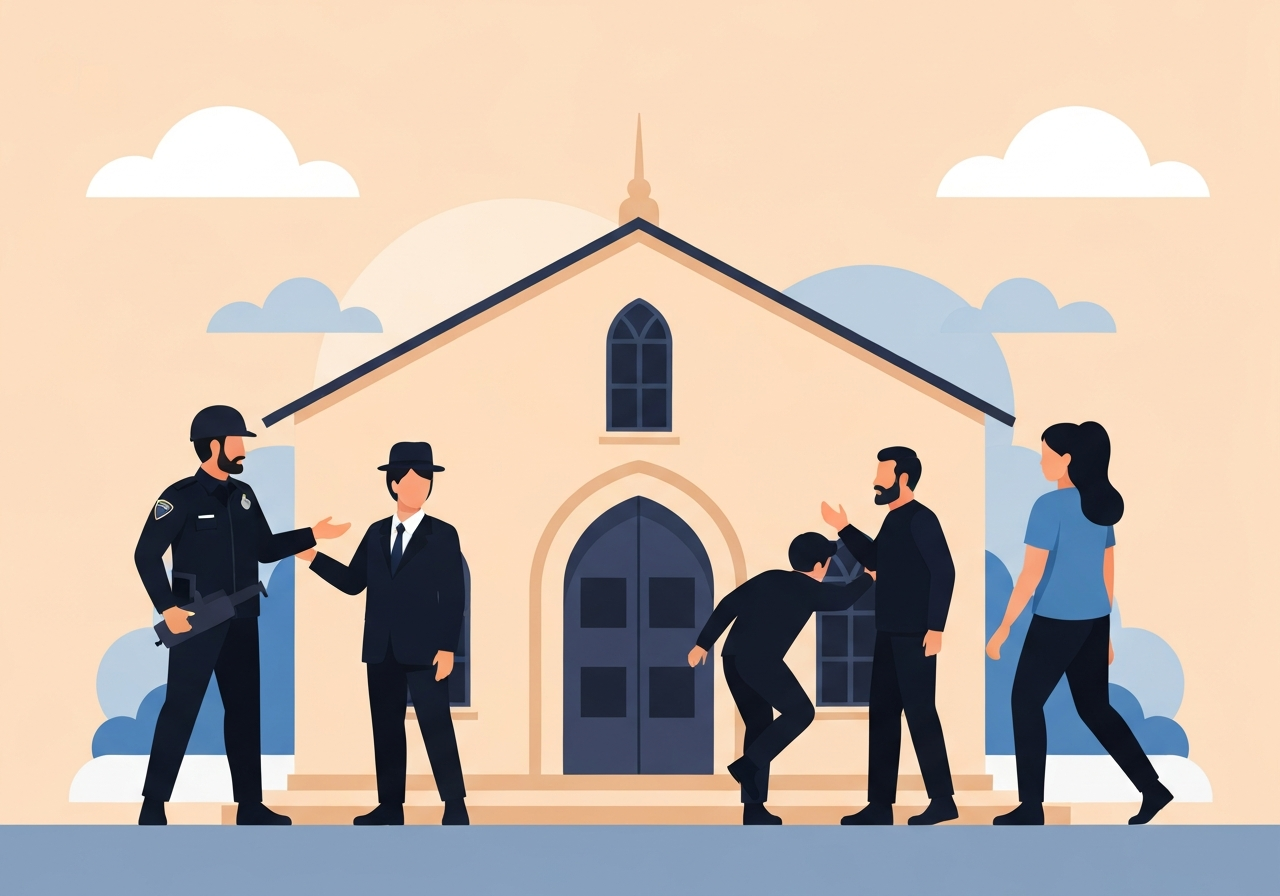
On March 12, 2026, a suspect drove a vehicle through the doors of Temple Israel in West Bloomfield, Michigan, then exited with a weapon and was shot during an armed confrontation with synagogue security, officials said. Authorities declared an active shooter situation and cleared the building; all 140 students and staff were accounted for and reported safe. Law enforcement later found mortar-type explosive devices in the vehicle and said the suspect’s body was badly burned, complicating identification. Multiple agencies, including the Oakland County Sheriff, Michigan State Police and the FBI, remain on scene investigating.
Key Takeaways
- A March 12, 2026 attack at Temple Israel in West Bloomfield ended when synagogue security shot and neutralized the lone suspect; no students or staff were injured.
- Temple Israel confirmed all 140 students and staff were safe after the incident, and parents were directed to a nearby Jewish Community Center for reunification.
- Oakland County officials said the suspect rammed a vehicle into the synagogue, exited with a rifle and was engaged by security; investigators later found mortar-type explosives inside the vehicle.
- One security team member struck by the vehicle was knocked unconscious, taken to hospital and is expected to survive; eight first responders received care at Henry Ford Health facilities for treatment or evaluation.
- FBI personnel were on scene; the FBI had conducted an active shooter prevention training at Temple Israel in January 2026, according to the agency.
- Investigators reported the suspect’s body was badly burned, which is complicating formal identification and the probe into motive and device origin.
Background
Temple Israel, located at 5725 Walnut Lake Road in West Bloomfield, is one of the largest Reform synagogues in the United States and regularly hosts student programs. Houses of worship in the region have been the subject of heightened security training and patrols since a pattern of attacks on religious institutions nationally prompted local authorities to increase prevention efforts. The FBI led an active shooter prevention and awareness session at Temple Israel in January 2026, part of wider outreach to faith communities across Southeast Michigan.
West Bloomfield lies in Oakland County, which oversees the sheriff’s office that responded to Thursday’s incident alongside municipal police and Michigan State Police troopers. Local officials said multiagency coordination was enacted quickly to clear the building, secure perimeters and manage reunification points for families. Health systems in the area, including Henry Ford Health, mobilized to treat first responders and provide trauma support where needed.
Main Event
Officials said the sequence began when a driver rammed a vehicle through the synagogue’s entrance and into an interior hallway. Two law enforcement sources told reporters the suspect then exited the vehicle with a rifle and engaged with synagogue security personnel. Oakland County Sheriff Michael Bouchard said law enforcement responded to an active shooter situation and later confirmed the suspect was dead, while declining to specify the exact cause of death at the scene.
Following the shooting, something inside the suspect’s vehicle ignited and burned the body, law enforcement sources said, which is complicating identification efforts. Investigators noted mortar-type explosive devices were inside the vehicle and called in explosive ordnance disposal teams to clear the scene. Authorities asked the public to avoid the area while they swept the building and processed evidence.
One security team member was struck by the vehicle and briefly knocked unconscious; he was pulled to safety by colleagues and transported to a hospital, where officials said he is expected to recover. Temple Israel officials confirmed that all 140 students and staff were accounted for, and parents were directed to the Jewish Community Center to reunite with their children. Multiple agencies, including the FBI, were present to support the investigation and evidence collection.
Law enforcement increased patrols at houses of worship across Southeast Michigan in the wake of the attack. Local command emphasized an abundance-of-caution approach as investigators examined the suspect’s vehicle for additional hazards and sought to establish a timeline, motive and whether any accomplices existed.
Analysis & Implications
The incident underscores persistent vulnerabilities at religious institutions nationwide and the value of on-site security training and preparedness. Temple Israel’s prior engagement with FBI active shooter prevention programming may have contributed to rapid on-site response and orderly reunification, though investigators will assess how training influenced outcomes. The presence of mortar-type devices raises new concerns about use of improvised explosive materials in vehicle-borne attacks on soft targets.
From a legal and forensic perspective, the burned condition of the body will slow identification and could delay public disclosure of the suspect’s identity and background. That delay may complicate immediate attribution, motive assessment and any linkage to known extremist networks or past incidents. Investigators will likely prioritize digital forensics, vehicle sourcing, and any cross-jurisdictional leads to reconstruct the suspect’s movements prior to the attack.
Politically and socially, the event is likely to prompt renewed calls for strengthened security at houses of worship and could intensify debate over arming private security versus relying on law enforcement patrols. Officials at the state level have already issued statements condemning violence and urging solidarity; continued messaging from community leaders will be important to manage fear and prevent escalation of retaliatory rhetoric.
Comparison & Data
| Measure | Value |
|---|---|
| Students and staff at Temple Israel | 140 (all accounted) |
| First responders treated | 8 (Henry Ford Health locations) |
| Date of attack | March 12, 2026 |
| FBI training at Temple Israel | January 2026 (active shooter prevention) |
| Suspect | One; body badly burned, identification pending |
The table summarizes known, confirmed figures released by authorities and institutional statements. Numbers of injured remain limited to the security guard who was hospitalized and eight first responders treated; official tallies may be updated as hospitals and agencies complete notifications. Comparison to prior faith-based attacks in the region shows a pattern of law enforcement and community partnerships increasing since 2020, with more frequent active-shooter preparedness efforts.
Reactions & Quotes
Oakland County Sheriff Michael Bouchard addressed the scene and spoke to the sequence of events, stressing the roles of security and responding officers. He noted that investigators were treating the scene with extreme caution because of possible explosive devices and the condition of the suspect’s remains. Bouchard acknowledged the psychological impact on the congregation and pledged continued support during the investigation.
Security did their job, and then the responders did theirs.
Michael Bouchard, Oakland County Sheriff
The state response included statements from the governor and attorney general emphasizing condemnation of violence and support for Michigan’s Jewish community. Officials framed the attack as a reminder of the need for vigilance and community cohesion across faith and civic lines. State law enforcement also said troopers were increasing patrols at other houses of worship while the probe is active.
Antisemitism and violence have no place in Michigan; we are monitoring the situation closely.
Governor Gretchen Whitmer (statement)
National leaders briefed on the incident issued expressions of concern, and civil rights groups called for calm and solidarity while investigations proceed. Faith and community organizations urged avoidance of speculation and stressed the importance of verified information so families and congregants could make safe decisions. Organizations representing Muslim and interfaith communities publicly condemned the attack and offered support to victims and the synagogue.
There is no justification for violence against any house of worship.
Dawud Walid, CAIR Michigan executive director
Unconfirmed
- The suspect’s identity and precise motive have not been publicly confirmed by officials as of the latest updates.
- While sources reported mortar-type explosives in the vehicle, the exact nature and origin of those devices remain under forensic examination.
- Sources indicated the suspect was shot by synagogue security, but the sheriff declined to specify the cause of death; official cause will be determined by investigators and medical examiners.
Bottom Line
The March 12, 2026 attack at Temple Israel in West Bloomfield ended with a lone suspect dead, no students or staff injured, and a swift multiagency response. The presence of mortar-type devices and the burned condition of the suspect’s remains make the investigation unusually complex, with identification, motive and device provenance remaining primary tasks for investigators.
For congregations and communities, the event reinforces the importance of preparedness, rapid communication and cooperation with law enforcement. Authorities have urged the public to await verified information as the probe continues and to support victims, first responders and community recovery efforts.
Sources
- CBS News — (local news report)
- Oakland County Sheriff's Office — (official law enforcement)
- FBI Detroit — (federal law enforcement/agency)
- Henry Ford Health — (health system statement)
- Office of Governor Gretchen Whitmer — (state official statement)
- Temple Israel — (institutional website)