
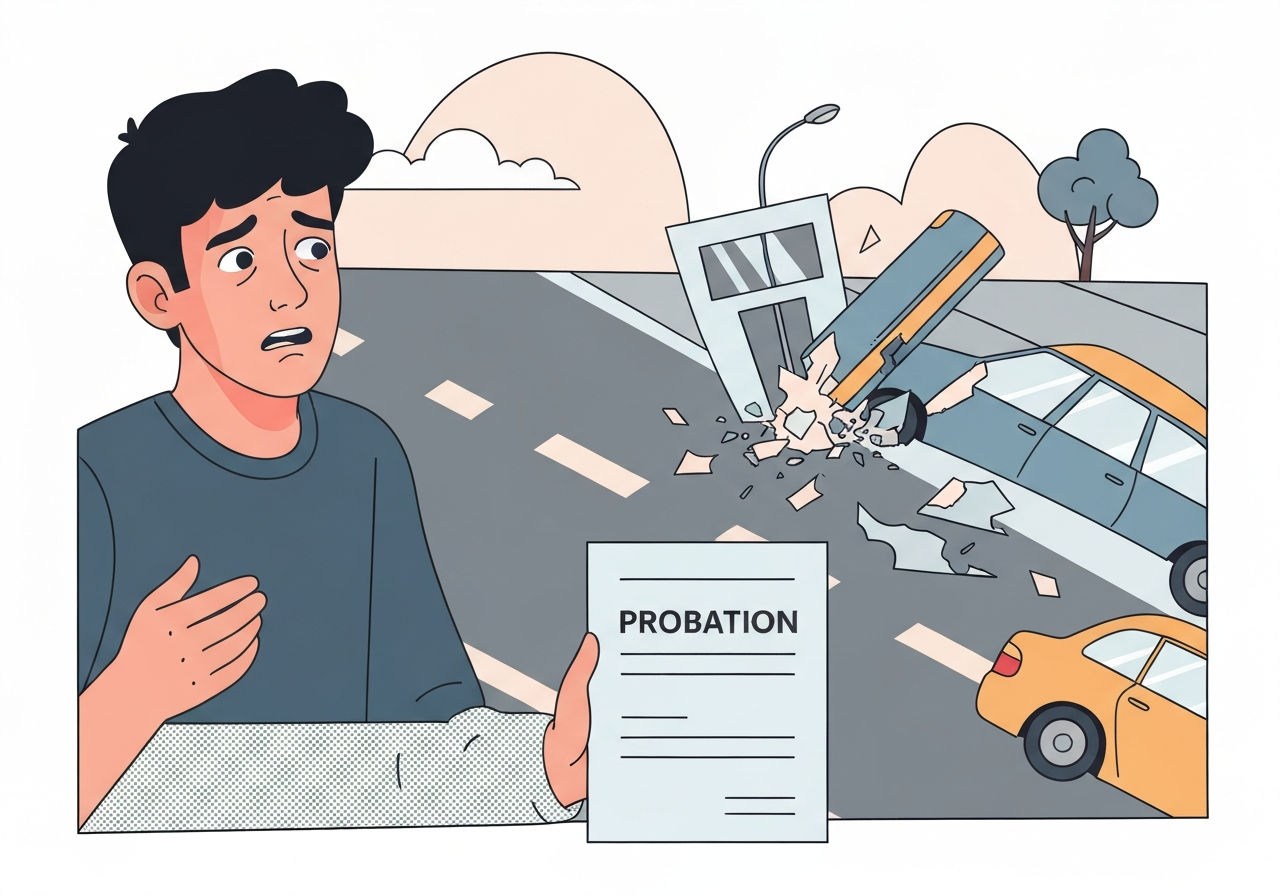
On March 20, 2026, a San Francisco Superior Court judge sentenced 80-year-old Mary Fong Lau to probation for a 2024 crash that killed a family of four at a West Portal bus stop. Judge Bruce Chan ordered 200 hours of community service and a three-year revocation of Lau’s driver’s license but declined to impose jail time or home detention, citing Lau’s age, clean record and remorse. Investigators found Lau’s Mercedes reached speeds up to 70 mph before it struck the group waiting outside the West Portal Branch Library; the victims were 40-year-old Diego Cardoso de Oliveira, 38-year-old Matilde Moncada Ramos Pinto and their two young sons, ages 1 and 3 months. The ruling prompted immediate anguish from the victims’ relatives and renewed civil litigation over wrongful death and alleged asset transfers.
Key takeaways
- Sentence: Mary Fong Lau, 80, received probation on March 20, 2026, plus 200 hours of community service and a three-year license revocation; no jail or home detention was imposed.
- Victims: The crash killed Diego Cardoso de Oliveira (40), Matilde Moncada Ramos Pinto (38), 1-year-old Joaquim and 3-month-old Cauê Ramos Pinto de Oliveira; two children died after being ejected or removed from life support.
- Crash details: Investigators found Lau’s SUV reached about 70 mph and then struck the bus stop outside the West Portal Branch Library; officials said there was no medical emergency or mechanical failure.
- Criminal outcome: Lau pleaded no contest in February 2026 to four felony counts of gross vehicular manslaughter; Judge Chan emphasized difficulty proving gross negligence despite the high speed.
- Civil actions: The victims’ relatives filed a wrongful-death lawsuit and in May 2025 alleged Lau shifted property interests before suit to shield assets; those civil claims remain pending.
- Court rationale: Judge Chan said incarceration would amount to retribution given Lau’s age, lack of prior convictions and demonstrated remorse, while acknowledging the “most egregious” loss of life.
Background
The crash occurred in 2024 on a residential street in San Francisco’s West Portal neighborhood, where families commonly wait at the bus stop outside the local branch library. The victims were celebrating an anniversary and were headed to the San Francisco Zoo when the Mercedes SUV struck them. In the aftermath, investigators ruled out driver impairment, vehicle malfunction and a medical emergency, and recorded speeds up to 70 mph. Those findings narrowed the criminal case to whether the defendant’s conduct met California’s standard for gross vehicular manslaughter.
Prosecutors pursued felony counts tied to gross negligence; defense counsel argued Lau expressed repeated remorse and had sought psychiatric help. During pretrial proceedings in February 2026 Lau entered no-contest pleas to four felony counts, which set the stage for Judge Bruce Chan’s sentencing hearing on March 20, 2026. Community response has been intense: vigils and public statements followed the tragedy, and the victims’ relatives also initiated civil suits to seek damages and to challenge alleged pre-suit transfers of Lau’s property.
Main event
At the March 20 hearing, Judge Chan delivered a detailed explanation of his sentencing calculus before imposing probation and community service. He acknowledged the breadth of material submitted to the court—letters, photographs and victim statements—and described the deaths of the two parents and their children as the most reprehensible aspect of the case. Chan said both sides agreed the defendant had not been under the influence, engaged in a sideshow or raced another vehicle, which complicated proving gross negligence beyond a reasonable doubt.
Courtroom testimony and the investigators’ reconstruction showed the Mercedes traveled in a straight line for multiple blocks at high speed with no evident braking before striking the bus stop outside the West Portal Branch Library. The force of impact threw Diego and 1-year-old Joaquim more than 100 feet from the stop; both died at the scene. Matilde died the following day, and the infant Cauê suffered severe brain injury and seizures before his grandmothers removed life support.
Family members delivered emotional victim impact statements during the hearing, expressing shock and anger at the criminal result and at what they described as a pattern of evasion in civil matters. Defense attorney Seth Morris argued Lau’s age, lack of criminal history and repeated expressions of remorse supported a noncustodial sentence. Lau offered a brief apology in court, telling the families, “I want to say sorry for your family,” and then bowed.
Analysis & implications
The sentence spotlights tensions in sentencing law between culpability and proportionality. Judge Chan’s decision relied on a legal and ethical judgment that incarceration for an octogenarian with no prior record might serve little rehabilitative or public-safety purpose and would risk being punitive rather than corrective. That interplay—between factual proof of gross negligence and broader penological goals—shaped the outcome more than the emotional force of the victims’ loss.
Practically, the ruling limits criminal punishment to noncustodial measures while leaving civil remedies as the primary path for the families’ financial recovery. The pending wrongful-death suits and the May 2025 complaint alleging strategic property transfers signal the families’ intent to pursue accountability through the civil courts, where the burden of proof is lower. If plaintiffs prevail in civil court, damages could include compensatory awards for funeral costs, loss of earnings and pain and suffering.
Public-policy implications extend to pedestrian safety and enforcement on city streets. The crash renewed calls from advocates to reduce traffic speeds, redesign dangerous bus-stop zones and expand pedestrian protections—particularly near libraries, schools and transit stops. Legally, the case may also prompt prosecutors to examine investigative and charging strategies in high-speed residential crashes where motive and intent are unclear but outcomes are catastrophic.
Comparison & data
| Metric | Reported value |
|---|---|
| Defendant age | 80 |
| Top recorded speed | ~70 mph |
| License sanction | 3-year revocation |
| Community service ordered | 200 hours |
| Criminal plea | No contest to 4 counts, Feb 2026 |
This table summarizes the key factual and sentencing metrics disclosed by investigators and the court. The recorded speed of about 70 mph on a residential stretch—described in court as nearly three times the local limit—helps explain public outrage, even though the prosecution said it could not prove gross negligence to the degree required for a custodial sentence in this case.
Reactions & quotes
“They will never have a chance to build a life, their potential forever unfulfilled.”
Judge Bruce Chan
Judge Chan used this language in court to acknowledge the irrevocable loss suffered by the victims and to frame the moral weight of the sentencing choice.
“I would have wished for the defendant to see who she killed, because they were lives.”
Denise Cardoso de Oliveira, sister of Diego
Family members delivered forceful victim impact statements, saying the criminal outcome left them feeling invisible and disrespected, and insisting that no sentence could restore the lost lives.
“A measured and humane application of justice,”
Seth Morris, defense attorney
The defense framed the judge’s decision as consistent with mercy-based sentencing factors such as age, lack of record and demonstrable remorse, while acknowledging the family’s pain.
Unconfirmed
- Allegations that Lau transferred property to avoid civil liability are asserted in a May 2025 filing but remain subject to discovery and court adjudication.
- The precise reason Lau accelerated to 70 mph over multiple blocks—whether a sudden medical event, momentary disorientation or other cause—has not been established in public records beyond investigators’ exclusion of certain possibilities.
- Whether an ankle monitor or home detention would have altered outcomes for victims’ families is a matter of policy debate and was not resolved in court.
Bottom line
The March 20, 2026 sentence in the West Portal case underscores a legal tension: catastrophic, avoidable loss does not always equate to custodial punishment when statutory proof thresholds and individualized sentencing factors—age, record and remorse—point away from imprisonment. For the bereaved family, the criminal result will feel insufficient; for the defendant, the judgment reflects judicial discretion applied to the facts and law before the court.
The families’ civil suits and public advocacy for street safety are likely to shape the next chapters. Civil litigation may produce monetary relief and further factual findings, while renewed policy attention to speed management and transit-stop safety could deliver systemic changes aimed at preventing similarly devastating outcomes.
Sources
- San Francisco Chronicle — news reporting and court coverage (media)