
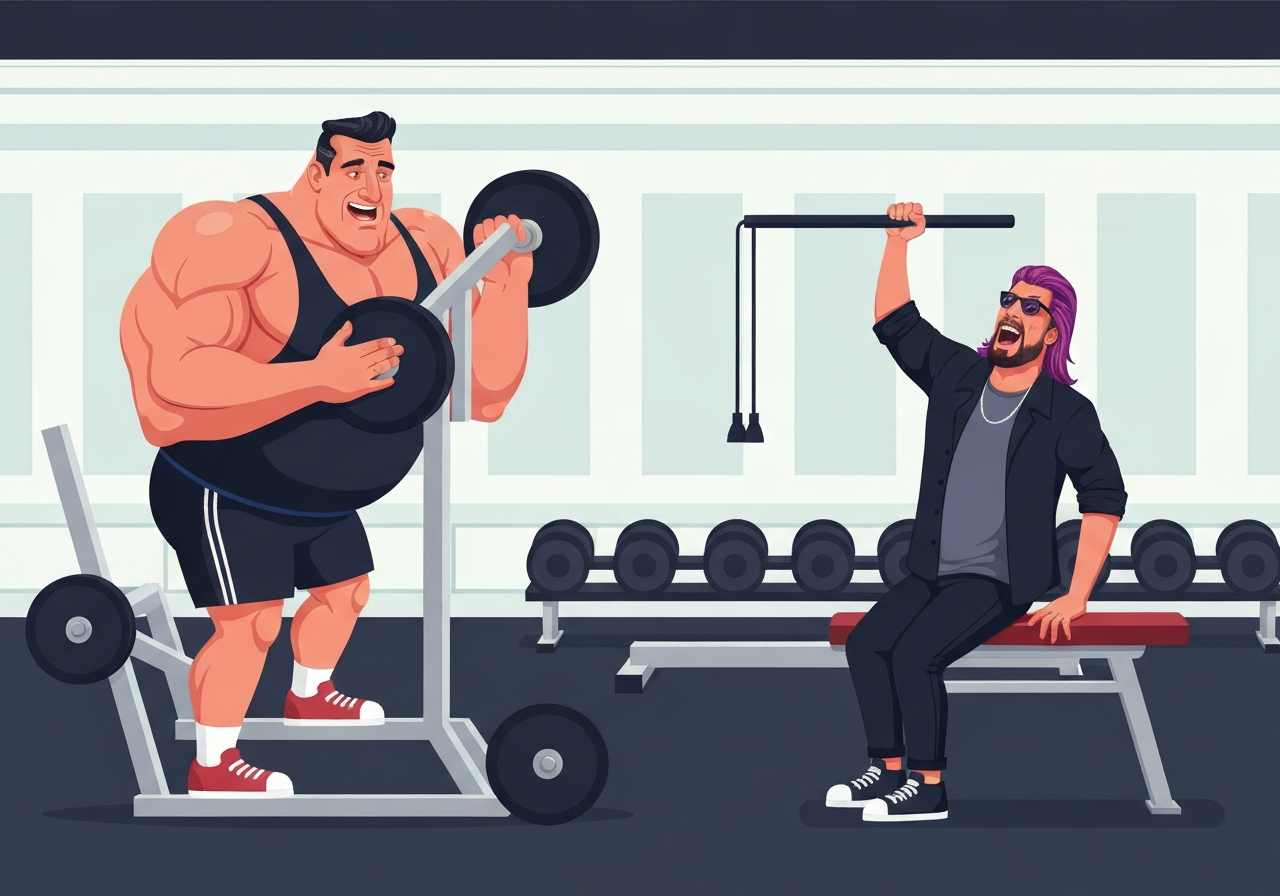
— As reports warned the United States could be in military conflict with Iran “as soon as this weekend,” several senior figures in the Trump administration instead drew public attention with shirtless gym clips, bench-press footage and a video featuring musician Kid Rock. Defense Secretary Pete Hegseth posted a workout clip showing him attempting more than 300 pounds on the bench in Florida; Health Secretary Robert F. Kennedy Jr. shared a separate shirtless clip filmed in casual settings. The juxtaposition of potential military escalation and viral, masculine-themed social media activity prompted sharp public reaction and media scrutiny.
Key Takeaways
- On Feb. 20, 2026, coverage noted rising talk of possible U.S.-Iran conflict occurring “as soon as this weekend,” while senior officials posted gym and leisure videos online.
- Defense Secretary Pete Hegseth published footage from Florida showing a bench-press attempt of over 300 pounds and instructing his spotter; the clip generated mixed social-media responses, including comments like “Bro, go do your job.”
- Health Secretary Robert F. Kennedy Jr. released a shirtless video in which he wore jeans in a hot tub, drank whole milk and rode an exercise bike inside a sauna; musician Kid Rock appears in the video as a companion.
- Public reaction split between admiration of physical feats (a commenter noted “Benching 315 is really impressive”) and criticism that such posts distract from policy responsibilities amid high-stakes foreign policy developments.
- These posts illustrate a pattern of senior officials using informal visual media to shape personal brands while occupying policymaking roles with consequential duties.
Background
The social-media clips arrived against a tense foreign-policy backdrop: news outlets and officials had raised the possibility of military action involving Iran within days, heightening public attention on national security leadership. Senior cabinet members routinely balance public-facing communications with operational responsibilities, but the visibility of athletic and leisure content from top officials has become more frequent in recent years. That trend intersects with a political culture that prizes performative masculinity and direct-to-audience messaging, especially through short-form video platforms. Historically, high-profile personal media appearances by officials have drawn scrutiny when timed near major diplomatic or military events, creating questions about priorities and signaling.
Defenders of the posts argue informal videos humanize officeholders and can build rapport with specific constituencies; critics counter that optics matter when lives and policy are on the line. The figures involved — Hegseth, a cabinet-level Defense official, and RFK Jr., the Health Secretary — hold portfolios where decisions can have broad public impact, from force posture overseas to vaccine and public-health messaging at home. Meanwhile, the involvement of a celebrity such as Kid Rock adds a cultural and partisan dimension that amplifies visibility beyond policy circles. The resulting coverage mixes politics, personality, and national-security concerns in a single public debate.
Main Event
The most widely shared clip showed Defense Secretary Pete Hegseth at a Florida gym attempting a heavy bench press. In the video he gave short instructions to his teenage spotter and then completed the lift before re-racking the bar. The recording was posted publicly and quickly circulated across social platforms, where it drew both applause for the raw lift and criticism that the secretary was broadcasting leisure activity at a fraught moment for national security. One widely viewed comment read, “Bro, go do your job,” reflecting public frustration; another praised the weight lifted, saying “Benching 315 is really impressive.”
Separately, Health Secretary Robert F. Kennedy Jr. posted a shirtless video in which he appears wearing jeans in a hot tub, drinks whole milk on camera, and rides an exercise bike inside a sauna. The video explicitly featured musician Kid Rock in the same frame, amplifying its pop-cultural resonance. Kennedy’s post was framed as personal content but intersected with his official role overseeing public-health policy, prompting debate about professional boundaries and messaging norms for cabinet officials. Both posts were distributed through social platforms rather than formal White House channels, a tactical choice that affects how they are received and interpreted.
Media outlets and commentators noted the contrast between these informal displays and the gravity of international developments discussed by national-security officials. Reporters asked whether such footage distracted from or complemented messaging about readiness and resolve. The posts prompted statements and commentary across partisan lines, with some allies praising the displays as relatable and critics emphasizing the importance of focus and seriousness during a potential conflict window.
Analysis & Implications
These social-media moments operate as political theater as much as personal sharing. When senior officials post informal or provocative content, they control an immediate narrative about toughness or authenticity that traditional press releases cannot replicate. That can strengthen bond with certain voter blocs while alienating others, especially when policy outcomes are uncertain or sensitive. In the current context, visuals of physical competence are being read as symbolic claims about leadership under pressure, even though physical displays do not substitute for policy expertise or operational command.
The timing matters: presenting a casual or jocular public image while discussions of military options are public can undermine public confidence in the seriousness with which leaders approach grave decisions. For the Defense Department in particular, optics about readiness, focus and professionalism carry operational weight because adversaries and allies alike observe and interpret U.S. signals. Even if the clips were intended primarily for domestic audiences, they become part of an international information environment.
There is also a governance question about the boundary between personal brand-building and cabinet-level responsibility. Cabinet members have increasingly used social platforms to bypass traditional media filters; that trend reshapes accountability mechanisms because informal posts can be distributed widely before reporters or oversight bodies can contextualize them. The consequence is a faster, noisier public square where policy and persona collide — complicating both communication strategies and public trust in institutions.
Comparison & Data
| Person | Setting | Visible Action |
|---|---|---|
| Pete Hegseth | Florida gym | Bench press attempt of over 300 lb; brief on-camera instructions |
| Robert F. Kennedy Jr. | Informal video (hot tub/sauna) | Shirtless; wearing jeans in hot tub, drinking whole milk, riding exercise bike in sauna |
| Kid Rock | Appears in RFK Jr. video | Present as companion/supervisor in casual footage |
The table above summarizes the core visible elements of the clips that circulated publicly. While these items are concrete, their interpretation varies: supporters see relatability and toughness, while critics view them as distraction. Absent additional data on intent or communication strategy, the most reliable inference is that these videos were produced for broad public consumption, not as formal policy statements. That distinction shapes how they should be evaluated by journalists, oversight bodies and the public.
Reactions & Quotes
“Gotta keep the butt down.”
Pete Hegseth (Defense Secretary), on-camera instruction
“Don’t touch it!”
Pete Hegseth (Defense Secretary), addressing his spotter in the clip
“Bro, go do your job.”
Social-media comment reacting to Hegseth’s video
Public responses ranged from amusement to anger: some users focused narrowly on physical achievement while others rebuked the officials for perceived inattention to urgent policy matters. Comment threads included both praise for athleticism and calls for officials to prioritize formal duties, demonstrating the polarized reception of such content.
Unconfirmed
- Whether the timing of the videos was coordinated to distract from rising tensions with Iran remains unconfirmed and has not been established by documentary evidence.
- Any direct operational impact of these posts on military planning or diplomatic negotiations is not documented and therefore unverified.
Bottom Line
The week’s viral clips illustrate a broader shift in how high-level officials communicate: informal, physical and celebrity-linked content can dominate attention even when stakes are high. Those visuals shape perceptions of competence and priorities in ways that traditional briefings do not, and they can complicate the public’s ability to distinguish stylistic signaling from substantive policy action.
Going forward, observers should watch for whether such posts are accompanied by formal statements, transparent decision-making timelines and clear operational communications. In the absence of that context, social-media displays will remain potent optics that can distract from — or be interpreted as a substitute for — the sober work of governance during critical moments.