
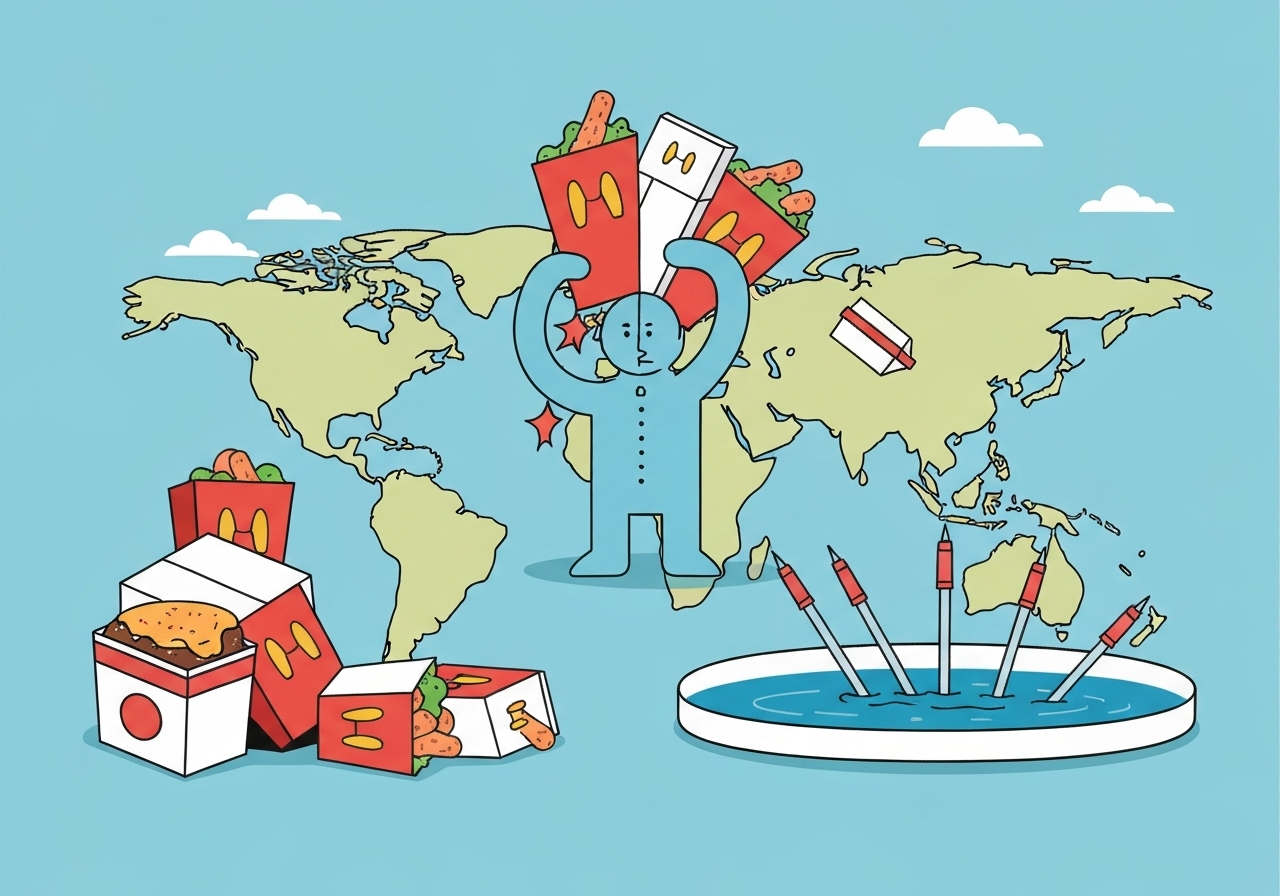
The World Health Organization has warned that fewer than one in ten people who could benefit from GLP-1 obesity injections such as Wegovy currently have access, releasing its first guidance on the drugs as obesity rates surge globally. WHO says more than 1 billion people were living with obesity in 2024 and projects that figure could top 2 billion by 2030 if trends continue. The agency added GLP-1 therapies to its Model List of Essential Medicines and urged countries and manufacturers to act on cost, production and supply-chain constraints. WHO director‑general Tedros Adhanom Ghebreyesus emphasised the need for comprehensive, long‑term care alongside medication to reduce obesity harms.
Key takeaways
- Less than 10% access: WHO estimates current global production could cover about 100 million people, under one‑tenth of those judged to need GLP‑1 therapies.
- Scale of the crisis: Over 1 billion people were obese in 2024; WHO projects more than 2 billion by 2030 without stronger interventions.
- Essential medicines listing: WHO has added GLP‑1 drugs such as semaglutide to its Model List of Essential Medicines to signal clinical importance.
- Patent timeline: Semaglutide patents are due to expire in several countries in 2026, creating opportunities for lower‑cost generic production.
- Access barriers: High prices, limited manufacturing capacity and supply‑chain bottlenecks are cited as major obstacles to equitable availability.
- Clinical guidance: WHO recommends GLP‑1s be prescribed with diet, physical activity and long‑term support because weight is often regained after stopping medication.
- Safety concerns: Regulators caution against unregulated sourcing; black‑market injections and non‑medical administration pose health risks.
Background
Obesity prevalence has risen worldwide over recent decades, driven by complex mixes of diet, urbanisation, economic change and social determinants of health. Public health strategies historically blended prevention—food environment regulation, physical activity promotion—and clinical management focused on lifestyle advice; pharmacological options were more limited until the emergence of GLP‑1 therapies. Drug makers such as Novo Nordisk developed semaglutide‑based products (Wegovy) that have shown substantial average weight loss in trials, shifting clinical discussion toward medical treatment as part of comprehensive care.
WHO’s decision to place GLP‑1 treatments on the essential medicines list reflects an evolving consensus that obesity is a chronic, treatable disease rather than solely a lifestyle choice. Still, differences in national healthcare budgets and procurement processes mean uptake varies: some health systems subsidise these drugs, others restrict use to specialised clinics, and many lower‑income countries have little or no formal access. Industry production capacity has not yet scaled to meet potential global demand, and supply‑chain constraints—from active pharmaceutical ingredient availability to injection device supply—remain material barriers.
Main event
The WHO published its first formal guidance on GLP‑1 receptor agonists, warning that current manufacturing could meet only a fraction of global need and calling for policy actions to improve affordability and distribution. The guidance urges countries to integrate these medicines into broader public‑health strategies while also promoting prevention measures to reduce future incidence. WHO highlighted voluntary licensing as one pathway for expanding production: under such agreements, patent holders permit other manufacturers to produce lower‑cost, non‑brand versions in designated markets.
Director‑general Tedros framed the guidance as part of a larger conceptual shift. He said the guidance recognises obesity as a chronic disease requiring lifelong, comprehensive care and that medication can help millions reduce harms linked to obesity, including diabetes and cardiovascular disease. WHO stressed that drugs should be accompanied by diet and exercise advice and ongoing support because stopping treatment often leads to weight regain within a year for many patients.
The agency also pointed to immediate operational risks: current production models, pricing structures and distribution channels will likely generate inequitable access, with wealthier nations and private markets absorbing the limited supply. WHO recommended that governments consider procurement strategies, price negotiation, and regulatory measures to reduce leakage to unregulated sellers, who are already offering injections through informal channels such as beauty salons and social media.
Analysis & implications
Economically, the imbalance between demand and production presents multiple challenges. High unit prices and constrained supply will create strong market incentives for private sales and cross‑border purchases, which can further limit public procurement capacity in low‑ and middle‑income countries. If semaglutide patents lapse in several countries in 2026, the entry of generic manufacturers could lower prices, but scale‑up will require technology transfer, raw ingredient availability and regulatory harmonisation—processes that typically take years.
From a public‑health perspective, GLP‑1 therapies offer measurable clinical benefits for many individuals, including weight reduction and related risk declines for diabetes and cardiovascular disease. However, reliance on medication without systemic prevention policies risks shifting focus away from upstream determinants—food systems, urban planning, socioeconomic inequality—that drive population‑level obesity. WHO’s guidance attempts to balance treatment access with prevention but implementing both tracks will demand political will and sustained funding.
International equity is the central policy question. Wealthy countries and private markets are likely to monopolise initial supplies unless mechanisms such as voluntary licences, pooled procurement or tiered pricing are widely adopted. Even with a generic market, countries must build distribution and prescribing frameworks, train clinicians for long‑term care models and strengthen monitoring for safety and misuse. The possibility of a persistent black market underscores the need for accessible, regulated supply to protect patients.
Comparison & data
| Metric | 2024 / Current | Projection or note |
|---|---|---|
| People living with obesity | 1.0+ billion (2024) | Projected >2.0 billion by 2030 without additional action |
| Deaths associated with obesity | 3.7 million (2024) | WHO estimate for 2024 attributable mortality |
| Potential coverage by current GLP‑1 production | ~100 million people | Under 10% of those who could benefit |
| Patent expiry (semaglutide) | Due from 2026 in several countries | May enable generic production in select markets |
The table highlights the mismatch between the burden of disease and current pharmaceutical supply. A production capacity that serves roughly 100 million people will leave most of the global population without access, amplifying inequities unless policy interventions accelerate manufacturing and lower prices. Historical precedents—HIV antiretroviral scale‑up in the 2000s and direct‑acting antivirals for hepatitis C—show that licensing, pooled buying and multilateral pressure can reduce cost and expand availability, but such efforts require coordination and time.
Reactions & quotes
WHO leadership framed the guidance as both a clinical and equity imperative, stressing combination care and the need to avoid leaving lower‑income populations behind.
“Our new guidance recognises that obesity is a chronic disease that can be treated with comprehensive and lifelong care.”
Tedros Adhanom Ghebreyesus, WHO director‑general
The organisation also highlighted access as a primary concern, urging policy measures to prevent unequal uptake.
“Our greatest concern is equitable access.”
Tedros Adhanom Ghebreyesus, WHO director‑general
Public and clinical stakeholders are watching whether companies adopt voluntary licences and whether health systems prioritise prevention alongside scaling drug access. Patient groups and clinicians have welcomed effective treatments but warned that without support services the benefits may be transient.
Unconfirmed
- Exact global production projections vary by scenario; the WHO figure (~100 million coverage) is an estimate based on current capacity and may change with rapid scale‑up.
- The specific timeline and geographic scope of patent expiries for semaglutide differ by jurisdiction; expiry in some countries in 2026 does not immediately guarantee affordable supply everywhere.
Bottom line
WHO’s guidance marks a turning point in framing obesity as a treatable chronic disease and urges simultaneous expansion of access to GLP‑1 therapies and stronger prevention policies. Under current manufacturing and pricing models, however, most people who could benefit will not receive these treatments, risking a two‑tier system where wealthier patients access medications and others do not.
Policymakers and manufacturers face a narrow window to use tools such as voluntary licences, pooled procurement and targeted subsidies to expand affordable supply, while health systems must plan for long‑term clinical support and monitoring. Ultimately, combining prevention, equitable access to effective therapies and strengthened primary care will determine whether these drugs reduce the global burden of obesity or primarily reshape treatment options for a fraction of those affected.