
Lead
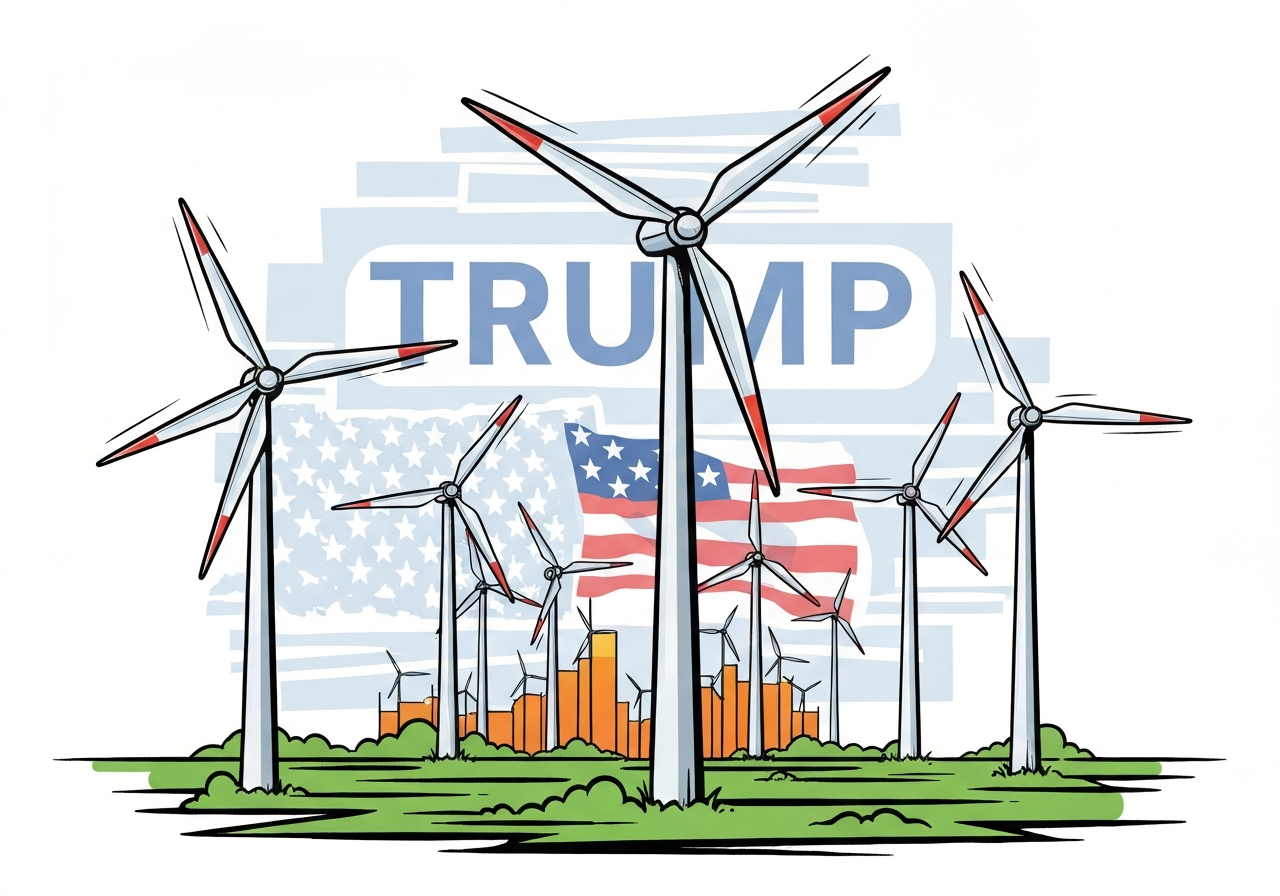
On Monday the U.S. Department of the Interior announced a $928 million agreement with French energy company TotalEnergies to swap previously held offshore-wind lease commitments for investments in domestic fossil-fuel projects. The deal includes an Interior pledge to reimburse TotalEnergies up to the value of those lease payments once the company meets specified commitments and a pledge by the company to refrain from new U.S. offshore-wind developments, a move the department framed as protecting energy affordability and security. Experts told ABC News the action is part of a broader Trump administration effort to slow renewables, but they say market and technical trends mean wind power — already producing a record share of U.S. electricity in 2025 — is likely to continue growing.
Key Takeaways
- The Interior-TotalEnergies agreement is for $928 million in redirected investment and includes a government reimbursement mechanism tied to company commitments.
- Offshore wind projects have been the most directly affected by recent federal actions, including a Jan. 20, 2025 executive order withdrawing areas of the outer continental shelf from leasing.
- In 2025 wind and solar supplied a record 17% of U.S. electricity; combined net generation from wind and solar reached about 760,000 GWh, with wind producing roughly 464,000 GWh (a 3% rise over 2024), per the EIA.
- FERC reported wind and solar accounted for nearly 90% of new U.S. electricity capacity additions in 2025, a trend expected to continue into 2026.
- Federal litigation and permit freezes have delayed East Coast projects, increasing costs and investor uncertainty despite court rulings that allowed work to resume on several projects.
- Experts emphasize that power purchase agreements and falling technology costs keep wind projects commercially attractive, not solely environmentally motivated goals.
Background
The federal government has stronger regulatory control over offshore than onshore wind because most offshore projects sit in federal waters. That jurisdictional distinction makes offshore wind particularly vulnerable to executive action and Interior Department decisions. In December 2025 the Interior froze large East Coast projects citing national-security concerns; federal courts later permitted several projects to continue, finding the government had not established an imminent risk sufficient to justify shutdowns.
President Trump has repeatedly criticized wind energy since his first term, and on Jan. 20, 2025 he signed an executive order withdrawing offshore-wind leasing areas. The administration has also taken steps across agencies — including DOJ litigation over state EV mandates, a DOD instruction favoring purchases from coal-fired plants, and an EPA move altering the longstanding ‘endangerment finding’ used in greenhouse-gas regulation — that collectively signal a shift in federal energy policy.
Private and public actors are working from different incentives. Offshore developers have relied on long-term power purchase agreements (PPAs) and lease investments to justify construction and financing. At the same time, policy uncertainty, earlier phase-outs of some renewable tax incentives and regulatory changes have raised the up-front cost and risk profile of large projects.
Main Event
The Interior Department described its arrangement with TotalEnergies as a way to lower costs for consumers and strengthen national energy security, while TotalEnergies agreed to redirect $928 million to U.S.-based fossil-fuel development in place of pursuing the previously leased East Coast offshore-wind projects. Under the deal, the company will be eligible for reimbursement up to the lease payments’ value after it meets the commitment milestones the government set.
Interior Secretary Doug Burgum framed the agreement as aligned with the administration’s priority of ensuring affordable, reliable baseload energy, calling offshore wind costly and subsidy-dependent in his statement. Critics, including state officials and renewable-energy advocates, called the deal a setback for coastal states and for the domestic offshore-wind industry’s development path.
The freeze and the TotalEnergies arrangement come amid litigation and court rulings that have both constrained and restored movement on specific projects. For example, projects such as Empire Wind (off Long Island) and Coastal Virginia Offshore Wind have faced stops and starts; Coastal Virginia has recently commenced deliveries to Virginia’s grid, while Empire Wind remains subject to legal and permitting processes.
Developers and suppliers say the pauses increased construction costs and investor risk, raising the ultimate cost of electricity in some locations. Even where projects resumed, the interruptions altered supply-chain schedules for specialized vessels, cable laying and turbine installation crews — factors that extend lead times and inflate budgets.
Analysis & Implications
Market fundamentals and technology trends point to continued growth for wind despite policy headwinds. Improvements in turbine size and efficiency, falling levelized costs, and investor appetite for long-term contracts mean many projects remain economically viable. Power purchase agreements lock in revenue streams that lower financing costs and can compress wholesale electricity prices when wind is generating.
However, federal policy shifts that target offshore wind create distinct near-term risks: permitting uncertainty, potential additional compliance requirements tied to national-security reviews, and a chill on upstream investment in U.S. manufacturing and port facilities. These effects can raise project capital costs, slowing deployment and raising consumer bills in the medium term.
On a global scale the EIA projects renewable capacity to expand significantly by 2030; U.S. growth in wind and solar is consistent with that trend. Even so, the balance between rapid deployment and stable policy frameworks matters: countries and regions that combine supportive policy, grid upgrades and supply-chain investment tend to capture the most capacity additions and related jobs.
The TotalEnergies deal illustrates a broader trade-off policymakers face: near-term emphasis on domestic fossil fuels to address perceived reliability or security gaps versus longer-term decarbonization and the economic opportunities tied to renewable build-out. The ultimate trajectory will hinge on project-level economics, litigation outcomes and whether federal and state policy signals stabilize.
Comparison & Data
| Metric | 2005 | 2025 |
|---|---|---|
| Share of U.S. electricity from wind & solar | Less than 1% | 17% |
| Combined net generation (wind + solar) | — | ≈760,000 GWh |
| Wind generation | — | ≈464,000 GWh (up 3% vs 2024) |
| Share of new U.S. capacity additions (2025) | — | Nearly 90% wind & solar |
These figures show the rapid scale-up of wind and solar over two decades. Falling technology costs and favorable financing have driven most new capacity additions, though policy changes and permitting delays can meaningfully alter deployment timelines and costs for multi-billion-dollar offshore projects.
Reactions & Quotes
Officials, state leaders and energy analysts offered sharply different takes on the Interior-TotalEnergies arrangement and on the administration’s broader stance toward renewables.
“This agreement is yet another win for President Trump’s commitment to affordable and reliable energy for all Americans.”
Doug Burgum, U.S. Secretary of the Interior (official statement)
Interior officials emphasized cost and security rationales; critics pushed back that the move undermines state energy plans and emerging domestic supply chains.
“The actions of the administration have had very little impact on the global increase in production of renewable energy.”
Erin Baker, University of Massachusetts Amherst (energy expert)
Academics and industry analysts highlighted that global market drivers and commercial contracts keep pushing renewables forward despite political headwinds.
“This is a terrible deal for the people of North Carolina and our country.”
Josh Stein, Governor of North Carolina (social media post)
State leaders in affected coastal states stressed local economic and environmental consequences, including lost lease revenue, jobs and future port investments tied to offshore build-out.
Unconfirmed
- That the Interior-TotalEnergies deal will lower national energy bills over the short term; early analyses from independent grid and market modelers are not yet available.
- Allegations that specific offshore-wind sites present imminent, demonstrable national-security risks sufficient to justify lease cancellations; courts have found insufficient evidence in at least one case so far.
Bottom Line
The Interior-TotalEnergies agreement marks a significant policy moment: it re-routes nearly $1 billion in planned offshore-wind lease-related investment into domestic fossil projects and signals an administration preference for bolstering traditional baseload sources. In the short term the deal and related federal actions increase uncertainty for East Coast offshore developers and suppliers, raising costs and delaying work that courts in several cases later allowed to continue.
Yet commercial drivers — falling costs, long-term contracts and record deployment in 2025 — suggest wind and solar growth will continue. Policymakers, investors and state utilities should watch litigation outcomes, national-security review processes and financing conditions closely; those factors will determine whether the pace of U.S. offshore-wind deployment accelerates, stalls or shifts toward different ownership and financing models.
Sources
- ABC News — news report (journalism)
- U.S. Department of the Interior — official statements & press releases (federal agency)
- U.S. Energy Information Administration (EIA) — electricity generation and capacity data (federal agency)
- Federal Energy Regulatory Commission (FERC) — capacity-addition data (federal agency)
- TotalEnergies — corporate press & investor information (company)