
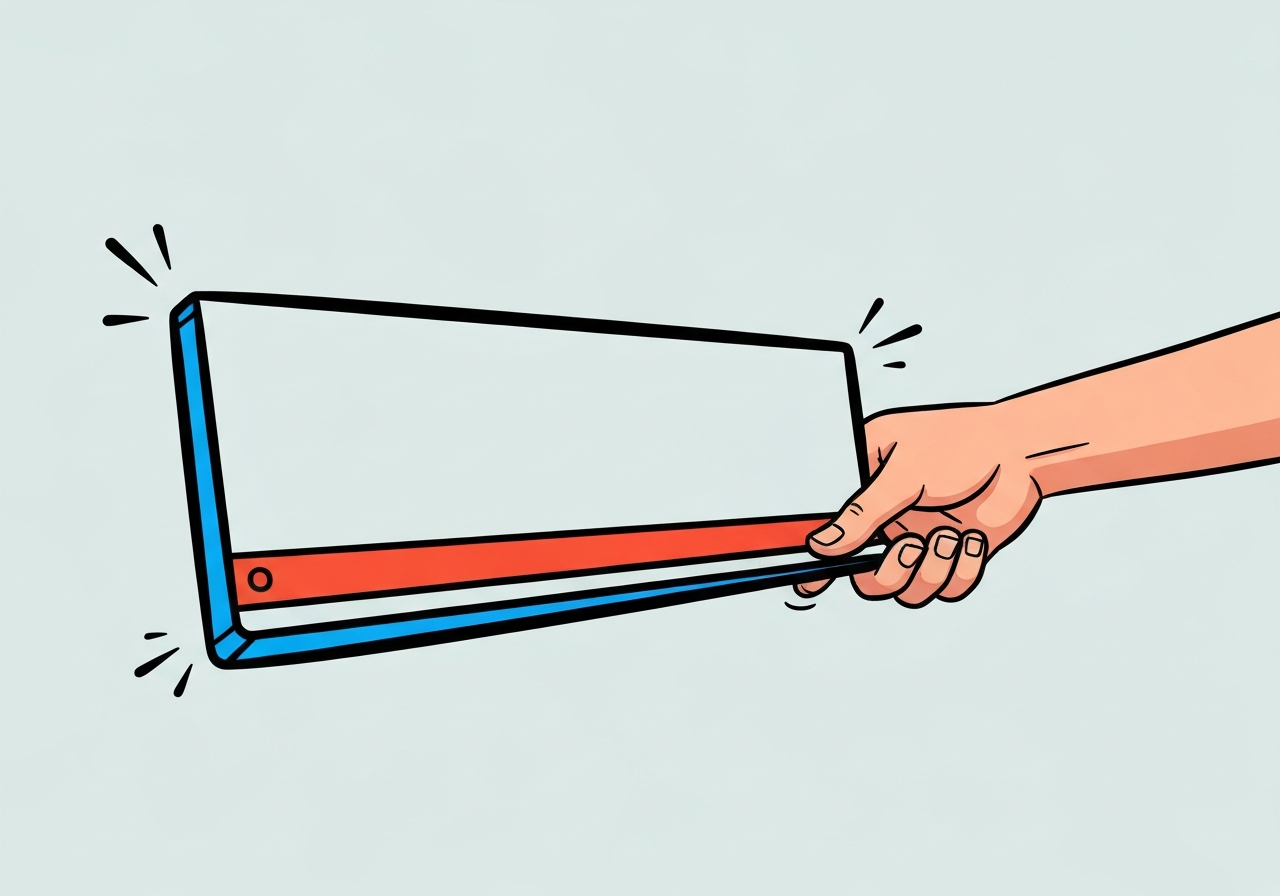
Microsoft announced that Windows 11 will regain a movable taskbar this year, letting users reposition it to the top or sides of the screen. The change, confirmed by Windows lead Pavan Davuluri, will appear first for Windows Insiders in the coming weeks and reach the general Windows 11 population later in the year. The update follows years of criticism about Windows 11’s taskbar limitations and broader concerns over performance and reliability. Microsoft is also testing a smaller taskbar option to give users more personalization choices.
Key takeaways
- Microsoft will reintroduce taskbar repositioning to Windows 11, allowing placement at the top or sides; this is targeted for Windows Insiders in the coming weeks.
- The wider rollout to all Windows 11 users is planned later this year, with a separate smaller-taskbar option arriving as an opt-in choice.
- Windows 11 removed movable taskbar functionality at its 2021 launch after the taskbar was reworked for Windows 10X.
- Users have repeatedly requested features absent from the initial Windows 11 taskbar, including multiple-monitor clock display and small icon options.
- Microsoft has been restoring several Windows 10 taskbar features and testing an agenda view in the notification center as part of broader UI refinements.
- Pavan Davuluri framed repositioning as a top user request, signaling Microsoft is responding directly to Insider feedback.
Background
For decades Windows supported moving the taskbar to any screen edge; that capability was removed when Windows 11 shipped in October 2021. The company rebuilt the taskbar with code adapted from Windows 10X, a project originally aimed at dual-screen devices that was folded into Windows 11. That decision simplified the taskbar codebase but eliminated several longstanding features users relied on.
The absence of certain taskbar functions — for example, showing the time and date on multiple monitors and using smaller icons — provoked repeated user complaints and drove active feedback channels inside the Windows Insider program. At the same time, Windows 11 has faced scrutiny over performance and reliability, prompting Microsoft to prioritize user-facing fixes and incremental reversions of removed features.
Main event
Microsoft’s announcement centers on the return of taskbar repositioning. According to the company, Insider builds will receive the functionality first so engineers can monitor compatibility across configurations and gather user feedback. The repositioning will support moving the bar to the top edge or either side of the screen; details about docking behavior on multi-monitor setups were not exhaustively enumerated in the initial statement.
The company also noted a smaller taskbar variant will be offered later in the year. That option is described as an alternative layout for users who prefer a compact interface, separate from the default taskbar experience. Microsoft presented these changes as part of a broader effort to make the shell more customizable in response to user requests.
Tom Warren, a senior editor who has covered Microsoft for over 20 years, documented how the Windows 11 taskbar lost features at launch and has tracked Microsoft’s stepwise restorations. His reporting highlights user-facing omissions and frames the repositioning as a correction of earlier design trade-offs tied to Windows 10X code reuse.
Analysis & implications
Restoring taskbar repositioning carries immediate user-experience benefits: it returns a familiar customization used by power users and long-time Windows customers. For enterprises and workflows that rely on vertical screen real estate or top-aligned toolbars, the change reduces friction and may improve productivity on wide or ultrawide displays. It also helps Microsoft address perception issues around Windows 11’s polish and responsiveness.
From a product-strategy perspective, the move signals a willingness to reverse or soften design choices that proved unpopular. That is significant because it shows Microsoft balancing its forward-looking design goals with the practical needs of existing customers. The staged rollout via the Insider channel gives Microsoft a controlled environment to test edge cases, telemetry, and compatibility before a broad release.
However, technical constraints remain. Because the taskbar was rebuilt for Windows 10X, reintroducing full legacy behavior may require additional engineering to maintain stability across drivers, third-party shell utilities, and multi-monitor setups. The smaller taskbar option also raises questions about accessibility, discoverability, and whether shortcuts or context menus will behave identically to the default layout.
Comparison & data
| Feature | Windows 10 (pre-2021) | Windows 11 at launch | Windows 11 (announced changes) |
|---|---|---|---|
| Movable taskbar | Yes | No | Yes (top/sides, Insider preview) |
| Clock on multiple monitors | Yes | No | Unspecified (user requests) |
| Small icon option | Yes | No | Part of ongoing restorations |
| Agenda in notification center | Yes (Windows 10) | No | Testing in notification center |
The table shows a clear pattern: several taskbar conveniences present in Windows 10 were omitted in Windows 11 but are now being selectively restored. This partial restoration approach reduces near-term risk but requires careful QA to ensure parity across hardware and language/localization settings.
Reactions & quotes
Microsoft framed the change as a direct response to user feedback, emphasizing personalization and clarity of intent before the feature reaches a broad audience.
“Repositioning the taskbar is one of the top asks we’ve heard from you.”
Pavan Davuluri, Windows lead (Microsoft)
Industry coverage and veteran Windows reporters framed the announcement as a corrective step that restores long-requested behavior after the 2021 redesign.
“I initially hated the new Windows 11 taskbar because it lacked functionality like displaying the time and date on multiple monitors.”
Tom Warren, senior editor (The Verge)
Unconfirmed
- Exact timeline for the global rollout beyond “later this year” is not yet specified and may change based on Insider feedback.
- Whether the restored taskbar will fully replicate every legacy behavior (for example, third-party taskbar utilities compatibility) has not been confirmed.
Bottom line
Microsoft’s decision to return a movable taskbar to Windows 11 is a practical response to sustained user feedback and a sign the company is prioritizing familiarity and customization. The staged Insider preview reduces the risk of widespread regressions while allowing Microsoft to validate behavior across diverse hardware.
For users, the change restores a useful customization that many relied on for years. For Microsoft, it is an acknowledgment that some UX decisions made during the Windows 11 transition need adjustment; the follow-through and quality of the rollout will determine whether the update measurably improves perception of Windows 11’s polish and reliability.