
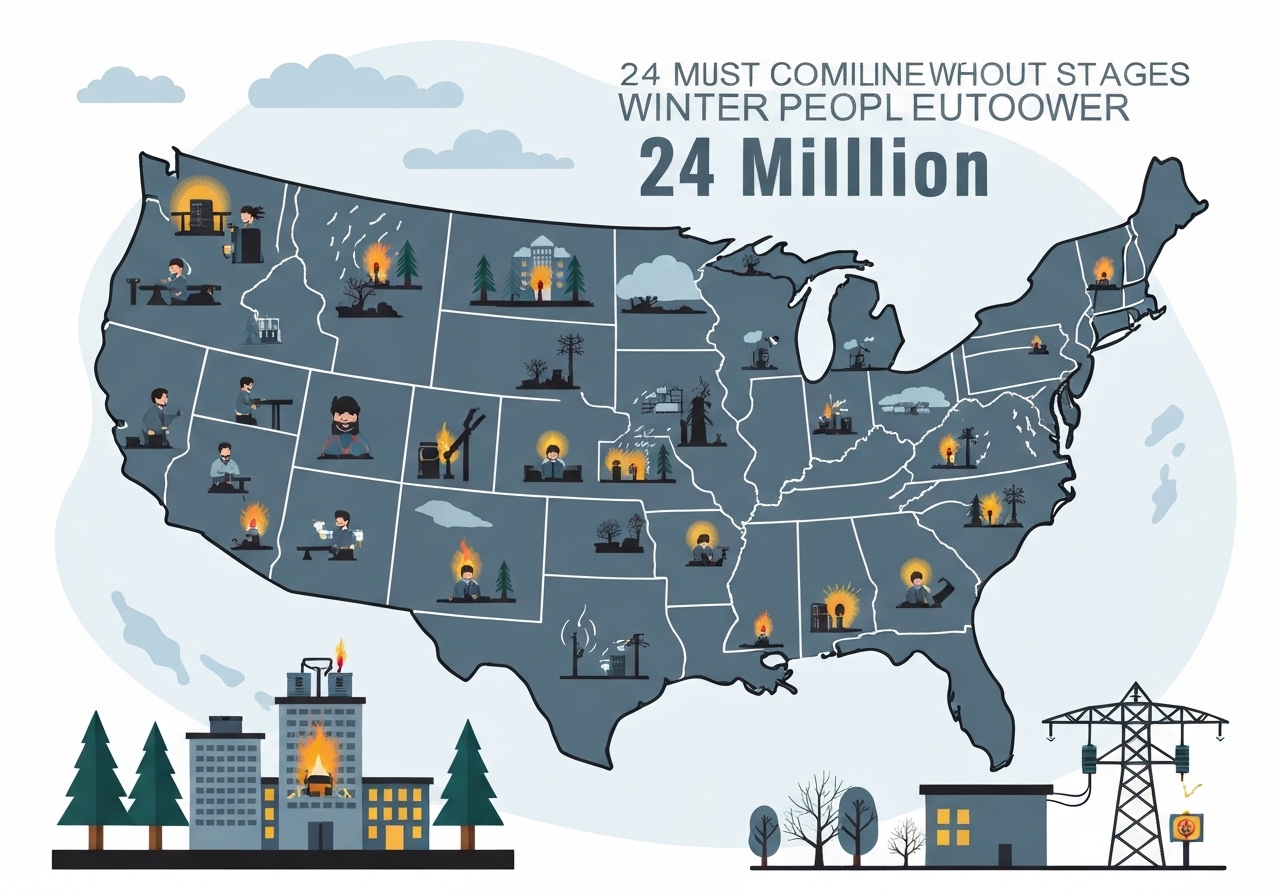
A major winter storm swept across a broad swath of the United States this weekend, knocking out power to about 1,000,000 customers and prompting more than 16,000 flight cancellations. Authorities say roughly 245 million residents across 40 states—from New Mexico and Texas to parts of New England and the South—will feel some effect from the system. At least 24 states and Washington, D.C., have issued emergency declarations to mobilize resources and streamline response. The National Weather Service warned that bitter cold behind the system will slow recovery and keep travel hazardous into early next week.
Key takeaways
- Power outages: Approximately 1,000,000 customers reported without electricity across multiple utility service areas at peak impact.
- Air travel disruption: More than 16,000 flights were canceled nationwide during the storm period, affecting major hubs and regional carriers.
- Population affected: An estimated 245 million people across 40 states are in the storm’s projected path.
- Emergency declarations: 24 states plus Washington, D.C., issued emergency or disaster declarations to speed resource deployment.
- Hazards: Widespread heavy snow, sleet, freezing rain and subfreezing temperatures are driving road closures and school shutdowns.
- Duration and recovery: Officials expect cleanup and restoration to be prolonged by sustained cold and recurring disruptions into early next week.
Background
The storm developed as a large winter system moved across the southern Plains before tracking northeast, tapping cold Arctic air and Gulf moisture to produce a mix of heavy snow, sleet and freezing rain. Such hybrid winter systems can strain power grids because ice and heavy, wet snow accumulate on lines and trees, increasing the likelihood of outages. In recent winters, similar multi-hazard events have produced widespread outages and long restoration timelines, prompting states to preemptively activate emergency operations centers.
Emergency declarations are a common early response tool that allow governors and local officials to access additional personnel, equipment and federal support more quickly. Utilities typically stage crews and mutual aid agreements ahead of expected damage, but the geographic breadth—stretching from the southern Plains to New England—complicates resource allocation. Transportation agencies and schools often announce preemptive cancellations when forecasts show hazardous travel or temperatures that endanger exposed workers and students.
Main event
The storm’s immediate impacts included heavy accumulations of snow in northern corridors and a wide swath of sleet and freezing rain through central and southern states. Icy conditions were reported on major interstates, prompting closures and travel advisories in multiple jurisdictions. Airport operations at several large hubs experienced cascading cancellations as crews struggled to de-ice aircraft and clear runways amid ongoing precipitation.
Utilities reported outages concentrated where ice-laden branches fell on transmission and distribution lines. Repair teams faced safety hazards from downed power lines and limited daylight, with restoration timelines stretched where access was impeded by blocked roads. School districts and local governments announced closures or remote operations to reduce exposure and free emergency resources for response.
State emergency declarations—issued in Alabama, Arkansas, Connecticut, Delaware, Georgia, Indiana, Kansas, Kentucky, Louisiana, Maryland, Mississippi, Missouri, Nebraska, New Jersey, New Mexico, New York, North Carolina, Ohio, Pennsylvania, South Carolina, Tennessee, Texas, Virginia and West Virginia—aimed to unlock state funding, authorize mobilization of the National Guard in some places, and expedite interagency coordination. Washington, D.C., declared an emergency as well to coordinate local services and public messaging.
Analysis & Implications
The scale of outages and cancellations reflects how an expansive storm footprint multiplies operational stress: airports, road crews and utilities must cover far more territory than under a localized event. Restoring service to 1,000,000 customers requires not only line crews but also safe road access, staging locations and coordinated mutual aid—resources that are in higher demand when many states are affected simultaneously.
Economically, large-scale travel disruption and business closures can produce measurable short-term losses in retail and service sectors, and extended outages raise the risk of spoilage for perishable goods and disruption to medical facilities. Critical facilities such as hospitals and shelters generally have backup power, but prolonged outages increase pressure on fuel supplies and logistics for generator refueling.
Politically and administratively, governors’ emergency declarations enable quicker deployment of state assets and can be a precondition for federal assistance. The breadth of the event tests inter-state mutual aid frameworks and may prompt after-action reviews on equipment prepositioning, the adequacy of staffing models for utilities, and the resilience of transportation nodes.
Comparison & data
| Metric | This storm |
|---|---|
| Customers without power | ~1,000,000 |
| Flights canceled | >16,000 |
| People potentially affected | ~245 million across 40 states |
| States with emergency declarations | 24 + Washington, D.C. |
These figures place the event among recent large winter disruptions by geographic reach and multi-modal impact. The >16,000 flight cancellations reflect both immediate weather impacts and knock-on scheduling effects; airlines often cancel flights proactively to avoid stranding aircraft and crews. Power outage totals concentrate where ice accumulation and wind combined to damage infrastructure.
Reactions & quotes
Cold following the storm will impede cleanup and extend hazardous travel conditions into early next week, complicating restoration work and public safety efforts.
National Weather Service (official)
Airports and carriers are coordinating to rebook passengers and prioritize safety; travelers should expect ongoing delays even after precipitation ends.
Airlines/FAA (industry statement)
State emergency declarations allow rapid deployment of resources, streamline requests for federal support and help local responders focus on critical needs first.
State emergency management officials (collective statement)
Unconfirmed
- Exact duration of widespread outages beyond early next week is uncertain and will depend on access conditions and crew availability.
- Comprehensive nationwide economic damage estimates are not yet available and remain preliminary.
- Detailed breakdown of cancellations by carrier and airport is incomplete pending consolidated industry reports.
Bottom line
This storm is notable for its geographic breadth and mix of hazards—heavy snow, freezing rain and extreme cold—that together amplified impacts on power, travel and daily life. The combination of approximately 1,000,000 customers without power, more than 16,000 flight cancellations, and emergency declarations in 24 states underscores the event’s severity and the strain on response systems.
Residents in affected areas should follow official guidance, expect prolonged recovery in colder pockets, and plan for continued disruptions into early next week. Officials and utilities will conduct after-action reviews to identify gaps in preparedness and mutual-aid responses, and those findings will shape readiness for future multi-state winter events.