
Lead
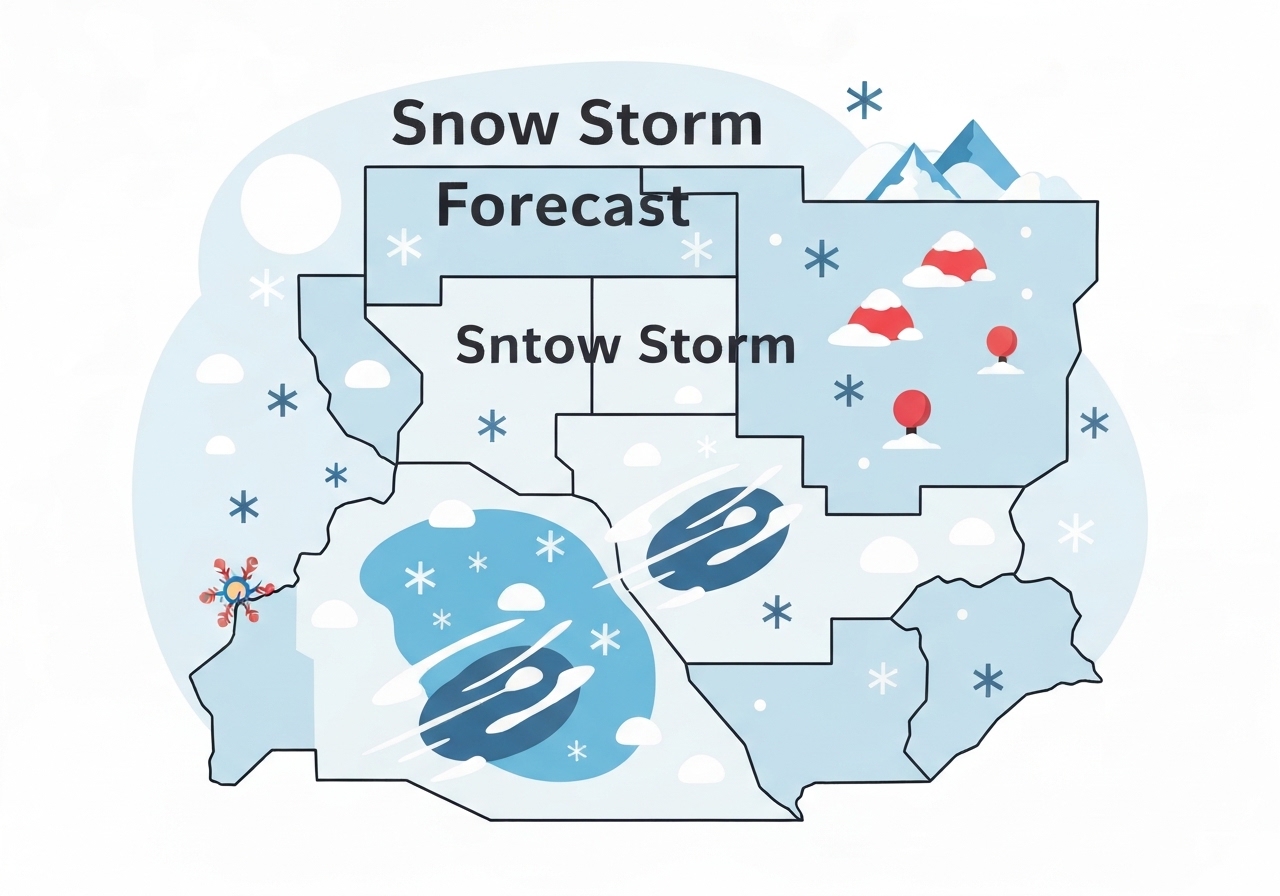
Updated Jan. 24, 2026 — A sprawling winter storm moving from the Southern Plains into the Northeast threatens more than 200 million people with snow, sleet and freezing rain across 35 states. Nineteen states and Washington, D.C., have declared states of emergency and at least nine states have activated National Guard units as officials warn of dangerous travel and infrastructure impacts. Forecast maps released this weekend show central corridors in Kentucky and Virginia could see up to two feet of snow, while major cities including New York City, Boston and Oklahoma City face 12–18 inches. Southern and mid-South regions are also at risk of significant ice accumulations, raising the prospect of widespread outages and hazardous roads.
Key takeaways
- More than 200 million people are under winter-storm threat across 35 states as the system advances from Jan. 24, 2026 into the weekend.
- Nineteen states plus Washington, D.C., declared states of emergency and at least nine states have mobilized National Guard resources.
- FEMA reports logistics hubs stocked with over 7 million meals, more than 3 million liters of water, roughly 650,000 blankets and more than 180 generators.
- Forecasts show central storm zones (parts of Kentucky and Virginia) could get as much as 24 inches of snow between Saturday and Monday, with major cities facing 12–18 inches.
- Ice accumulations up to 1 inch are possible in southern pockets; parts of Texas, Georgia, Arkansas, Mississippi, Alabama and Tennessee could see up to 0.75 inch of ice.
- Over 43 million people are under an extreme cold warning and more than 146 million are covered by cold-weather advisories tied to dangerous wind chills.
- Local capacities are strained: Nashville has 45 snowplows available to clear hundreds of miles of streets, and utility crews are being staged across affected states.
Background
The storm developed over the Southern Plains and is tracking northeastward, tapping cold Arctic air behind it and moisture from the Gulf of Mexico ahead of it. That combination creates a classic winter system with a wide spectrum of precipitation types: heavy snow in the interior, sleet in transition zones and freezing rain across parts of the South and mid-Atlantic. Officials note the geographic breadth of the event is unusual: millions of people in densely populated corridors and rural communities face simultaneous hazards, complicating both travel and emergency response.
State and local executives moved quickly to preposition resources. Governors and state emergency-management agencies issued declarations to free up funding and request federal help; several states also placed National Guard units on standby or activated them for missions including road clearance, shelter operations and utility support. FEMA announced prepositioned supplies to distribution centers in the South and East to respond to immediate humanitarian needs and power-restoration efforts.
Main event
As the system advanced on Saturday, radar and model ensembles showed the heaviest snow bands forming across parts of the Ohio Valley and central Appalachians. Meteorologists warned that pockets in Kentucky and Virginia stood the best chance of accumulating close to two feet of snow between Saturday and Monday, depending on storm track shifts. Major metropolitan areas—New York City, Boston and Oklahoma City—were forecast to pick up 12–18 inches where coastal or urban enhancement occurred.
In the South, a stripe of freezing rain developed ahead of the cold air, coating roads and vehicles in Texas, Alabama and Mississippi. National Weather Service statements stressed that ice can produce more severe infrastructure damage than snow, noting a quarter-inch of ice is often the threshold for significant line and tree damage. Local crews began mutual-aid staging; nearly 200 Florida utility workers were reported in Georgia and South Carolina ready to assist.
Transportation systems faced immediate disruption. State officials repeatedly urged residents to stay off roadways; nevertheless dozens of vehicles slid off slick highways. In Nashville, city transportation officials said only 45 plows were available to treat hundreds of lane-miles, and plowing is ineffective once precipitation turns to sleet or glaze ice. In many rural counties, limited equipment and slower response times raised concern about extended isolation for some communities.
Analysis & implications
Infrastructure vulnerability is the central risk of this event. Ice accumulation—particularly in the southern and lower-elevation zones—threatens distribution lines and tree limbs, increasing the likelihood of sustained outages. FEMA’s prepositioned stocks (over 7 million meals, 3 million liters of water, ~650,000 blankets and 180+ generators) aim to blunt immediate humanitarian needs but restoring long-duration power outages will require coordinated utility crews and, in some cases, additional mutual-aid across states.
The storm’s scale complicates federal and state resource allocation. With 19 states and D.C. under emergency declarations, priority-setting becomes essential: critical infrastructure (hospitals, shelters, wastewater systems) must be supported first. Simultaneous needs across wide geographic areas can stretch specialized teams—like power-line contractors and heavy-equipment operators—raising the prospect of staggered restoration timetables in less-populated counties.
Economically, acute impacts will appear in transportation, retail and local services from canceled flights and road closures. Longer-lasting effects may hit agricultural sectors in the Plains and supply chains that rely on trucked freight if highway networks remain compromised. Insurance and municipal budgets may also experience pressure from emergency response and cleanup costs if tree and infrastructure damage is widespread.
Comparison & data
| Metric | Value (reported) |
|---|---|
| People under winter-storm threat | More than 200 million |
| States under winter threat | 35 states |
| States of emergency | 19 states + Washington, D.C. |
| FEMA prepositioned meals | 7,000,000+ |
| FEMA water (liters) | 3,000,000+ |
| Projected heavy snow (central zones) | Up to 24 inches |
| Ice accumulations (southern pockets) | Up to 1.0 inch (some areas 0.75 in) |
These numbers underline both the geographic reach and the intensity of the system. While many storms produce heavy localized snow, the combination here of extreme cold warnings (over 43 million people), broad cold advisories (more than 146 million) and significant ice potential across southern states elevates the operational complexity for responders.
Reactions & quotes
Officials at the Department of Homeland Security emphasized the unusual scale of the event and the need for coordinated response across jurisdictions.
“This is among the largest multi-state storms we’ve seen in decades, affecting a very large population,”
Department of Homeland Security official
Power-system experts warned that modest ice accretions can rapidly cascade into large outages when lines and vegetation fail.
“When ice exceeds roughly a quarter inch, lines and nearby trees begin to fail, increasing outage risk substantially,”
Electrical engineering professor, Texas A&M University
On the ground, municipal crews described the immediate operational limits when road conditions freeze and equipment is scarce.
“If roads become packed with snow and then ice, temperatures in the single digits make recovery very difficult,”
Nashville Department of Transportation plow operator
Unconfirmed
- Reports of long-term, statewide power outages remain evolving; some local outages are confirmed but system-wide durations are not yet verified.
- Social-media accounts claim major interstate closures across all affected states; official DOT and state sources have confirmed closures in some corridors but not universally.
- Storm-related casualty figures are not confirmed; emergency services continue to compile incident reports.
Bottom line
This storm combines wide geographic reach with a mix of snow and freezing precipitation that will complicate response and recovery. Communities in the central threatened corridor should prepare for up to two feet of snow, while southern and mid-Atlantic areas should plan for significant icing and its higher risk to power and trees.
Residents should follow state and local guidance: avoid travel where advised, secure supplies if power loss is possible, and heed shelter instructions for vulnerable populations. With resource demands high across many jurisdictions, help and full restoration may be staggered, so personal preparedness and neighborhood coordination will matter over the next several days.