
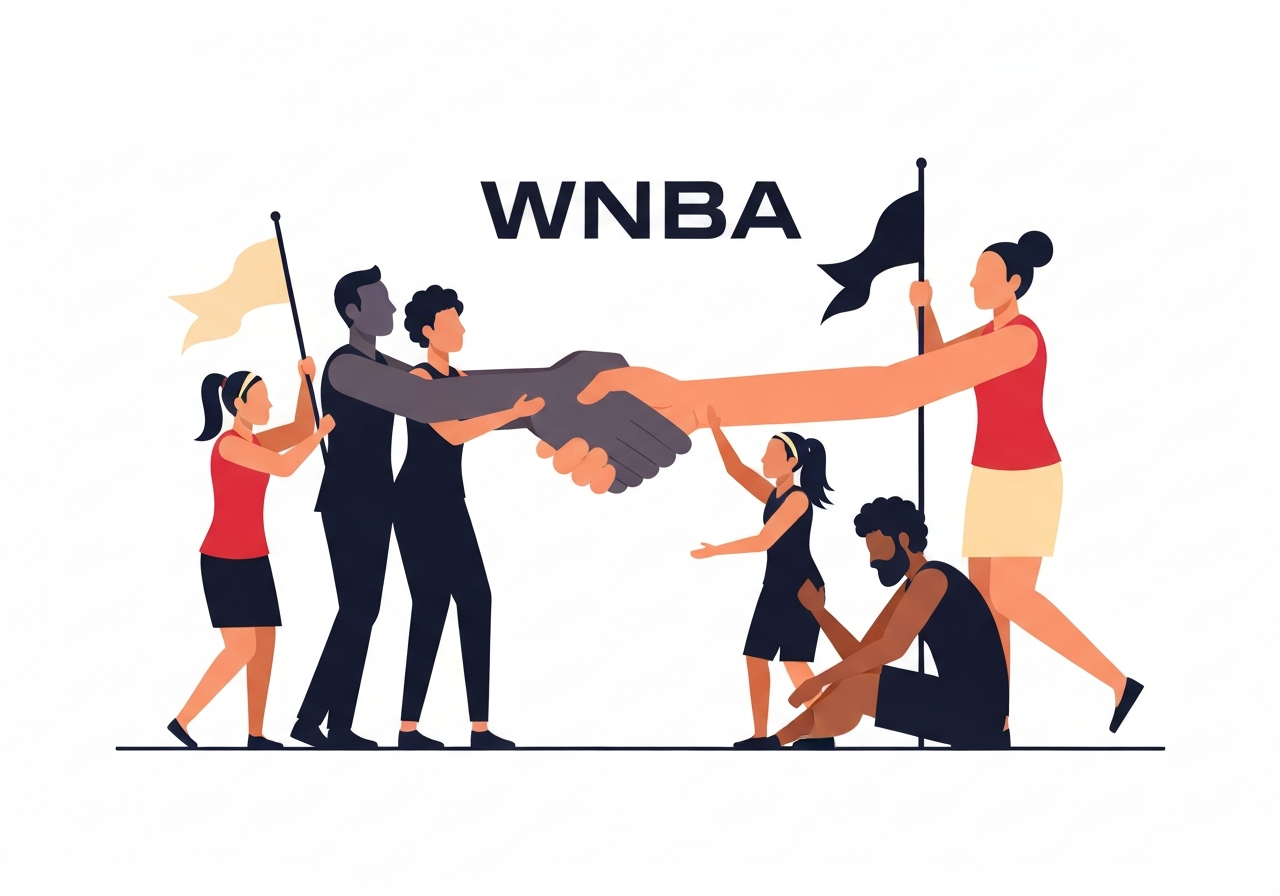
Lead: Early on Wednesday, March 18, 2026, in New York, the WNBA and the WNBA Players’ Association announced they have reached an agreement in principle on a new collective bargaining agreement (CBA). Negotiators said the framework was settled after more than 100 hours of in-person talks over eight days, with a formal term sheet to be completed in the coming days. The accord, if finalized and ratified by players and the league Board of Governors, would sharply raise player pay and boost benefits as the league prepares for its 30th season. League and union leaders characterized the deal as transformational for players and the sport’s continued growth.
Key Takeaways
- The negotiating teams reached a verbal agreement at about 2:20 a.m. ET on March 18, 2026, after more than 10 hours of talks on the final day.
- The proposed pact would increase average player compensation to exceed $500,000 and could create first-time million-dollar players in the WNBA.
- Overall salaries are expected to rise roughly fourfold from last season, reflecting a revenue-sharing model tied to league income.
- More than 80% of players are unrestricted free agents this offseason; teams must re-sign many players before the season opens on May 8, 2026.
- Training camps are scheduled to open April 19, 2026, six days after the college draft, requiring a compressed timeline for term-sheet finalization and administrative work.
- The talks centered on revenue sharing, housing provisions and franchise-tag policies—issues leaders identified as the main sticking points.
- The league reported a single-season attendance record through August 2025 of roughly 2.5 million fans, a factor cited in revenue-growth projections.
Background
The players opted out of their previous agreement 17 months ago and allowed the old deal to lapse five months after its initial expiration, setting the stage for this round of bargaining. The opt-out reflected players’ contention that compensation and benefits had not kept pace with the league’s growing profile and commercial returns. Over the past several seasons the WNBA has expanded media exposure, sponsorship deals and attendance, which players and the union say created leverage for a more meaningful share of revenue.
Union leaders, rostered players and league executives have all said the talks were often difficult and at times adversarial, particularly over how to structure revenue sharing and protections such as franchise tags. The union negotiated not only direct salary increases but also improvements to facilities, staffing, housing and support services meant to raise the standard of work for players across the league. Both sides agreed to an intense, in-person negotiating window in mid-March to try to conclude terms ahead of the 2026 season calendar.
Main Event
Negotiators from the league and the WNBPA met in New York for roughly eight consecutive days, compiling more than 100 hours of face-to-face bargaining. The final stretch of discussions extended into the early hours of March 18, when both sides said they had aligned on the principal elements of a new CBA framework. League commissioner Cathy Engelbert and union president Nneka Ogwumike addressed reporters together in a hotel lobby shortly before 3 a.m., calling the progress a major step forward.
The parties said lawyers would draft a formal term sheet in the next day or two and that the agreement would then require votes from players and the WNBA Board of Governors. Union leaders emphasized that key economic provisions—most notably a revenue-sharing formula—were central to the breakthrough. Officials also noted that housing, franchise-tag language and standards for facilities and team staffing were settled in principle but would be fleshed out in writing.
Practically, the timeline ahead is tight: teams must conduct an expansion draft to populate new Toronto and Portland rosters, negotiate with a large pool of free agents and prepare for training camps on April 19 and a planned season opener on May 8. League officials said those operational deadlines remain unchanged contingent on a finalized and ratified CBA, and that league calendars are being coordinated to minimize disruption.
Analysis & Implications
The proposed shift to a revenue-sharing model represents a structural change in how WNBA players are compensated, moving pay from fixed caps and piecemeal bonuses toward a sustained portion of league income. If average pay rises above $500,000 and some players reach seven-figure salaries, the WNBA would enter a new economic tier among U.S. professional sports and women’s leagues worldwide. That change could accelerate talent retention, attract higher-profile international players and alter the market for endorsements and athlete-driven enterprises.
For teams and owners, the immediate implication is a significantly larger payroll commitment. Owners and front offices will need to adjust budgets for player salaries, but they can offset some increases via revenue growth tied to expanded broadcast deals, sponsorship sales and higher gate receipts. The league’s reported audience gains—more than 2.5 million attendees through August 2025—lend credibility to revenue projections, yet converting that momentum into guaranteed long-term income streams remains an operational challenge.
From a labor-relations perspective, the agreement in principle may set a precedent across women’s sports by embedding players in revenue growth rather than one-off raises. That model can create alignment between player incentives and league marketing objectives, but it also introduces variability: players’ earnings will be more directly tied to the league’s ability to sustain growth. The deal’s success thus depends on parallel investments in media distribution, venue upgrades and marketing to maintain upward momentum.
Comparison & Data
| Metric | Previous Season | Proposed CBA |
|---|---|---|
| Average player pay | Under $125,000 | Above $500,000 (projected) |
| Top salaries | Below $500,000 | Potential seven-figure contracts |
| Attendance (through Aug. 2025) | ~2.5 million | — |
The table above summarizes headline economic shifts the parties cited: roughly a fourfold increase in average compensation and the prospect of first-time million-dollar contracts. Those figures are derived from statements by league and union representatives during the March 18 announcement and reflect projected outcomes contingent on final documentation, ratification and the league’s revenue performance.
Reactions & Quotes
Leaders from both sides framed the agreement as momentous while noting remaining administrative steps.
“We have aligned on key elements of a new collective bargaining agreement together,”
Cathy Engelbert, WNBA Commissioner
Engelbert emphasized shared goals for growth and confirmed that a formal term sheet and additional details would be released as lawyers complete the paperwork.
“For the first time, player salaries are tied to a truly meaningful share of league revenue,”
Nneka Ogwumike, WNBPA President
Ogwumike described the structure as driving exponential salary growth and raising standards for facilities, staffing and player support across the league.
“We opted out because what we were giving to this league and what we were getting back didn’t match,”
Alysha Clark, WNBPA executive committee member
Clark framed the opt-out decision as a strategic stance that ultimately helped secure a materially different financial arrangement for players.
Unconfirmed
- The exact percentage of league revenue allocated to player pay has not been published and remains pending the formal term sheet.
- The final number of players who will receive seven-figure salaries has not been confirmed and depends on contract structure and team decisions.
- Precise housing allowances, franchise-tag mechanics and staffing standards are still subject to written detail and final legal review.
Bottom Line
The agreement in principle announced March 18, 2026, marks a potentially transformative shift for the WNBA: it moves compensation toward a revenue-linked model and projects substantial increases in average and top-tier salaries. If the term sheet clearances and ratification votes proceed on schedule, players and teams face a compressed operational window to finalize contracts, conduct an expansion draft for Toronto and Portland, and prepare for training camps on April 19 and opening day on May 8.
Longer term, the deal could strengthen the league’s competitiveness for talent and commercial partnerships, but its success hinges on sustained audience growth and new revenue streams. Stakeholders should watch the forthcoming term sheet, the ratification votes and subsequent team-level roster moves to assess how the headline numbers translate into concrete wages and working conditions across the league.