
Lead
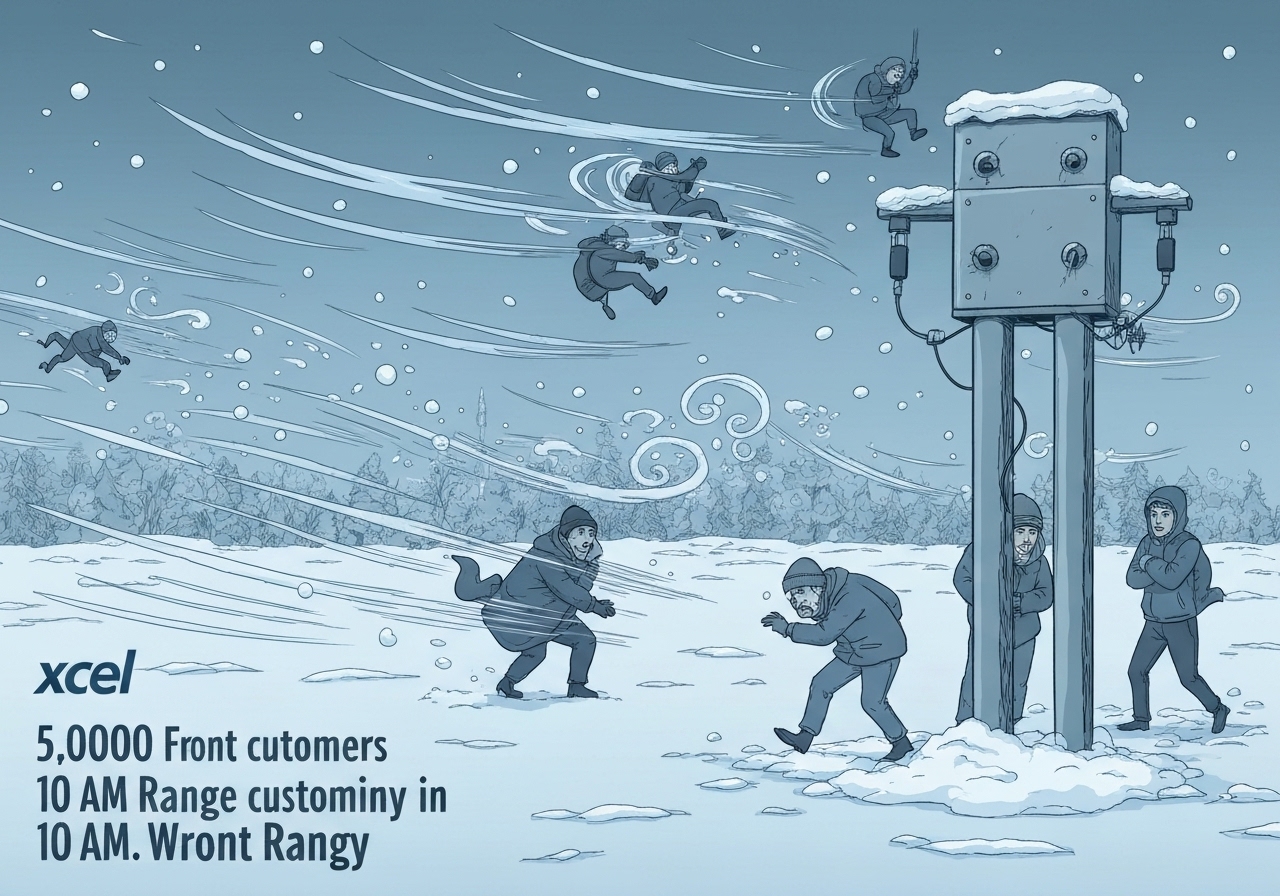
On Dec. 17, 2025, Xcel Energy initiated a public safety power shutoff at 10 a.m., cutting service for about 50,000 customers along Colorado’s Front Range to reduce wildfire risk amid extreme winds and very dry conditions. The outages affect residents in Boulder, Clear Creek, Jefferson, Larimer and Weld counties; Denver County is not expected to be impacted. Xcel officials said crews were staged across the region and aimed to restore service as conditions eased, with restorations expected around 6 p.m. Wednesday. Much of the Front Range was under a red-flag warning, and forecasts called for wind gusts up to 85 mph.
Key Takeaways
- Approximately 50,000 Xcel customers lost power beginning at 10 a.m. MST on Wednesday, Dec. 17, 2025, across five Front Range counties.
- Forecasts showed gusts up to 85 mph and red-flag warnings, prompting the utility’s public safety shutoff to limit fire starts from electrical equipment.
- Xcel positioned hundreds of crews along the Front Range and estimated conditions could improve and allow restorations around 6 p.m. Wednesday.
- Many school districts—Boulder, Clear Creek, Weld and Jefferson—closed in anticipation of the shutoff, and some transit services (RTD W Line) were suspended with bus shuttles used instead.
- Comfort centers with charging, water and snacks were opened in Evergreen and Lakewood from 1 p.m. to 8 p.m., coordinated with the Red Cross and Jefferson County.
- Xcel warned outages might recur as early as 6 a.m. Friday if dangerous winds and dry conditions persist, potentially leaving some communities without power for multiple days.
- The company is operating under its updated Wildfire Mitigation Plan; regulators previously ordered improved coordination after a controversial 2024 shutoff.
- Xcel faces ongoing legal exposure tied to past fires, including a roughly $640 million settlement related to the 2021 Marshall Fire and litigation over the 2024 Smokehouse Creek fire in Texas.
Background
Utilities in the American West have increasingly used targeted power shutoffs to reduce the risk that electrical equipment will spark wildfires during high-wind, low-humidity events. Xcel’s public safety shutoff on Dec. 17 is part of an expanded Wildfire Mitigation Plan designed after years of severe fire seasons and regulatory scrutiny. That plan includes clearer rules for coordination with state and local authorities and operational thresholds for shutting off lines when weather and vegetation conditions elevate fire risk.
Public concern about utility-caused fires has grown since the 2021 Marshall Fire in Colorado and other catastrophic blazes nationwide. Xcel reached a roughly $640 million settlement with Colorado plaintiffs and insurers over the Marshall Fire in September 2024 while denying wrongdoing; the company has acknowledged its equipment appears to have been involved in the 2024 Smokehouse Creek fire in Texas, which killed three people and prompted additional litigation. Regulators and communities now expect faster notification, staging of crews, and support services when shutoffs are ordered.
Main Event
At 10 a.m. on Wednesday, Xcel took the precautionary step of de-energizing circuits serving about 50,000 customers across Boulder, Clear Creek, Jefferson, Larimer and Weld counties. Company representatives said the decision followed forecasts of extreme winds and very dry fuels, and that the outage was intended to reduce the likelihood of power lines or equipment igniting vegetation. Denver County was not included in the shutoff area.
Xcel president Robert Kenney addressed reporters the same morning, describing the operation as a planned safety measure and noting that hundreds of line workers and support crews were positioned to respond once conditions allowed. Customers were advised to report visible damage to lines, to stay clear of any downed wires, and to expect restoration efforts to begin as soon as wind and fire risk subsided.
Local services were affected: several school districts closed for the day in anticipation of the outages, and the Regional Transportation District suspended W Line rail service between Federal Center Station and JeffCo Gov’t Center/Golden Station, replacing it with bus shuttles. RTD also warned that lighting and fare equipment at certain stations would be offline because of the risk to substations.
To support displaced residents and those without power, Xcel coordinated with the Red Cross and Jefferson County to open comfort centers offering phone charging, power, water and snacks at Evergreen Library (County Highway 73) and Belmar Library (Allison Parkway) from 1 p.m. to 8 p.m. The company cautioned that additional outages could occur Friday, when a second storm could overlap with Wednesday’s affected areas.
Analysis & Implications
Public safety shutoffs are an operational trade-off: they reduce ignition risk from energized equipment during extreme weather but impose immediate costs on households, businesses and critical services. For 50,000 affected customers, the short-term impacts include loss of power for heating, medical devices, refrigeration and communications; schools and transit disruptions amplify community-wide consequences. Repeated or extended outages raise questions about equitable access to resilience resources, especially for medically vulnerable or low-income residents.
Legally and politically, Xcel’s decision occurs against a backdrop of high-profile lawsuits and settlements tied to previous fires. While the company has framed Wednesday’s action as unrelated to litigation, repeated outages and future incidents will influence regulatory reviews, potential fines, and public trust. State regulators have already required clearer coordination after April 2024 criticisms; regulators will likely scrutinize whether notifications, staging and community supports met expectations this week.
Economically, multi-day outages can suppress local commerce and strain emergency services. Transit interruptions—particularly rail shutdowns—can cascade into longer commutes and increased roadway traffic. For businesses reliant on point-of-sale systems and lighting, even brief power loss can mean significant operational losses, and for agriculture and cold-chain supply, extended outages risk spoilage.
Comparison & Data
| Event | Date | Noted Wind Gusts | Customers Affected | Known casualties/settlements |
|---|---|---|---|---|
| Dec. 17 Front Range shutoff | 2025-12-17 | Forecast gusts up to 85 mph | About 50,000 | No fatalities reported; potential multi-day outages warned |
| Marshall Fire | 2021 | High winds cited (varied reports) | — | Roughly $640 million settlement (Colorado plaintiffs/insurers) |
| Smokehouse Creek fire (Texas) | 2024 | High winds cited | — | Three fatalities; ongoing litigation |
The table summarizes known figures and outcomes. Exact customer counts and wind measurements for historical fires vary by source; the Front Range shutoff on Dec. 17 is distinct in that the utility proactively de-energized circuits to prevent new ignitions rather than responding to an active fire.
Reactions & Quotes
Xcel’s Colorado president framed the shutoff as a preventive safety measure and rejected suggestions that the action was linked to litigation. Company leaders emphasized staged crews and rapid restoration when safe.
“Let me just unequivocally say no.”
Robert Kenney, President, Xcel Energy Colorado
Texas officials responded to separate litigation over the 2024 Smokehouse Creek fire with strong language; Xcel has said it will defend itself. Those disputes continue to shape public perception of utility conduct in extreme-weather events.
“Xcel’s blatant negligence killed three Texans and caused unfathomable destruction.”
Texas Attorney General (press statement regarding Smokehouse Creek litigation)
Community organizations and transit agencies described operational impacts and their mitigation steps—comfort centers, bus shuttles and station equipment shutdowns—to reduce risks to the public and maintain essential services.
RTD temporarily suspended service on the W Line and prepared bus shuttles where substations and station equipment were at risk.
Regional Transportation District (operational advisory)
Unconfirmed
- Whether specific neighborhoods will experience outages exceeding three days in duration remains uncertain; Xcel warned some areas could be without power for more than three days if Friday’s storm overlaps Wednesday’s impacts.
- Precise wind measurements at the locations where equipment could be damaged have not been confirmed across every affected county; forecasts indicated gusts up to 85 mph but localized readings may differ.
- Any connection between Wednesday’s operational decisions and ongoing litigation is officially denied by Xcel; investigators or regulators could later identify additional factors that are not yet public.
Bottom Line
Xcel’s Dec. 17 public safety shutoff affected roughly 50,000 Front Range customers and reflects a precautionary approach utilities now use during extreme wind and dry conditions to lower wildfire risk. The immediate objective was to prevent new ignitions from electrical equipment while crews staged for rapid restorations when safe. For affected residents, the operational reality is disruption: closed schools, altered transit, and the need to rely on comfort centers or personal preparedness measures.
Looking ahead, repeated or prolonged shutoffs will intensify debates over utility strategy, regulatory oversight and community resilience investments—especially as utilities balance wildfire risk reduction against the socioeconomic costs of outages. Residents in affected counties should follow official notices, preserve battery charge for medical devices and communications, and use community resources if needed while utilities and emergency partners work to restore service.
Sources
- Colorado Public Radio — regional public radio (news report)
- Xcel Energy Pressroom — official company statements and releases
- Regional Transportation District (RTD) — official transit advisories
- American Red Cross — humanitarian organization (coordination of comfort centers)
- Office of the Texas Attorney General — official press releases (related litigation)