
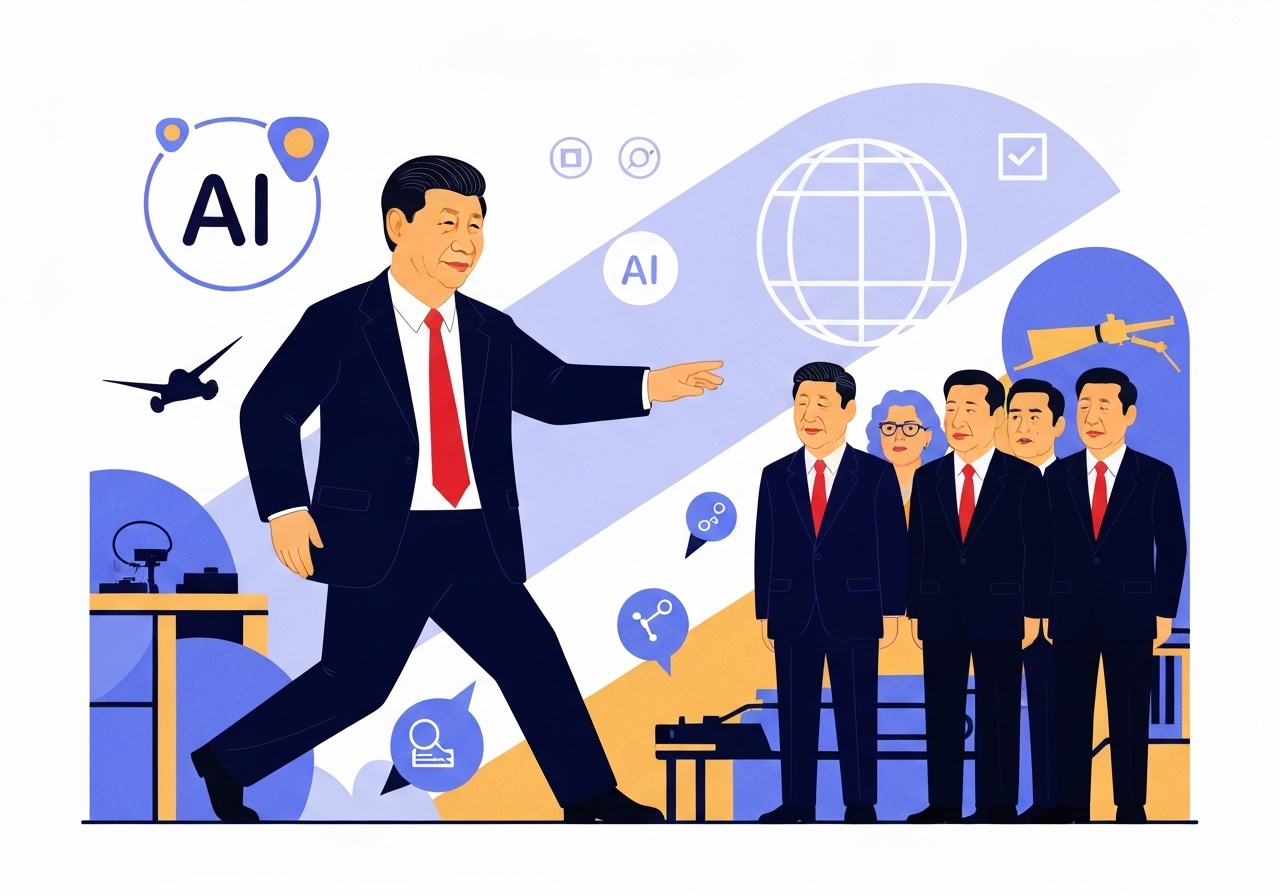
On in Tianjin, Chinese President Xi Jinping urged members of the Shanghai Cooperation Organization to deepen collaboration on artificial intelligence and to steer clear of a “Cold War mentality.” Addressing the bloc’s largest gathering to date—with more than 20 foreign leaders in attendance—Xi highlighted $84 billion in Chinese investment across fellow SCO countries and pledged support for 10,000 trainees via Beijing’s Luban vocational program, as the two-day summit moved toward a joint statement.
Key Takeaways
- Xi called for stronger AI cooperation within the SCO and warned against a return to a Cold War frame of mind.
- The Tianjin summit is the largest in SCO history, drawing 20+ leaders, including Russia’s Vladimir Putin and India’s Narendra Modi.
- China says it has invested $84 billion in other SCO countries to date.
- Beijing will back 10,000 students through the “Luban” vocational education initiative.
- Xi is expected to meet Putin this week; Putin is due in Beijing for an 80th-anniversary World War II military parade.
- Over the last two days, Xi met at least 10 visiting leaders, including Turkey’s Recep Tayyip Erdogan and Cambodia’s Hun Manet.
- Xi met Modi on Saturday in Tianjin; both sides underscored partnership over rivalry, according to official readouts.
- A joint statement is expected at the end of Monday’s session, with China’s top diplomat Wang Yi to brief the press in the evening.
Verified Facts
Speaking in Tianjin on Monday, Xi framed artificial intelligence as a shared opportunity for SCO members and argued the bloc should resist a “Cold War mentality.” The session gathered more than 20 foreign leaders, making it the largest SCO summit to date. High-profile attendees include Russian President Vladimir Putin and Indian Prime Minister Narendra Modi.
Xi said China has committed $84 billion in investment to partner countries across the SCO and promised support for 10,000 students through the Luban vocational education program. He positioned the summit as a chance to launch a new phase of “high-quality” cooperation and development.
Diplomatic choreography around the summit is significant: Xi is expected to meet Putin this week, and the Russian leader is scheduled to remain in China for a military parade in Beijing marking 80 years since the end of World War II. The SCO’s two-day meeting is slated to produce a joint statement on Monday, and China’s foreign minister Wang Yi plans a press conference in the evening local time.
Xi has already met at least 10 visiting leaders over the preceding 48 hours, including Turkey’s Recep Tayyip Erdogan and Cambodia’s Hun Manet. On Saturday, Xi met Modi in Tianjin, and both sides affirmed the importance of being partners rather than rivals, according to official readouts from Beijing and New Delhi.
Context & Impact
The call for AI collaboration lands as major powers and regional blocs compete to shape global AI rules, standards, and safety norms. By positioning the SCO as a venue for cooperation, Beijing signals it wants the bloc to influence how AI is developed, deployed, and governed across Eurasia.
The summit unfolds amid persistent U.S.–China trade and technology tensions, Russia’s ongoing war in Ukraine, and regional instability tied to the Israel–Hamas conflict. Against this backdrop, China is presenting itself as a mediator while reinforcing ties with SCO members—a group that includes China, Russia, India, Pakistan, and several Central Asian states, with membership expanding in recent years.
Economically, the cited $84 billion underscores deepening cross-border finance and infrastructure links—many associated with Belt and Road projects. The Luban program’s 10,000 trainees point to a talent-building push that could support cooperative AI projects, manufacturing upgrading, and digital public services within the bloc.
- Potential AI cooperation areas: cross-border research, safety evaluation, data-sharing frameworks, standards-setting, and talent exchanges.
- Risks and sensitivities: data governance differences, export controls, and alignment challenges among diverse legal systems.
| By the numbers | Figure | Notes |
|---|---|---|
| Attending leaders | 20+ | Largest SCO summit to date |
| China’s investment in SCO countries | $84 billion | Cumulative figure cited by Xi |
| Luban program trainees | 10,000 | Supported by Beijing |
| Summit duration | 2 days | Concludes Monday |
| WWII anniversary | 80 years | Military parade in Beijing |
| Host city | Tianjin | Main summit venue |
Official Statements
Xi urged SCO members to strengthen AI cooperation and avoid a “Cold War mentality.”
Xi Jinping, opening remarks in Tianjin
Stable, mutually respectful cooperation between India and China is necessary for both countries’ development.
India’s Ministry of External Affairs, readout after the Xi–Modi meeting
Unconfirmed
- The scope, governance, and timeline of any SCO-wide AI cooperation framework have not been detailed.
- The precise contents of the forthcoming joint statement were not available at publication time.
- Any new economic or security agreements, beyond previously announced initiatives, remain unannounced.
- The breakdown and timing of the $84 billion investment figure were not disclosed.
- The exact schedule and agenda for the expected Xi–Putin bilateral were not formally released.
Bottom Line
Xi used the record-size SCO summit to pitch AI collaboration as a unifying project while rejecting Cold War framing. Whether the meeting yields concrete steps—on AI standards, talent programs, or new economic initiatives—will hinge on the joint statement and follow-through by member states.
For now, the summit underscores Beijing’s bid to shape regional rules and partnerships at a moment of intensifying geopolitical competition and evolving technology governance.