
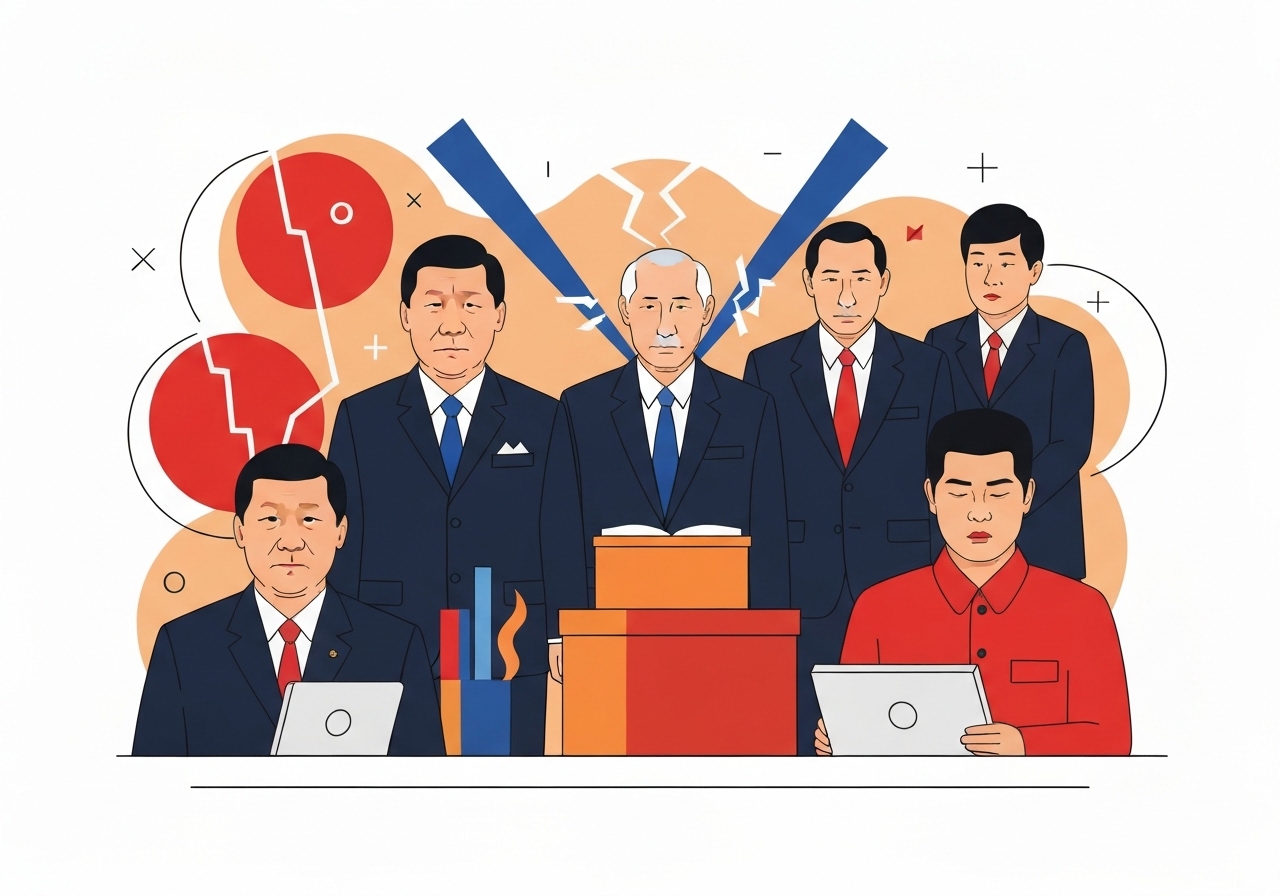
On Sept. 3, 2025 in Beijing, Presidents Xi Jinping and Vladimir Putin and North Korean leader Kim Jong Un appeared together before a large military parade marking the 80th anniversary of Japan’s World War II surrender; the display projected unity but analysts say it did not resolve deep strategic differences among the three governments.
Key Takeaways
- The leaders staged a high-profile joint appearance at Beijing’s Victory Day events on Sept. 3, 2025.
- China unveiled new weapons during the parade, including ICBMs, hypersonic systems and drones.
- Analysts describe the meeting as a targeted show of solidarity rather than proof of a formal trilateral bloc.
- China and Russia signed a framework for a new gas pipeline; India and China announced bilateral economic deals in Tianjin.
- US officials remain alert to defense links after reports that North Korea has sent personnel to support Russia in Ukraine.
- Former intelligence officials warn that public optics mask underlying tensions, especially between Beijing and Pyongyang.
Verified Facts
The three leaders greeted each other on a red carpet before a Beijing military parade on Sept. 3, 2025, an event attended by dozens of foreign delegations and tens of thousands of spectators. The parade marked the 80th anniversary of Japan’s surrender in World War II and featured a wide range of new Chinese weaponry on public display, from intercontinental ballistic missiles to hypersonic cruise missiles and drones.
On the margins of the event, China and Russia reached a memorandum of understanding on a framework for a natural gas pipeline between the two countries. Details remain to be finalized, but the agreement signals ongoing economic cooperation despite Western attempts to isolate Moscow after its 2022 invasion of Ukraine.
Also nearby, leaders gathered in Tianjin where India and China announced several bilateral economic agreements. Indian Prime Minister Narendra Modi attended parts of the summit but left before the Beijing parade.
US and Western intelligence assessments remain split over whether Beijing, Moscow and Pyongyang constitute a coordinated bloc. Officials note extensive bilateral ties—Russia–China and Russia–North Korea—but no public evidence of a binding trilateral defense pact or permanent command arrangement linking all three.
Context & Impact
The public optics of the leaders walking together were aimed at messaging: a display that counters Western influence and underscores an alternative diplomatic alignment. Analysts say the message is directed at US allies in Asia and Europe.
Yet specialists emphasize limits to that narrative. Key economic and military powers—Japan and many European nations—did not join the parade, and important global economies remain outside any anti-West coalition. That constrains how far Beijing can translate imagery into a durable global leadership role.
For US security planners, the central concern is whether the appearance presages deeper military cooperation, particularly given reporting that North Korea has provided personnel to Russia’s campaign in Ukraine. To date, Washington has seen increased bilateral cooperation but no confirmed multilateral defense structure linking all three states.
- Short-term: The parade will likely strengthen anti-Western narratives among partner publics and signal continued China–Russia economic ties.
- Medium-term: Analysts expect pragmatic, case-by-case coordination rather than an integrated alliance; tensions—especially between China and North Korea—persist.
“The parade was a powerful show of soft and hard power, but it papered over underlying tensions,”
—Former intelligence officials and analysts
Official Statements
Chinese state media quoted Xi Jinping describing China’s rise as “unstoppable,” framing the parade as a demonstration of national resurgence.
Chinese state media
Former US President Donald Trump wrote on Truth Social that the leaders were “conspiring” against the United States and that he watched the procession closely.
Truth Social post
Unconfirmed
- No open-source confirmation of a formal trilateral military alliance linking China, Russia and North Korea exists as of Sept. 3, 2025.
- Reports that North Korean combat troops have been permanently deployed to fight in Ukraine are contested and lack full public verification.
- It is unclear whether China has formally recognized North Korea’s nuclear status beyond accepting closer Russia–North Korea ties.
Bottom Line
The Sept. 3 Beijing appearance was a staged demonstration of shared opposition to Western influence and a showcase of China’s growing military capabilities. But experts caution that optics do not equal institutional alignment: substantive trilateral cooperation remains unproven, and bilateral interests and frictions—particularly between Beijing and Pyongyang—limit the likelihood of a formal three-way bloc.