
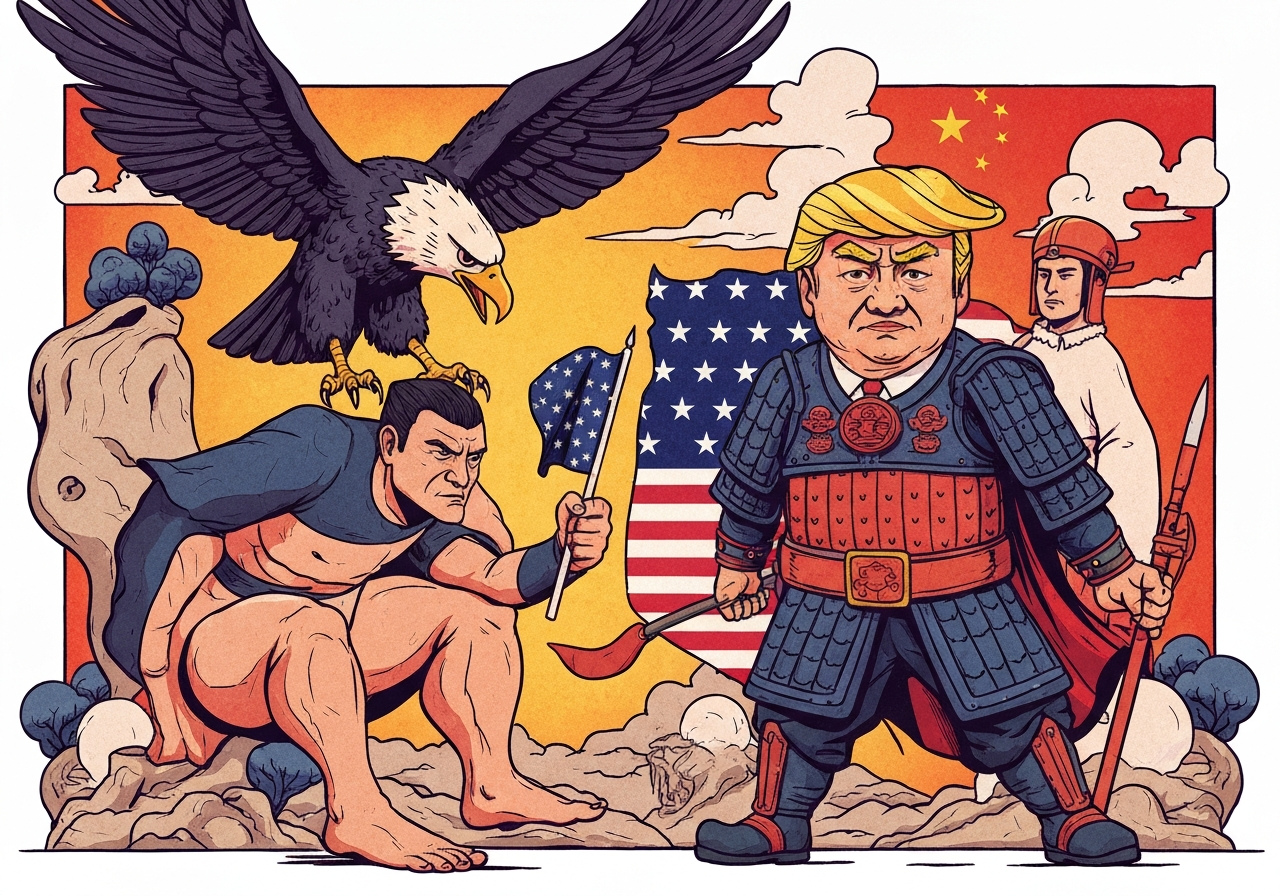
Lead: This week’s intense U.S. and Israeli strikes on Iran — including the reported killing of Supreme Leader Ayatollah Ali Khamenei — have bolstered Xi Jinping’s long-standing argument that China must expand its military capacity to deter external coercion. Chinese leaders view President Trump’s willingness to use force as evidence that Washington remains the principal strategic threat to Beijing. The developments come as Mr. Xi prepares to meet Mr. Trump in Beijing in the coming weeks, following a punishing trade dispute last year.
Key Takeaways
- U.S. and Israeli operations against Iran this week, including the reported death of Ayatollah Ali Khamenei, have intensified Beijing’s security concerns.
- Chinese leadership interprets President Trump’s recent use of military force as confirmation that hard power shapes international outcomes.
- Xi Jinping has directed a prolonged military modernization effort — described internally as building a “Great Wall” of deterrence — for more than a decade.
- A high-level meeting between Xi and Trump is expected in Beijing in the coming weeks, after a deep trade confrontation in 2025.
- Chinese officials say nuclear deterrence likely protects China from direct targeting, but they view U.S. force projection as a broader systemic risk.
- Analysts in Beijing see the Iran events accelerating plans for force structure, regional posture, and strategic partnerships.
Background
Since taking consolidated power in the early 2010s, Xi Jinping has prioritized rebuilding China’s armed forces to project influence beyond its borders. That drive has combined investment in naval, missile, cyber and space capabilities with doctrinal changes designed to prepare forces for high-end contingencies against advanced opponents. The leadership frames these steps as necessary to defend sovereignty and to secure Chinese interests in a world that, in its view, is shaped by military realities.
The Trump administration’s recent foreign-policy approach — emphasizing bold, unilateral military measures in pursuit of strategic aims — has deepened anxiety among Chinese policymakers. Beijing experienced a sharp economic confrontation with Washington last year that ended in a fragile truce; the memory of that trade conflict shapes how Chinese strategists assess Washington’s capacity and willingness to apply pressure across multiple domains. Regional partners that maintained close ties to Beijing, including Iran and Venezuela, factor into Beijing’s risk calculus when it evaluates the potential costs of great-power competition.
Main Event
In the past week, coordinated U.S. and Israeli strikes on Iranian targets culminated in the reported death of Ayatollah Ali Khamenei, an outcome that Chinese officials and analysts say demonstrates an uncompromising U.S. approach to perceived threats. The scale and speed of the operations have been interpreted in Beijing as an assertion of American dominance through decisive military means rather than prolonged diplomatic effort. Chinese state commentary and government interlocutors have underscored the strategic implications for countries aligned with Beijing.
Beijing’s response has been measured in public: official statements stressed calls for restraint and stability in the region while private conversations, as described by analysts, have emphasized accelerating defense preparations. Senior Chinese leaders are reported to be re-evaluating timelines for key force acquisitions and exercises, viewing the Iran events as evidence that U.S. actions can rapidly alter geopolitical balances. The prospect of leaders allied to China being targeted or removed by military action — whether through strikes or capture — has led to renewed urgency around protecting Beijing’s diplomatic and economic footholds.
The upcoming bilateral meeting between Xi and Trump offers a narrow window to manage tensions. Chinese officials hope the summit will stabilize relations after last year’s trade clashes, but the recent military events reduce room for complacency. Beijing’s strategic planning now balances near-term diplomatic engagement with a longer-term push to strengthen deterrent capabilities across domains that matter to high-intensity conflicts.
Analysis & Implications
Strategically, the Iran episode reinforces a fundamental tenet of Xi’s security doctrine: credible hard power deters coercion. For more than a decade, Xi has encouraged the People’s Liberation Army to prepare to fight and prevail in high-end conflicts; the recent strikes are being used in Chinese strategic discourse as validation of that position. That validation is likely to translate into faster procurement cycles, larger budgets allocated to force-projection systems, and accelerated joint training focused on contested environments.
Politically, the events complicate Beijing’s posture toward a U.S. administration that it must engage at the highest levels. Publicly, China will continue to emphasize diplomacy and regional stability; privately, policymakers will press for contingency plans that reduce vulnerabilities, including stronger ties with regional partners and more dispersed basing and logistics arrangements. The twin tracks of engagement and preparation are likely to characterize Beijing’s approach in the months ahead.
Economically, a perceived increase in geopolitical risk could prompt Beijing to accelerate efforts to insulate critical supply chains and to diversify markets away from potentially coercive leverage. Financial planners in China may re-evaluate external dependencies, while state-directed investment could focus on strategic industries that support military resilience, such as semiconductors, advanced materials and shipbuilding.
On the international stage, the incident may prompt recalibration among U.S. allies and regional powers. Some states may seek closer security ties with Washington for protection, while others will hedge, deepening economic or military links with China to avoid overreliance on a single patron. The result could be a more fragmented order in which military credibility and alliance management become central bargaining chips.
Comparison & Data
| Year | Significant development |
|---|---|
| 2012–2014 | Xi consolidates leadership and elevates military modernization as a priority |
| 2025 | Intense U.S.-China trade confrontation, followed by a tentative truce |
| March 2026 | U.S. and Israeli strikes on Iran; reported killing of Ayatollah Khamenei |
The table highlights three inflection points that shape current Chinese strategic thinking: Xi’s early mandate to rebuild the military, the economic confrontation with Washington in 2025, and the recent military operations in March 2026. Together, these events form the backdrop for Beijing’s renewed emphasis on deterrence and rapid capability development.
Reactions & Quotes
“A sovereign nation’s security depends on credible defense capabilities; these developments underscore that imperative.”
Chinese security analyst (paraphrased reaction)
“We urge restraint and de-escalation while recognizing the strategic consequences for all parties involved.”
Beijing official statement (public commentary)
“Events this week will be studied across capitals as an indicator of how far major powers will go to defend perceived interests.”
Regional policy expert (analysis)
Unconfirmed
- Whether the United States plans to target China’s top leadership in the manner reported for other leaders remains unverified and lacks supporting evidence.
- Details about any specific acceleration of Chinese procurement timetables or classified force posture changes have not been publicly confirmed.
- Attributions of intent by third-party states to shift alliances in direct response to these strikes are speculative and require further corroboration.
Bottom Line
The recent strikes on Iran and the reported death of Ayatollah Ali Khamenei have crystallized a perception in Beijing that hostile use of force remains a decisive tool in international politics. For Xi Jinping, these events validate a long-held priority: building enough military capability to deter coercion and protect China’s strategic interests.
Expect China to pursue a two-track approach — publicly seeking stability and diplomatic engagement while privately accelerating measures that enhance deterrence, resilience and strategic independence. The coming Xi–Trump meeting offers a chance to manage immediate tensions, but it is unlikely to remove the deeper drivers pushing Beijing toward greater military confidence and capability.
Sources
- The New York Times — News reporting and analysis (primary article described in this piece)