
Lead
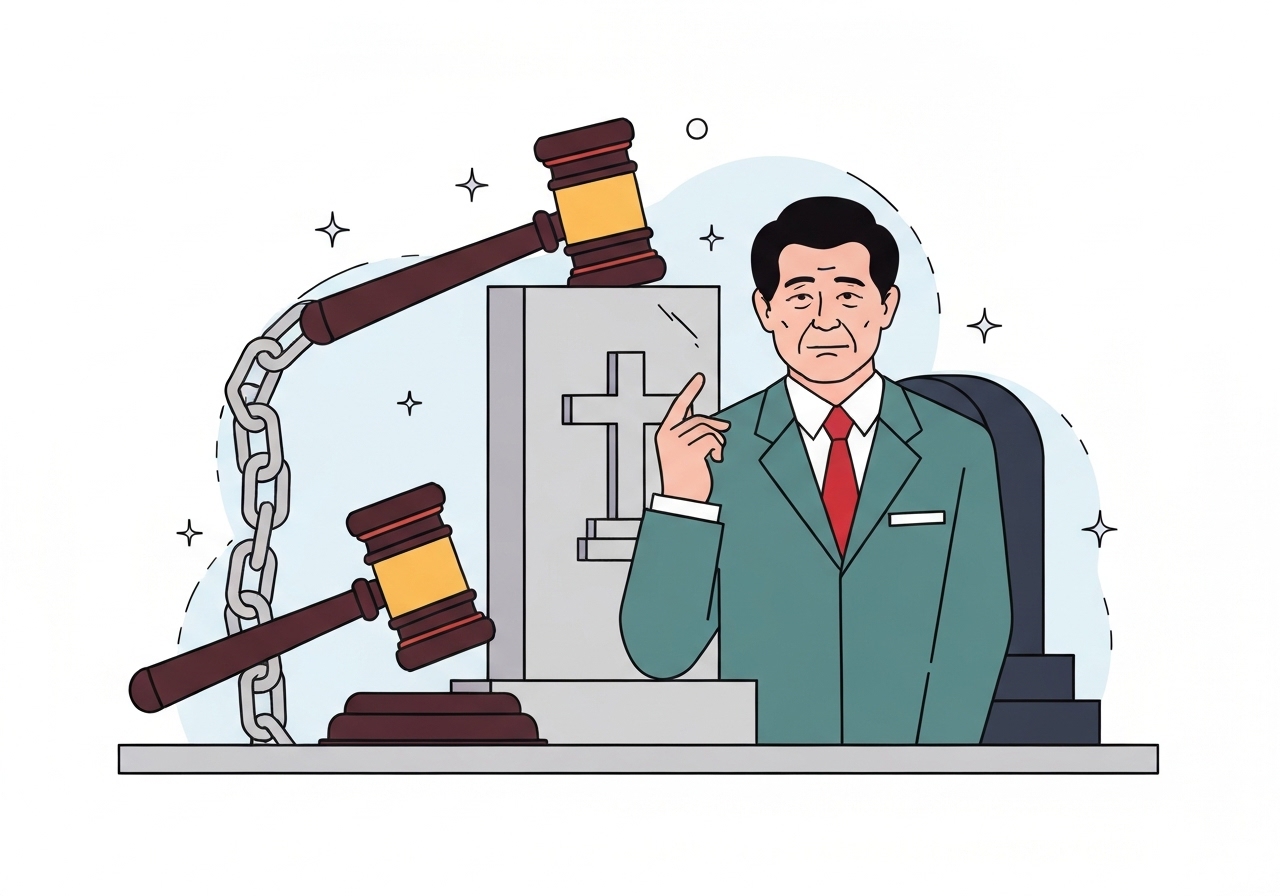
An independent counsel on Tuesday asked a Seoul court to impose the death penalty on former President Yoon Suk Yeol for allegedly directing a rebellion tied to his December 2024 martial law decree in Seoul. Yoon, removed from office last April, faces multiple criminal trials linked to the decree and other scandals from his presidency; the rebellion charge is the most serious. The Seoul Central District Court was told the counsel’s team wants capital punishment; the court is expected to issue a verdict in February. Experts contacted by reporters say a life sentence is the more likely outcome given South Korea has not carried out an execution since 1997.
Key Takeaways
- Independent counsel Cho Eun-suk requested the death penalty for Yoon Suk Yeol on rebellion charges related to a December 2024 martial law decree that brought troops into Seoul.
- Yoon was removed from office in April and now faces eight separate trials, with the Seoul court expected to rule in February.
- Prosecutors concluded Yoon plotted for over a year to use martial law to sideline rivals and consolidate power, according to the independent counsel’s summary.
- The decree led to street confrontations at the National Assembly and the decree was subsequently voted down by lawmakers, including some from Yoon’s own party.
- The political crisis halted high-level diplomacy and unsettled financial markets, and Yoon was detained in January of the previous year—the first sitting South Korean president to be detained.
Background
Yoon Suk Yeol, a former high-profile prosecutor who entered politics in 2021 and won the presidency in 2022, dramatically lost power after the December 2024 decree. The measure, the first martial law declaration of its kind in more than 40 years, authorized military forces to encircle the assembly and enter election offices—a move that evoked memories of authoritarian rule in the 1970s and 1980s. Parliament impeached Yoon and the Constitutional Court later upheld his dismissal, triggering a snap presidential election won by Lee Jae Myung in June. After Lee took office, his administration appointed three independent counsels to investigate alleged misconduct by Yoon, his wife and close associates.
The independent counsel in this case, led by Cho Eun-suk, completed a six-month investigation and reported that Yoon had planned for more than a year to impose martial law with the intent to neutralize political opponents. There had been public speculation that the decree aimed to shield Yoon’s wife, Kim Keon Hee, from corruption probes; the counsel’s report emphasizes broader political motives to crush rivals and monopolize power. The December events produced mass protests, a chaotic scene at the National Assembly and a rare instance of lawmakers—from the opposition and some within Yoon’s own party—entering the assembly to vote down the decree.
Main Event
On the night the decree was announced, troops were deployed to streets around the National Assembly and to election offices, prompting thousands to rush to the assembly to denounce the order and call for Yoon’s resignation. Lawmakers managed to gather in sufficient numbers to enter an assembly chamber and reject the decree, effectively neutralizing the immediate legal effect of the proclamation. The independent counsel asserts that those deployments and the intent behind them amounted to a coordinated plan to overthrow democratic processes and intimidate elected representatives.
At Tuesday’s hearing Yoon was scheduled to make remarks; he has consistently argued that his actions were a last-resort, nonviolent attempt to alert the public to what he described as the obstructionist threat posed by the liberal opposition Democratic Party. Yoon characterized the opposition-controlled parliament as “a den of criminals” and “anti-state forces,” language he says justified urgent measures to restore governance. Counsel Cho’s filing frames those statements and the subsequent military positioning as evidence of a plot to seize or retain power unlawfully.
The independent counsel’s team told the Seoul Central District Court it seeks the maximum penalty, contending that Yoon’s conduct meets the statutory elements for directing a rebellion. Court officials say a ruling is expected in February; legal analysts say that while the counsel has asked for death, statutory practice and the country’s de facto moratorium on executions since 1997 make a life term the more probable punishment. The trials and the broader political fallout interrupted South Korea’s diplomatic calendar and contributed to volatility in financial markets during the crisis.
Analysis & Implications
If a court were to impose a death sentence on a former head of state, it would represent a historic legal moment for South Korea and test the country’s legal and political institutions. South Korea retains capital punishment on the statute books but has observed a de facto moratorium on executions since 1997; imposing the death penalty now would break a long-standing national practice and trigger intense domestic and international scrutiny. Even a life term, analysts say, would mark an unprecedented permanent removal of a democratically elected leader and could deepen political polarization.
The counsel’s case underscores tensions between executive authority and parliamentary checks in a polarized polity. The December decree and its aftermath revealed fault lines inside Yoon’s own conservative coalition and demonstrated how legislative majorities can serve as a brake on emergency measures perceived as politically motivated. International partners are likely to monitor the verdict for its implications for rule-of-law norms and for stability in Seoul’s policy continuity on security and diplomacy.
There are economic consequences as well: markets reacted to the rapid political shift in December and to subsequent legal uncertainty, with short-term capital market volatility recorded during the crisis. Longer-term investor confidence will hinge on how rapidly the political system normalizes and how legal institutions handle high-profile prosecutions. Legal precedent from these trials could influence future executive behavior and any drafting of emergency power statutes.
Comparison & Data
| Year | Event | Outcome |
|---|---|---|
| 1970s–1980s | Use of martial law under military-aligned regimes | Suppression of pro-democracy protests |
| 1997 | Last recorded execution in South Korea | Nation has observed de facto moratorium since |
| Dec 2024 | Yoon’s martial law decree | Decree voted down; impeachment and removal |
The table places Yoon’s decree in historical context: martial law previously served as a tool of authoritarian control, while the post-1997 era has trended away from capital punishment. The December 2024 events are anomalous for a democratic South Korea and prompted institutional responses—including impeachment and independent criminal probes—that are rare in scale and consequence.
Reactions & Quotes
Government officials, opposition leaders and legal experts offered swift and stark responses to the counsel’s sentencing request, reflecting deep divisions over motive and proportionality.
The decree and the attempt to deploy armed forces around the legislature constituted an unacceptable breach of democratic norms and warranted full investigation.
Independent counsel office (investigative filing)
The counsel’s statement summarized its case that the decree was part of a planned attempt to neutralize rivals. The office characterized the conduct as meeting statutory criteria for rebellion and argued for the maximum sentence on that basis.
My actions were a desperate attempt to warn citizens about the danger of a parliament that had turned against the public good.
Yoon Suk Yeol (defendant, scheduled remarks)
Yoon has framed the decree as nonviolent political signaling meant to mobilize public opinion against what he described as obstruction by the opposition. His supporters say the prosecution is politically motivated; opponents view his rhetoric as dangerously escalatory.
While the counsel seeks the death penalty, legal and historical practice in South Korea make a death sentence unlikely; a life term is the more probable judicial outcome.
Legal analyst (university law school)
Experts note the statutory availability of capital punishment does not mean it will be applied; the absence of executions since 1997 and the political sensitivity of the case make a death sentence an improbable end result according to most analysts.
Unconfirmed
- Reports that the decree was issued primarily to shield Kim Keon Hee from corruption probes remain contested; the independent counsel’s final summary emphasized broader political objectives rather than a single protective motive.
- Claims circulated online that military commanders refused direct orders at the time have not been independently verified and lack published documentary evidence in the counsel’s public filings.
Bottom Line
The independent counsel’s request for the death penalty turns an already extraordinary political crisis into a historic legal episode with implications for rule of law, democratic norms and political reconciliation in South Korea. Even if the court stops short of capital punishment, convictions on rebellion counts would constitute a decisive rebuke of the use of emergency powers for partisan ends.
Observers should watch the Seoul Central District Court’s February decision for its legal reasoning, potential appeals process and the wider political fallout. How the government, opposition and broader society respond will shape whether this episode deepens polarization or triggers reforms that strengthen institutional checks on executive emergency powers.
Sources
- ABC News — international news report summarizing counsel filing and court schedule.