
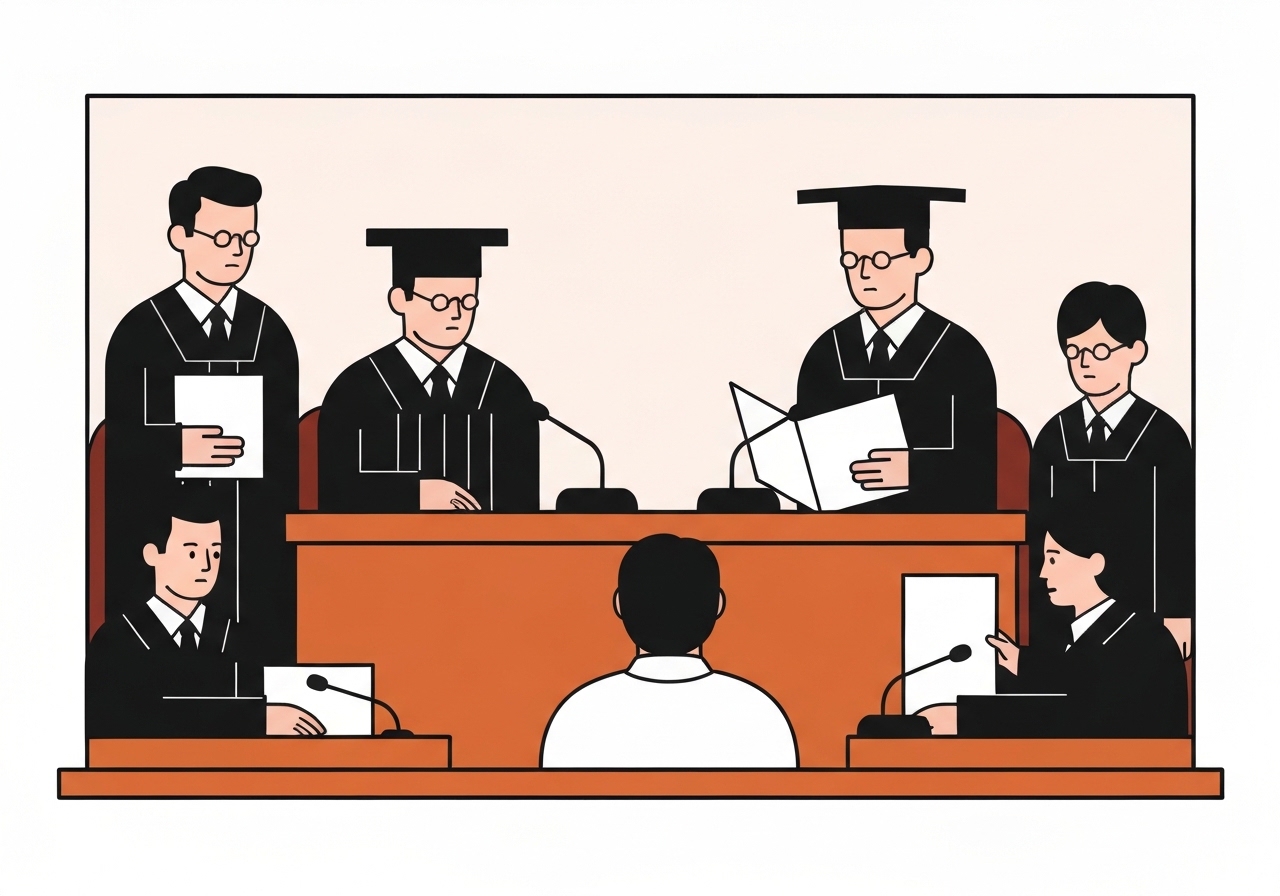
Lead: On 16 January 2026, a Seoul court found former South Korean president Yoon Suk Yeol guilty on charges tied to his December 2024 declaration of martial law and sentenced him to five years in prison. The Central District Court convicted Yoon of obstructing authorities from executing an arrest warrant, falsifying official documents and failing to follow required legal procedures for imposing martial law. Judge Baek Dae-hyun said the former president failed to uphold the Constitution, and Yoon has seven days to file an appeal. The ruling comes as a separate, more serious insurrection trial against Yoon remains pending with a verdict expected in February.
Key Takeaways
- The sentence: Yoon Suk Yeol received a five-year prison term on 16 January 2026 from the Seoul Central District Court for offences tied to his December 2024 martial law declaration.
- Charges upheld: The conviction lists obstruction of an arrest warrant execution, fabrication of official documents and procedural violations in imposing martial law.
- Judicial timeline: Judge Baek Dae-hyun delivered the verdict on Friday; Yoon has a seven-day window to lodge an appeal.
- Duration of action: The December 2024 martial law declaration lasted about six hours but triggered mass protests and political turmoil.
- Broader legal exposure: A separate insurrection trial against Yoon is ongoing, with prosecutors having sought the death penalty and a verdict expected in February 2026.
- Public reaction: Supporters gathered outside the court on the day of sentencing; defence counsel called the decision politicised and confirmed an appeal.
- Sentence context: Special Counsel Cho Eun-suk’s team had sought a longer term; Yonhap reported the five-year term is roughly half of the prosecutors’ request.
Background
South Korea experienced a dramatic constitutional crisis in December 2024 when then-president Yoon Suk Yeol attempted to impose martial law amid mass protests. The move, which lasted approximately six hours, prompted widespread demonstrations and a swift institutional response that included impeachment, arrest, and eventual dismissal from office. Martial law is an extraordinary measure in South Korea, historically associated with authoritarian rule, and its use reignited deep concerns about democratic safeguards and civilian control of institutions.
The legal proceedings against Yoon have involved multiple parallel tracks: criminal charges tied to the martial law declaration, separate counts of alleged insurrection, and inquiries by special prosecutors and parliamentary panels. Key stakeholders include the Special Counsel’s office led by Cho Eun-suk, the Seoul Central District Court, opposition parties that led street protests, and civic groups demanding accountability. The case has polarized opinion domestically and drawn international attention because of South Korea’s reputation as a stable liberal democracy in East Asia.
Main Event
At the Seoul Central District Court on 16 January 2026, Judge Baek Dae-hyun read a verdict finding Yoon guilty of obstructing officials executing an arrest warrant, fabricating official records, and violating legal procedures for declaring martial law. The court determined that the former president, as head of state, had a heightened duty to uphold the Constitution and that his actions constituted serious breaches of that obligation. In delivering the sentence, the judge characterised Yoon’s conduct as showing disregard for constitutional norms and described the culpability as extremely grave.
Immediately after the ruling, Yoon’s legal team announced plans to appeal. Defence lawyer Yoo Jung-hwa told reporters outside the courtroom that the team regretted what it called a politicised decision and would challenge the judgment in the appellate courts. Yoon has seven days to submit an appeal notice, after which appellate procedure and scheduling will determine the next legal steps. The sentencing is the first final ruling among several criminal proceedings the ex-president faces related to the martial law episode.
The trial day also drew public demonstrations: supporters of Yoon gathered outside the courthouse chanting and expressing dismay at the verdict, while opponents and civil society groups marked the decision as a vindication of democratic accountability. International reporters on the scene, including Al Jazeera’s Jack Barton, noted the crowd divisions and stressed that the more consequential insurrection trial remains unresolved. Prosecutors in that separate case have sought the most severe penalty, and analysts say the martial law verdict could influence the tone and outcome of the February trial.
Analysis & Implications
The conviction and five-year sentence crystallise a pivotal moment for South Korean politics: a former head of state has been punished for actions taken while in office that the court judged to have violated constitutional order. Domestically, the ruling is likely to deepen political cleavages. Yoon’s supporters may see the sentence as political retribution, while critics will view it as necessary enforcement of legal norms. Either reaction could drive further street-level mobilisation and pressure on political institutions in the months ahead.
Legally, the decision sets a precedent about the limits of executive emergency powers and the accountability of presidents for procedural breaches when invoking extraordinary measures. Courts will now be looked to as arbiters of those limits, and future administrations may face tighter institutional constraints. The appellate process will be closely watched for how judges weigh claims about executive discretion, emergency prerogative, and evidentiary standards for obstruction and document fabrication charges.
Internationally, the case complicates South Korea’s image as a stable democracy, at least in the short term. Allies and markets will monitor for signs of political instability, though the judicial resolution of high-level wrongdoing can also signal institutional resilience. The looming insurrection trial, where prosecutors demanded the death penalty, raises the stakes further: if the insurrection verdict aligns with the martial law finding, political realignment and legal consequences for Yoon could be substantial.
Comparison & Data
| Item | Prosecutors’ Request | Court Ruling |
|---|---|---|
| Prison term | Approximately 10 years (reported request) | 5 years |
| Duration of martial law | About six hours in December 2024 | |
| Appeal period | 7 days from 16 January 2026 | |
The table summarises the main numeric contrasts reported in the case: prosecutors sought a longer sentence while the court imposed five years, and the extraordinary measure in question lasted roughly six hours. These figures give a compact sense of disparity between prosecutorial aims and the court’s conclusion, and they help frame how the appellate process and the pending insurrection trial may proceed.
Reactions & Quotes
Officials, defence counsel and reporters framed the verdict in sharply different terms, illustrating the polarized public debate.
Despite having a duty, above all others, to uphold the Constitution and observe the rule of law as president, the defendant instead displayed an attitude that disregarded the Constitution.
Judge Baek Dae-hyun, Seoul Central District Court
The judge emphasised the special responsibilities of a head of state and characterised the behaviour as a grave breach of constitutional duty. This statement was central to the court’s reasoning in assigning a custodial sentence.
We express regret that the decision was made in a politicised manner.
Yoo Jung-hwa, defence lawyer for Yoon Suk Yeol
Yoon’s legal team immediately signalled an appeal and framed the verdict as influenced by politics, a claim likely to be a central argument in higher courts. That stance also aims to mobilise public support among his backers.
These charges are not really related to the main event. That is the insurrection trial that is still ongoing.
Jack Barton, Al Jazeera reporter in Seoul
On-the-ground reporting stressed that the martial law conviction is one of several legal threads and that the pending insurrection case remains the principal legal drama with a February verdict anticipated.
Unconfirmed
- Whether the martial law verdict will directly alter sentencing outcomes in the separate insurrection case remains uncertain and will depend on the appellate handling of shared evidence.
- Allegations that political actors outside the judiciary influenced prosecutorial priorities have been asserted in public debate but lack corroborated, publicly available evidence.
Bottom Line
The five-year sentence handed to Yoon Suk Yeol marks a significant judicial rebuke of a former president for actions taken while in office and underscores the South Korean judiciary’s willingness to hold high officials to account. The decision does not finalize Yoon’s legal fate: appeals and a pending insurrection trial could materially change outcomes and will shape public reaction.
For democracy in South Korea, the case is both a stress test and a demonstration of institutional process: courts have asserted authority to review executive emergency measures, but political polarisation suggests governance and social cohesion will face sustained strain. Observers should watch appellate filings, the February insurrection verdict, and subsequent political mobilisation for indications of how the country navigates the aftermath.
Sources
- Al Jazeera — International media report on the court verdict and on-the-ground reporting from Seoul.
- Yonhap News Agency — South Korean news agency report cited for sentencing context and prosecutors’ requests.
- Special Prosecution Office of the Republic of Korea — Official body overseeing high-profile prosecutions and public statements from prosecutors.