
Lead
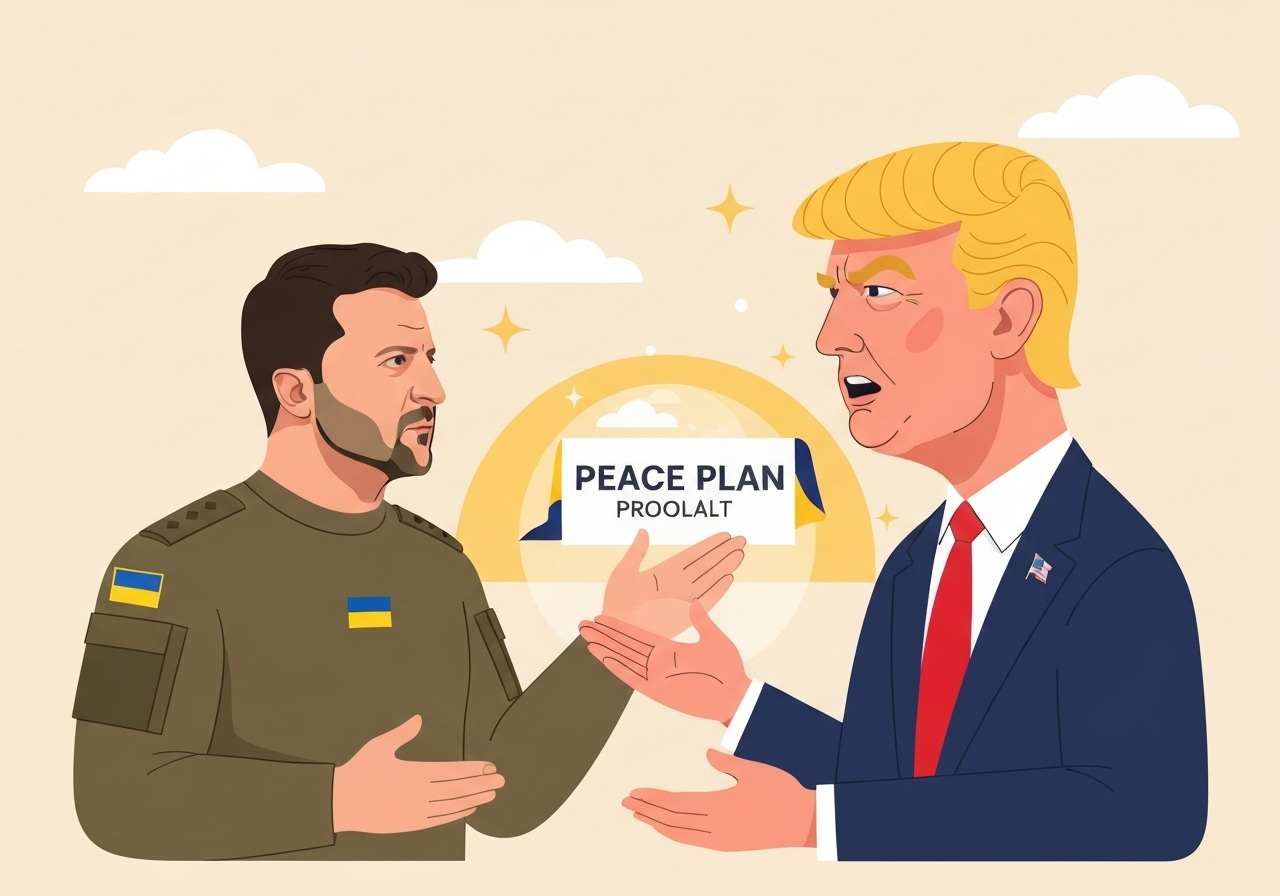
Ukrainian President Volodymyr Zelensky will hold a conversation with former US President Donald Trump after Washington circulated a draft peace plan intended to end the war with Russia. The proposal was reportedly prepared by US special envoy Steve Witkoff together with Russian counterpart Kirill Dmitriev, without Kyiv’s direct involvement. Zelensky’s office said Ukraine will work on the plan’s provisions in a way that could produce a just end to the war, while declining to disclose details. The White House characterized the draft as balanced, even as European officials and Kyiv voiced concerns about being excluded from its drafting.
Key Takeaways
- The plan was reportedly drafted by Steve Witkoff (US special envoy) and Kirill Dmitriev (Russian counterpart) without Ukraine’s participation.
- Multiple media outlets cite that the draft may include about 28 points and asks Ukraine to cede parts of the Donbas it currently holds, reduce its army size, and forgo certain weapons.
- Zelensky met senior US military leaders in Kyiv on Thursday, including US Army Secretary Dan Driscoll, Gen Randy George, and Gen Chris Donahue, shortly after the plan surfaced.
- White House press secretary Karoline Leavitt said the plan is intended to be acceptable to both Russia and Ukraine and denied it forces major Ukrainian concessions.
- Kremlin spokesman Dmitry Peskov acknowledged contacts with the US but said there have been no formal consultations called on the matter.
- EU foreign policy chief Kaja Kallas warned that any workable proposal must include Ukrainians and Europeans in the process.
- Earlier this week Russian strikes struck Ternopil, with at least 26 people reported in the attack, underscoring ongoing hostilities even as diplomatic efforts proceed.
Background
The United States, under initiatives led by former President Donald Trump and his envoys, has pursued separate diplomatic tracks aimed at ending the conflict since Trump began his second term. Those moves have included a bilateral summit in Alaska and repeated visits by Mr Witkoff to Moscow. Washington’s outreach is notable because it has attempted to position itself as a mediator between Kyiv and Moscow without always coordinating those steps with European partners.
The war between Russia and Ukraine entered its fourth year since Russia’s full-scale invasion began, and the battlefield remains active: Ukrainian forces continue to strike Russian infrastructure with long-range systems while Russia sustains missile and drone campaigns against Ukrainian cities. That persistent violence complicates any diplomacy that would require territorial or military concessions, and it heightens Kyiv’s sensitivity to proposals prepared without its input.
Main Event
The draft plan surfaced publicly after reports from several international outlets that it was compiled by US and Russian envoys with no Ukrainian authorship. Kyiv’s official response was cautious: Zelensky’s office said Ukraine would engage with provisions that could bring a just end to the war, but it provided no specifics. Ukrainian MPs and other officials, including MP Lisa Yasko, explicitly said Kyiv had not been consulted and expressed frustration at being left out of drafting processes that affect their sovereignty.
At the White House briefing, press secretary Karoline Leavitt defended the US effort, saying that Mr Witkoff and Secretary of State Marco Rubio had engaged both sides equally. Leavitt described the plan as potentially acceptable to both parties but declined to release substantive details, framing the effort as energetic US diplomacy to restart talks.
The Kremlin reacted in measured terms. Spokesman Dmitry Peskov said contacts with the US had occurred but denied there had been a consultation process that could be described as formal negotiations. Moscow has also reiterated that any peace formula would need to address what it calls the root causes of the conflict, language Kyiv interprets as maximalist demands that could amount to surrender.
Analysis & Implications
If the draft indeed contains terms asking Kyiv to relinquish control over parts of the Donbas, sharply reduce its armed forces, and forgo major categories of weaponry, the balance of concessions would tilt substantially toward Moscow. Such outcomes would reshape Ukraine’s security posture and territorial integrity and likely face strong domestic political resistance in Kyiv and among allied capitals.
For the United States, presenting a plan created with Russian input but without full Ukrainian or European consultation risks alienating key partners. EU foreign ministers already cautioned against sidestepping Kyiv or Brussels, arguing that any viable settlement must carry the consent of those directly affected. Washington’s aim to ‘reinvigorate diplomacy’ could backfire if the proposal is viewed as imposing terms rather than facilitating a mutually agreeable settlement.
Russia stands to gain both diplomatically and politically if global attention shifts to a plan that reflects its core demands. However, accepting a deal that leaves Russian forces unaccountable or that cedes significant Ukrainian territory would be politically contentious in the West and could undermine long-term regional stability. Conversely, if Kyiv is given meaningful guarantees and security architecture, a negotiated end could reduce human suffering and economic costs in the region.
Comparison & Data
| Draft Item (reported) | Likely Ukrainian Position | Likely Russian Aim |
|---|---|---|
| Approx. 28 points reported | Demand full Ukrainian input and security guarantees | Secure territorial and military concessions |
| Cede parts of Donbas under Ukrainian control | Reject territorial loss as basis for peace | Formalize control over contested areas |
| Cut Ukrainian army size; forgo many weapons | Maintain defense capacity | Reduce Ukrainian military threat |
This simplified comparison draws on media reporting that the draft contains around 28 items and on public statements by Kyiv, Moscow and EU officials. It does not assert that these items are final or agreed; rather, it shows how reported elements would align with each side’s stated preferences and red lines.
Reactions & Quotes
Officials in Kyiv and Brussels voiced concern about exclusion from drafting. Below are representative quotations with context.
It is a good plan for both Russia and Ukraine, and we believe it should be acceptable to both sides.
Karoline Leavitt, White House press secretary
Leavitt made this comment during a White House briefing while rejecting suggestions the draft forces major Ukrainian concessions. Her remarks emphasized US intent to present a balanced framework while withholding document specifics.
There were contacts, but no process that could be called consultations.
Dmitry Peskov, Kremlin spokesman
Peskov used cautious language to acknowledge communication with Washington while avoiding characterization that would imply formal negotiation. Moscow has repeatedly framed any future deal as needing to address what it calls the conflict’s root causes.
It looks like someone wants to decide things for us, and that’s very painful for most of us Ukrainians.
Lisa Yasko, Ukrainian MP
MP Yasko expressed frustration at perceived external decision-making. Her comment reflects broader Ukrainian sensitivity to proposals developed without Kyiv’s active involvement and underlines domestic political risk for any deal seen as imposed.
Unconfirmed
- The detailed contents of the draft, including the precise list of 28 points, have not been publicly released for independent verification.
- Media reports that Kyiv must cede specific areas of Donbas, cut its army size and forgo many weapons remain unconfirmed by Ukrainian authorities.
- The extent to which Moscow has formally accepted any of the draft’s terms is unclear beyond statements describing contacts rather than consultations.
Bottom Line
The US-drafted proposal has catalyzed a fresh round of high-stakes diplomacy, but its political future depends on meaningful Ukrainian and European buy-in. Kyiv’s cautious acceptance to ‘work on provisions’ signals a willingness to explore diplomacy while guarding core red lines on territory and security.
If the draft in its reported form indeed demands large concessions from Ukraine, it risks being rejected domestically in Kyiv and questioned by European partners, undermining Washington’s aim to restart talks. Conversely, if subsequent revisions include firm security guarantees, verification and a central role for Ukraine and Europe, a negotiated pathway — however difficult — could reduce violence.
For now, negotiations remain fluid and contingent on whether follow-up talks clarify the draft’s terms and secure credible guarantees acceptable to all principal parties.
Sources
- BBC News — news report summarizing developments and Ukrainian reaction (media).
- Reuters — international news agency reporting on related diplomatic contacts (media).
- Axios — news outlet cited for reporting on draft contents (media).
- Financial Times — reporting on the plan and its possible provisions (media).
- White House Briefing Room — official statements and press briefings by US administration representatives (official).
- The Kremlin — official statements from Russian government spokespeople (official).
- European Council / EU External Action — statements from EU officials including foreign policy chief remarks (official).