
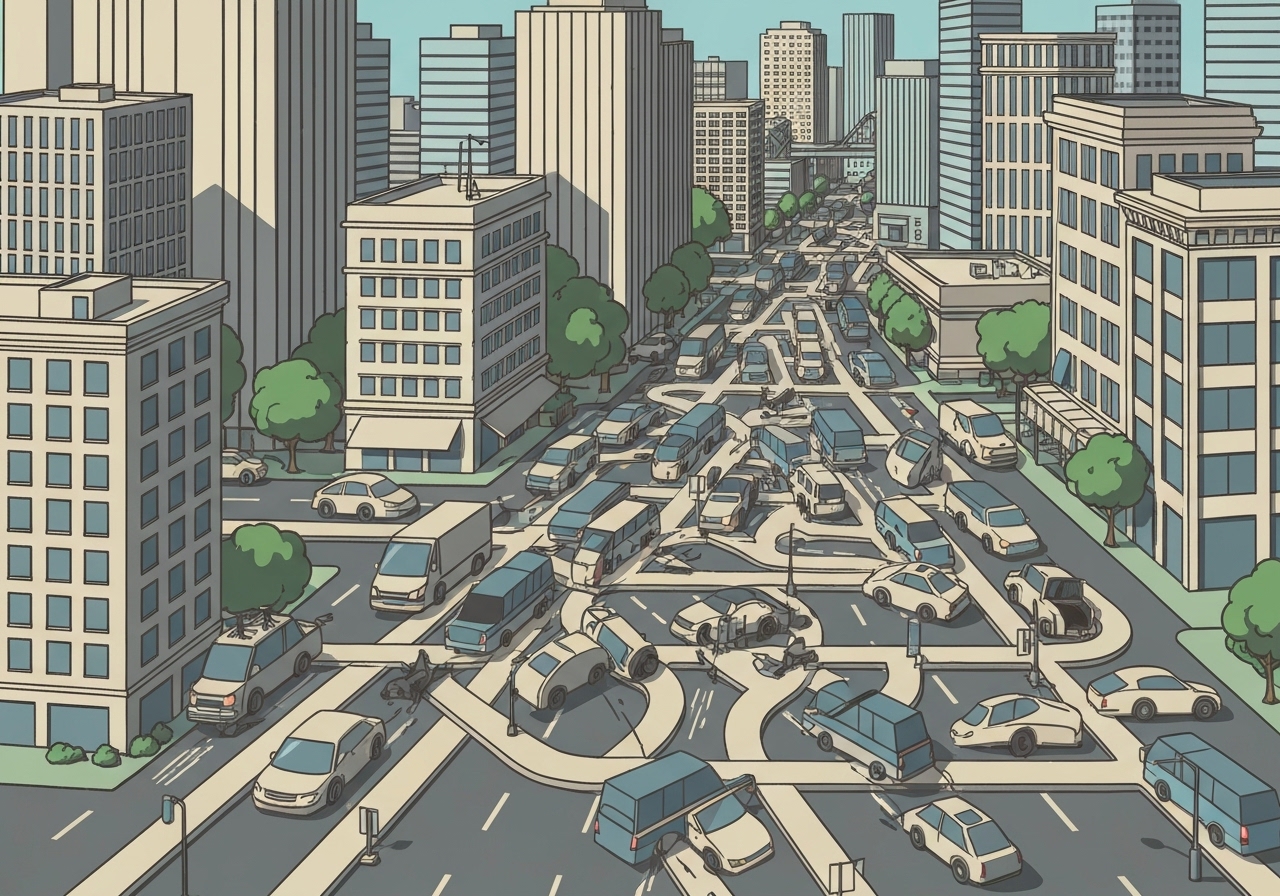
Lead: On Dec. 20, 2025, Waymo announced a temporary suspension of its ride-hailing service across San Francisco after citywide rolling blackouts left roughly one-third of the city without power and numerous autonomous vehicles stalled at dark intersections. The outages, part of Pacific Gas & Electric Co.’s managed cuts affecting about 125,000 homes and businesses, coincided with widely shared videos showing Waymo cars stopped in traffic, contributing to congestion. Waymo said the pause was intended to protect riders and ensure unobstructed access for emergency personnel while utilities restored power. PG&E indicated power restorations would begin later that evening.
- Key Takeaway: Waymo suspended service citywide on Dec. 20, 2025, following a broad San Francisco blackout that affected about 125,000 homes and businesses.
- About one-third of San Francisco experienced power loss during PG&E’s rolling outages; PG&E said restorations would start “later this evening” (statement at 8:30 p.m.).
- Numerous user-posted videos showed groups of driverless Waymo vehicles—sometimes two to five—stopping at intersections where traffic lights were out, producing localized traffic jams.
- Riders and pedestrians reported and shared footage of Waymo vehicles idling at corners and forming lines that human drivers navigated around, amplifying street-level congestion.
- Waymo’s spokesperson Suzanne Philion posted the company decision shortly after 7:00 p.m., citing safety and the need to keep routes clear for emergency responders.
- Online reaction included high-engagement posts; one online account claimed the clip was the 1,000th posted from a local project and cited more than 20 million views on X (unverified by independent metrics).
Background: Autonomous vehicles (AVs) like Waymo’s rely on a combination of onboard sensors, map data, and external signals to navigate urban environments. Traffic-control infrastructure such as signalized intersections is a key input; when those signals become unavailable, AV systems must switch to fallback behaviors that prioritize safety, which can include stopping, yielding, or awaiting remote operator instructions. Rolling power outages are a tool utilities sometimes use to reduce wildfire or grid risk; in this case, PG&E controlled cuts affected roughly 125,000 service points across San Francisco on Dec. 20, 2025.
Waymo has operated in San Francisco for several years under permits and pilot conditions that require coordination with city officials and emergency services. The company uses a mix of fully autonomous software and human oversight, including remote operators who can intervene when vehicles encounter situations they cannot resolve independently. However, remote remediation depends on communications networks and operational protocols that may be stressed during citywide outages, raising questions about resilience in emergency conditions.
Main Event: During the blackout on Dec. 20, multiple social-media posts and short videos circulated showing Waymo vehicles stopped at intersections where traffic lights had failed. Clips captured groups of vehicles—often one behind another—displaying hazard lights in wet weather while human drivers negotiated around them. The footage was posted by riders, passersby, and aggregators and quickly spread across platforms.
Shortly after 7:00 p.m., Waymo issued a brief statement via spokeswoman Suzanne Philion saying the company had temporarily suspended ride-hailing services in San Francisco, citing the broad power outage and the need to keep riders safe and give emergency personnel clear access. Around 8:30 p.m., PG&E posted that power should begin to be restored later that evening, though restoration timelines vary by neighborhood. The combined effect of dark signals, stopped AVs, and human-driven vehicles led to localized slowdowns and complaints from commuters.
Observers noted clusters of two to five Waymo vehicles at different corners across the city, blinking red lights in the rain and forming visual markers of disrupted flow. Riders and drivers shared images and short video clips showing long lines of human-operated cars queuing behind halted autonomous vehicles. Some social posts suggested cellular or network degradation might have complicated remote intervention, a claim that remains to be substantiated.
Analysis & Implications: The incident highlights operational limits that can emerge when AV systems encounter urban grid failures. Traffic-signal outages create ambiguous right-of-way scenarios that AV software must interpret; conservative, safety-first logic can lead to repeated stopping. While that behavior reduces collision risk, it can inadvertently create secondary consequences—traffic bottlenecks and delayed emergency response if not coordinated with city traffic management.
For Waymo and other AV operators, this event underscores the need for robust fallback strategies that balance safety with traffic flow—such as preprogrammed intersection protocols, coordination with municipal traffic-control centers, and redundant communications for remote operators. Regulators and city planners may press for clearer emergency coordination requirements in AV permits, including protocols for power outages, network loss, and multi-vehicle blockages.
There are broader reputational and policy implications. High-visibility incidents during outages can shape public perception of AV reliability and influence local policy debates over deployment limits or operational conditions. Conversely, a transparent post-incident review and measurable improvements in contingency planning could mitigate long-term trust damage and strengthen integration between AV fleets and municipal emergency operations.
| Metric | Reported Value |
|---|---|
| Service suspension | Waymo paused ride-hailing across San Francisco (Dec. 20, 2025) |
| Customers/businesses affected | About 125,000 homes and businesses (PG&E rolling outages) |
| City share without power | Approximately one-third of San Francisco |
| Online engagement (reported) | One account claimed ~20 million views on X for related clips (unverified) |
The table summarizes the principal numerical facts reported by utilities and local coverage. While utility outage counts and Waymo’s suspension are official or company statements, social-media engagement figures should be treated cautiously without independent verification. The data illustrate how an infrastructure event (rolling blackout) cascaded into operational impacts for a major autonomous fleet.
Reactions & Quotes:
“We have temporarily suspended our ride-hailing services given the broad power outage in San Francisco.”
Waymo spokesperson Suzanne Philion (company statement)
Waymo framed the pause as a safety measure intended to protect riders and preserve clear routes for emergency personnel. The timing of the company message—shortly after 7:00 p.m.—came as videos of stalled vehicles were already circulating widely online.
“Power should start to be restored later this evening.”
Pacific Gas & Electric Co. (utility statement, 8:30 p.m.)
PG&E’s brief public update signaled the start of restoration but did not provide neighborhood-level timelines in the immediate message referenced by local reports. Municipal officials and first responders did not report widespread inability to reach emergency scenes in public statements available at the time of reporting.
“This afternoon’s flurry of frozen Waymo’s across the city…causing a historic traffic meltdown.”
Social media account aggregating local videos (public post)
Social-media reaction elevated the visual impact of the incident; high-engagement posts amplified perceptions of a citywide operational failure even though the physical effect was localized to intersections where signals had failed.
- Unconfirmed: Whether cellular-network degradation impeded Waymo’s remote operators remains unverified and was not confirmed by Waymo or the utility.
- The precise number of Waymo vehicles that stopped across the city has not been independently tabulated beyond user-posted clips and is therefore uncertain.
- Claims of 20 million views for the compilation of clips were made by a social account but have not been corroborated with platform analytics or third-party measurement.
Bottom Line: The Dec. 20, 2025 blackout in San Francisco exposed a weak point in the interaction between urban infrastructure failures and autonomous vehicle operations. Waymo’s decision to pause services reflects a safety-first posture, but conservative AV responses to dark intersections can produce secondary disruptions that burden traffic flow and public perception.
Policymakers and fleet operators should treat this incident as a case study in resilience planning: clearer municipal coordination protocols, redundant communications for remote assistance, and contingency behaviors that balance safety with mobility are practical next steps. For San Francisco residents and regulators, the episode will likely prompt renewed scrutiny of AV permitting conditions and emergency-readiness requirements.
Sources:
- Mission Local (local news report on Waymo service suspension and on-the-ground videos)
- Pacific Gas & Electric Co. (official utility statements and outage management)