
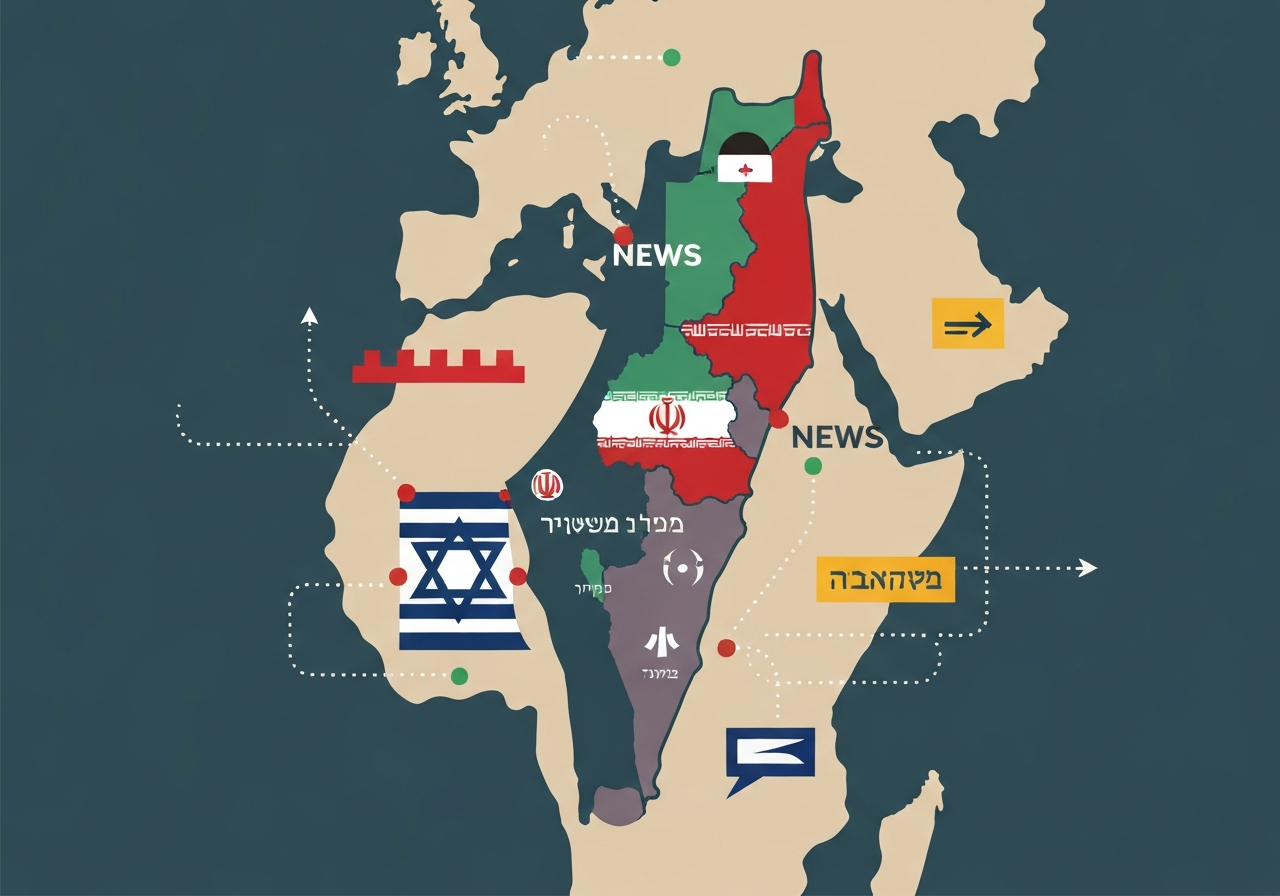
May 10 — Multiple incidents across the Middle East on May 10 heightened regional tensions, with reported strikes, air-defense engagements and maritime incidents centered on the Strait of Hormuz and Gulf approaches. A Qatari vessel was reported to have broken a blockade in the Hormuz corridor while the US and Israeli forces are said to have conducted covert rescue operations from Iraq earlier in the Iran war. Separate reporting alleges Russia has been moving drone components to Iran via the Caspian Sea. Casualty tallies and military actions continue to shift after a ceasefire announced on April 7 and enacted on April 8.
Key Takeaways
- On May 10, regional outlets reported multiple strikes and air-defense actions across the Gulf, including an alleged attack east of the Strait of Hormuz.
- A Qatari ship reportedly breached a blockade near the Strait of Hormuz, an event described in maritime-security reports on May 10.
- IDF and US forces are reported to have mounted covert rescue operations from Iraq during the Iran war; those operations were named Operations Roaring Lion and Epic Fury and began on February 28.
- Since February 28, Israeli authorities report 12 IDF soldiers and 23 civilians killed, and at least 7,693 people injured in ballistic-missile strikes across Israel; CENTCOM reports 13 US service members killed.
- Russia is reported by multiple sources to have moved drone components to Iran through the Caspian Sea, a claim with diplomatic and sanctions implications.
- Maritime security notices (UKMTO) and multiple national defense ministries logged projectiles, drone incursions and an emergency declaration by a US F-35A over Oman on May 10.
- Aramco’s CEO stated global supply has been affected, estimating roughly 1 billion barrels of oil removed from the market over the past two months.
Background
The current wave of hostilities escalated after operations launched on February 28 — publicly referred to as Operations Roaring Lion and Epic Fury — with stated aims that analysts describe as intended to alter Iran’s regional posture. Military strikes and retaliations have since spread across multiple theaters, including Israel, the Gulf and Iraqi airspace. The situation rapidly drew in regional states and external powers, producing a complex web of missile strikes, drone attacks and naval incidents that affect both military users and commercial shipping.
Past episodes in the region show how quickly local clashes can become broader confrontations: attacks on strategic sites, including ports and oil facilities, tend to provoke retaliatory measures and raise insurance and transit costs for global shipping. Gulf states and partners have repeatedly strengthened air defenses and naval escorts in response to repeated drone and missile activity. International maritime monitors have issued increased warnings for vessels transiting the Strait of Hormuz and nearby choke points.
Main Event
On May 10, maritime-security reports indicated that a Qatari-flagged ship navigated through a section of the Strait of Hormuz despite attempts by armed actors to enforce a de facto blockade. The UKMTO and commercial shipping notices logged an attack on a bulk carrier near Qatar earlier the same day, and regional navies increased patrols around key approaches. Those developments fed into an already heightened maritime posture following recent blockade attempts and reported seizures in the Gulf.
Separately, reporting aggregated on May 10 said that Israeli and US units conducted covert rescue or recovery missions staged from Iraqi territory during the Iran war. The operations, described in some briefings as aimed at shaping conditions on the ground, reportedly began on February 28. Officials have characterized those actions as targeted and selective; independent confirmation of the full scope of those missions remains limited.
Additional reports on May 10 described strikes inside Iran that allegedly killed senior figures, prompting retaliatory fires across the region targeting Gulf states and US bases. Those strikes, together with missile barrages into Israel, produced the casualty totals that Israeli authorities and CENTCOM later released. A ceasefire announced on April 7 and implemented on April 8 reduced—but did not fully halt—hostilities; intermittent attacks and maritime incidents persisted into May.
Analysis & Implications
The claimed movement of drone parts from Russia to Iran via the Caspian Sea, if substantiated, would indicate a logistical route that bypasses overland sanctions chokepoints and carries significant implications for enforcement regimes. Such flows enable Iran to replenish unmanned aerial vehicle stocks more rapidly, prolonging its ability to project force via drones and complicating regional air defense burdens. Washington and allied capitals would face pressure to tighten maritime and overflight interdiction efforts and to press partners for closer monitoring of Caspian maritime traffic.
The reported use of Iraq as a staging area for rescue or covert operations raises diplomatic risks for Baghdad, which must balance relations with both Iran and Western partners. Iraqi leadership faces domestic political fallout if territory is used for cross-border strikes or operations without broad government consent. For the US and Israel, operating from Iraqi soil underscores the complexity of conducting deniable or low-visibility missions in a crowded theater of competing state and non-state actors.
Maritime disruptions in the Strait of Hormuz carry direct economic consequences beyond immediate security concerns: Aramco’s CEO’s estimate of roughly 1 billion barrels removed from global circulation over two months underscores how supply-side shocks ripple into insurance costs, freight rates and energy prices. Prolonged uncertainty could push importers to diversify routes and buyers to seek longer-term supply assurances, reshaping regional energy commerce in the medium term.
Comparison & Data
| Metric | Reported Value |
|---|---|
| IDF soldiers killed | 12 |
| Civilians killed in Israel | 23 |
| People injured in Israel (ballistic attacks) | 7,693 |
| US service members killed (CENTCOM) | 13 |
| Estimated barrels removed from market | ~1,000,000,000 |
The table aggregates official tallies and public statements released by national authorities and corporate executives; readers should note that battlefield casualty accounting and supply-impact estimates can be revised as investigations and audits progress. The numbers indicate both the human cost on Israeli soil and a broader economic disruption traceable to sustained hostilities.
Reactions & Quotes
“Air defenses engaged and intercepted two inbound drones believed to have originated from Iran.”
UAE Defense Ministry (official statement)
The UAE’s defense ministry publicly reported on May 10 that its air defenses had dealt with two drones, offering a concise operational confirmation of an attempted cross-border strike and reflecting broader regional concern about drone proliferation.
“Thirteen US service members have been killed,”
CENTCOM (official report)
CENTCOM provided an operational casualty figure tied to the period of intense hostilities following February 28; US military spokespeople emphasized ongoing investigations and the provisional nature of some battlefield reports.
“A vessel was struck by an unknown projectile near Qatar,”
UKMTO / Maritime-security notices (commercial reporting)
Commercial shipping advisories and maritime-security organizations logged an incident involving a bulk carrier near Qatar, prompting heightened escort and monitoring activity in adjacent sea lanes.
Unconfirmed
- Reports that Ayatollah Ali Khamenei was killed in an Israeli strike on a Tehran bunker have circulated in some briefings; independent verification from multiple, independent sources has not been made public.
- Claims that Russia is systematically smuggling drone components to Iran via the Caspian Sea are reported by several outlets but remain subject to further corroboration by interdiction evidence and intelligence disclosures.
- Details about the precise scope and objectives of covert rescue operations staged from Iraq have not been fully disclosed by participating governments and remain partially unattributed.
Bottom Line
The May 10 reports illustrate a conflict that continues to produce both kinetic incidents and strategic second-order effects—on maritime security, regional diplomacy and global energy markets. Official casualty figures and corporate supply estimates point to real human and economic costs, while unverified high-profile claims underline the fog of war that still surrounds many episodes.
Moving forward, the most consequential near-term developments to watch are independent confirmation of high-level fatalities reported inside Iran, verification of trans-Caspian arms flows, and whether maritime interdiction or convoy operations reduce vessel vulnerability in the Hormuz approaches. Diplomats and military planners will also be closely monitoring whether the April ceasefire holds or gives way to renewed, broader exchanges.