
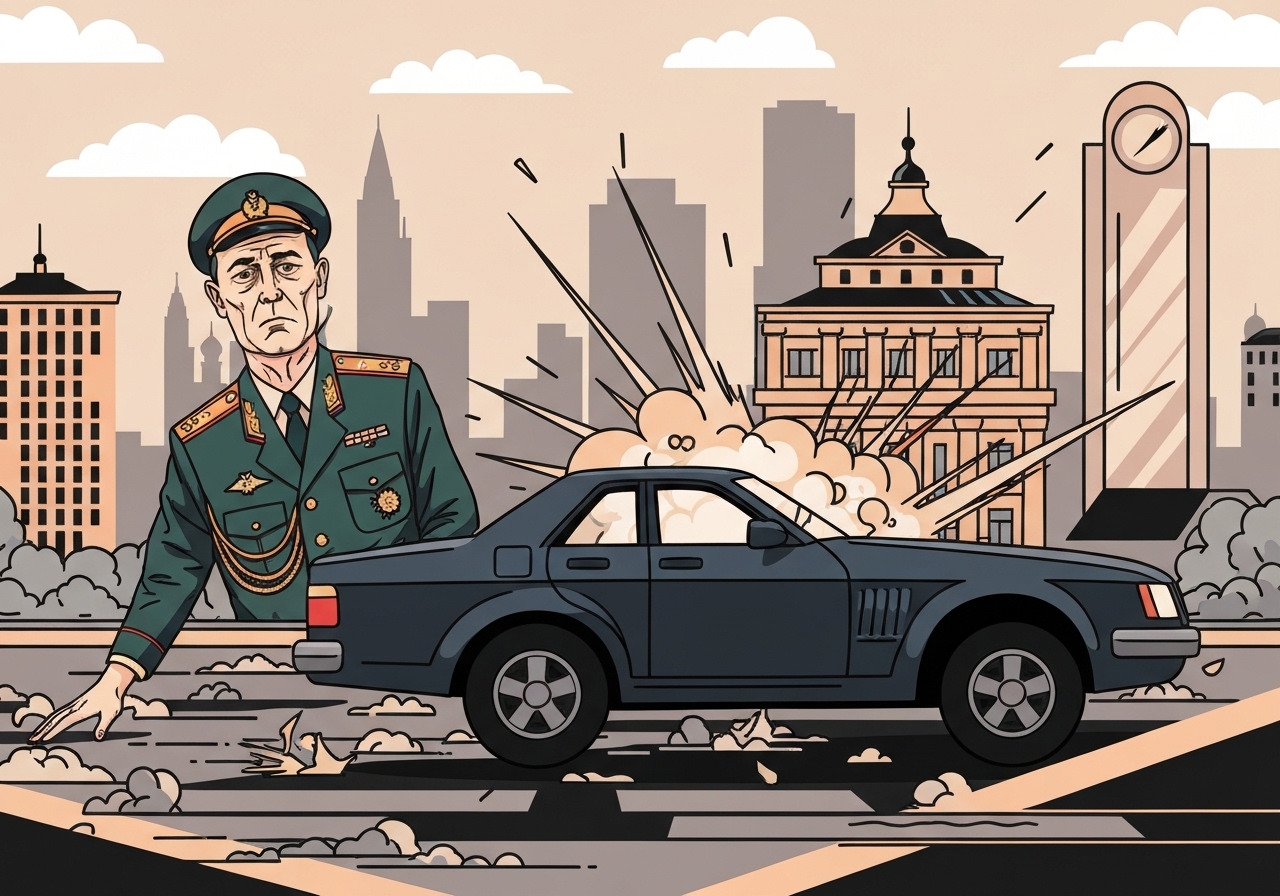
Lt. Gen. Fanil Sarvarov, head of the Operational Training Directorate in the Russian Armed Forces’ General Staff, was killed after a car bombing in southern Moscow on Monday, Russia’s federal investigators said. Sarvarov died from injuries sustained in the blast, authorities reported, and investigators say they are following multiple leads into the attack. The Investigative Committee named one line of inquiry as an alleged operation by Ukrainian intelligence services, a claim Kyiv has not independently confirmed. Kremlin spokesman Dmitry Peskov said President Vladimir Putin was “immediately” informed.
Key takeaways
- Victim: Lt. Gen. Fanil Sarvarov, head of the Operational Training Directorate of the General Staff, died from injuries after a car bombing in southern Moscow on Monday.
- Investigation: Russia’s Investigative Committee said multiple lines of inquiry are open; one alleged lead points to Ukrainian intelligence, according to spokesperson Svetlana Petrenko.
- Presidential notice: Kremlin spokesman Dmitry Peskov said President Vladimir Putin was notified immediately following the incident.
- Pattern: Russian authorities have blamed Kyiv for several high-profile attacks since the full-scale invasion of Ukraine in February 2022.
- Comparable incidents: Senior officers reportedly killed in similar attacks include Lt. Gen. Igor Kirillov (December 2024), General Yaroslav Moskalik (April), and earlier targeted killings such as Maxim Fomin (April 2023) and Daria Dugina (August 2022).
- Public detail: Officials have released limited forensic details so far; independent verification of responsibility is not publicly available at this time.
Background
The killing of a senior Russian general in Moscow comes amid a string of violent incidents in and around the capital that Moscow has repeatedly attributed to foreign intelligence operations since February 2022. The war in Ukraine has heightened Moscow’s security posture and placed pressure on Russian security services to detect and deter covert attacks on military and political figures. Several past cases cited by Russian authorities involve high-ranking military personnel and public figures who died from explosives concealed on vehicles or devices placed near residences.
Russia’s security apparatus, including the Investigative Committee and the Federal Security Service, has publicized some investigative leads in prior cases while also criticizing gaps in protection and information-sharing across agencies. Critics and independent observers have urged caution in accepting official attributions without transparent evidence, noting the political stakes and the difficulty of third-party verification. Family members of victims and some analysts have also raised questions about access to forensic reports and the chain of custody for evidence.
Main event
According to the Investigative Committee, the explosion struck Sarvarov’s vehicle in southern Moscow on Monday. Emergency services transported him to hospital, where he later died of his injuries; officials have not released the exact time of death or detailed medical findings. Law enforcement cordoned off the scene and said forensic teams are collecting evidence while canvassing CCTV and witness accounts from the area.
Svetlana Petrenko, the Investigative Committee’s spokesperson, told reporters investigators were pursuing “numerous lines of inquiry” and that one line involved alleged orchestration by Ukrainian intelligence. The statement did not provide specific forensic or intelligence details supporting that claim. Separately, Dmitry Peskov, the Kremlin spokesman, said President Putin had been informed immediately and that federal agencies were coordinating the inquiry.
Moscow has publicly connected several prior attacks on military figures to foreign services, citing patterns in methods and targeted victims. Investigators in this case are examining vehicle debris, explosive residues and electronic evidence, officials said; they have not released a timeline for results or named suspects. Local officials have increased patrols in sensitive districts and announced heightened protective measures for some senior personnel.
Analysis & implications
Domestically, the assassination of a high-ranking general on Moscow’s streets represents a significant security breach that could erode public confidence in the state’s ability to protect senior officials. Russian authorities face political pressure to demonstrate swift investigative progress; failure to produce credible, transparent findings risks fueling speculation and conspiracy narratives. The incident will likely trigger internal reviews of personal protection protocols and may lead to reshuffling within security services tasked with countering such attacks.
Internationally, Moscow’s allegation that Ukrainian intelligence was involved—if reiterated—could have diplomatic consequences, including public accusations, reciprocal claims or intensified counterintelligence measures. Kyiv has denied or refrained from confirming responsibility in past similar incidents; absent clear, independently verifiable evidence, the claim may have limited traction with neutral third parties. Western governments and independent monitors tend to call for rigorous, evidence-based investigation before assigning cross-border blame.
Militarily and operationally, targeted killings of senior officers affect command continuity and could complicate training, planning and logistics within the Russian military hierarchy. If the pattern of attacks on officials continues, it may force changes to how commanders travel and live, degrade morale among senior leadership, and create friction over resource allocation for protective services. Conversely, if internal failures in security are exposed, the Kremlin may prioritize tighter control over investigative narratives and personnel accountability.
Comparison & data
| Name | Rank/Role | Date | Method | Location |
|---|---|---|---|---|
| Fanil Sarvarov | Lt. Gen., Operational Training Directorate | Monday | Car bombing | Southern Moscow |
| Igor Kirillov | Lt. Gen., NBC Protection Forces | December 2024 | Bomb on electric scooter | Outside apartment (Moscow) |
| Yaroslav Moskalik | Deputy head, operational department | April | Car blast | Near Moscow |
| Maxim Fomin | Military blogger | April 2023 | Exploding statuette | St. Petersburg cafe |
| Daria Dugina | Civilian, public figure | August 2022 | Car bomb | Near Moscow |
The table highlights a variety of methods and targets across a multi-year period. While several incidents share characteristics—use of improvised explosive devices and targeting of individuals tied to military or political influence—each case also differs in location, delivery method and available forensic detail. Comparative review suggests authorities rely on pattern recognition to build public narratives, but independent verification remains uneven across incidents.
Reactions & quotes
“Investigators are pursuing numerous lines of inquiry regarding the murder. One of these is that the crime was orchestrated by Ukrainian intelligence services,”
Svetlana Petrenko, Investigative Committee spokesperson
Petrenko framed the official investigative posture and highlighted alleged foreign involvement while offering few operational specifics. The comment was part of the initial public update released by investigators.
“President Putin was immediately informed,”
Dmitry Peskov, Kremlin spokesman
Peskov’s remark indicated the incident was elevated quickly to the highest level of the executive branch, underscoring the political sensitivity of an attack on a senior military figure within Moscow’s borders.
“A grave error,”
Vladimir Putin (on the December 2024 death of Igor Kirillov)
Putin’s earlier characterization of the Kirillov case as a “grave error” by security services illustrates Moscow’s internal scrutiny following previous fatal incidents and signals expectations that agencies must improve protective measures and investigative performance.
Unconfirmed
- Direct responsibility by Ukrainian intelligence is an official claim but has not been independently verified by open-source or international investigators.
- Any public forensic links between this blast and earlier attacks (chemical signature, explosive type, unique trigger mechanism) have not been released for external scrutiny.
- Claims that the attack used inside access or help from security personnel remain unproven pending investigative disclosures.
Bottom line
The killing of Lt. Gen. Fanil Sarvarov in a Moscow car bombing is a high-profile security incident with immediate political and operational implications in Russia. Authorities have opened several investigative lines and publicly suggested foreign involvement, but independent verification of responsibility is currently lacking. The case adds to a series of targeted attacks that have raised questions about protective failures and interagency coordination.
For observers, the key indicators to watch are: the specificity and evidence provided by investigators, any credible external corroboration, and subsequent policy or personnel changes within Russia’s security services. How Moscow responds—procedurally and rhetorically—will shape both domestic perceptions and the international narrative around accountability and escalation risk.
Sources
- Deutsche Welle (international broadcaster/press)