
Lead
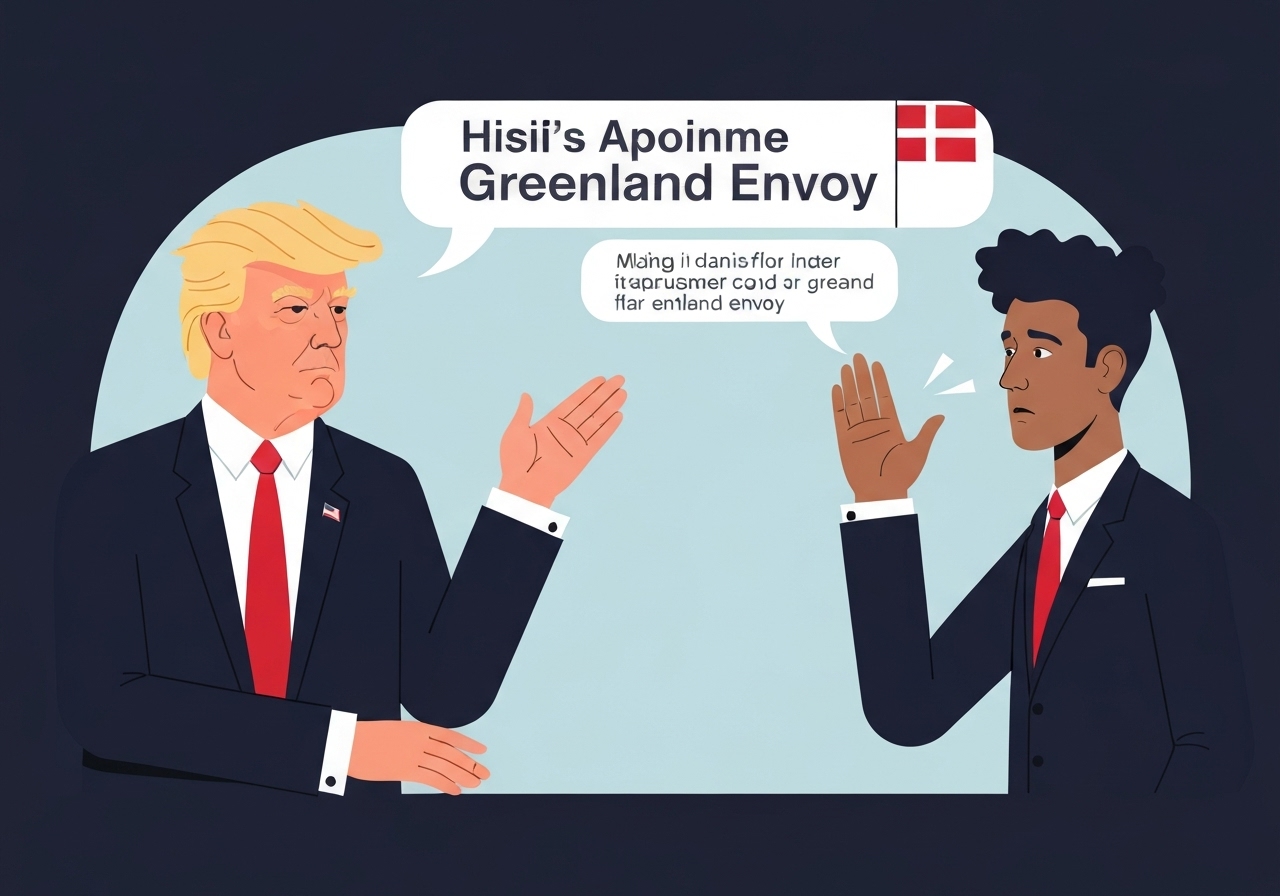
Denmark said on December 22, 2025 it would summon the U.S. ambassador after President Donald Trump appointed Louisiana Governor Jeff Landry as a special envoy to Greenland. The announcement came weeks after Mr. Trump returned to the White House in January 2025 and amid repeated American statements that the Arctic island is strategically vital. Danish officials described the appointment and accompanying rhetoric as an infringement on the Kingdom of Denmark’s sovereignty, and Greenlandic leaders reiterated that Greenlanders will decide their own future. The move has prompted a diplomatic protest that risks straining U.S.-Danish ties and rekindling wider international concern over competition in the Arctic.
Key Takeaways
- On December 22, 2025 Denmark announced it would summon the U.S. ambassador following President Trump naming Gov. Jeff Landry as special envoy to Greenland.
- President Trump, back in the White House since January 2025, has argued the island is needed for U.S. security and has not ruled out force, according to administration statements.
- Greenland has about 57,000 residents; a January poll found most want independence from Denmark but do not favor becoming part of the United States.
- Denmark’s foreign minister called the Landry appointment “deeply angering” and said the ministry would request an explanation from U.S. diplomatic leadership.
- Greenland’s prime minister emphasized that Greenlanders determine their own future and stressed territorial integrity must be respected.
- The U.S. opened a consulate in Greenland in June 2020 and high-level U.S. visits, including a March visit by Vice President JD Vance, have underscored growing American interest.
- Reports in August 2025 led Denmark to summon the U.S. charge d’affaires over alleged attempts to identify local actors favorable to closer U.S.-Greenland ties.
Background
Greenland is an autonomous territory within the Kingdom of Denmark; its strategic position between North America and Europe has long attracted attention from major powers. Climate-driven changes in Arctic sea lanes, the island’s mineral prospects and its location along the shortest missile routes between the United States and Russia have elevated Greenland’s geopolitical significance. Historically, U.S. interest has surfaced repeatedly, including diplomatic and military engagement, and the U.S. established a consulate in Nuuk in June 2020 to maintain a direct presence.
Political dynamics inside the Kingdom complicate outside interest: Greenlanders have a strong current of support for eventual independence, though opinion varies on the preferred partner or timeline. Denmark has consistently maintained that Greenland is not for sale and that the Kingdom’s territorial integrity is sacrosanct. Those positions frame official Danish responses to recent U.S. statements and actions, and they shape how Copenhagen manages relations with Washington while supporting Greenlandic self-determination.
Main Event
On Sunday, President Trump announced the appointment of Louisiana Governor Jeff Landry as a special envoy to Greenland, describing Landry as someone who understands the island’s security value to the United States. Landry publicly thanked the president and described the role as a volunteer position intended to advance U.S. interests. Danish Foreign Minister Lars Lokke Rasmussen replied that he was “deeply angered” and said the ministry would summon the U.S. ambassador to demand an explanation.
Greenland’s Prime Minister Jens-Frederik Nielsen responded on social media that the appointment changes nothing about Greenland’s status, asserting that Greenlanders will decide their own future and reiterating that “Greenland belongs to Greenlanders.” The Danish statement stressed respect for the territorial integrity of the Kingdom of Denmark and insisted that all states must refrain from actions or rhetoric that undermine that sovereignty.
The episode follows earlier tensions in 2025: in August, Denmark summoned the U.S. charge d’affaires after media reports that U.S. officials had been observed in Nuuk attempting to identify local figures sympathetic to closer ties with the United States. High-level U.S. visits, including a March trip by Vice President JD Vance, have amplified public attention to American interest on the island and to Washington’s security rationale.
Analysis & Implications
Strategically, Greenland occupies a central position in Arctic geopolitics. As thawing sea routes increase accessibility and interest in mineral resources grows, Greenland’s geography has made it a focus of U.S., Russian and Chinese activity. For Washington, proximity to North America and potential military and surveillance advantages make Greenland a recurring security priority; for Copenhagen and Nuuk, those same factors make outside offers or pressure politically sensitive.
Diplomatically, the appointment of a political governor as a special envoy bypasses normal channels and risks provoking allied governments by appearing to treat the territory as an expendable asset. Denmark’s decision to summon the ambassador is a formal diplomatic rebuke that signals Copenhagen will defend constitutional arrangements and may escalate if Washington persists with what Danish officials characterize as provocative rhetoric.
Domestically in Greenland, the episode could produce mixed effects. It may strengthen currents favoring greater independence by illustrating the pressure that external powers can place on the island, or it could stimulate debate over closer economic and security ties with the United States among those who see strategic partnership as a path to prosperity. Internationally, NATO partners and Arctic Council members will watch how the United States calibrates its approach to allied sovereignty and competition with Russia and China in the High North.
Comparison & Data
| Item | Detail |
|---|---|
| Population of Greenland | Approx. 57,000 |
| U.S. consulate | Opened June 2020 |
| Poll (January) | Majority favor independence but not joining U.S. |
| Key U.S. visits | Vice President JD Vance visit in March 2025 |
The table summarizes core factual touchpoints cited by officials and media reporting. These data points illustrate why Greenland draws sustained attention from external powers while underscoring that local political sentiment and intra-Kingdom legal arrangements remain central to any outcome.
Reactions & Quotes
Officials in Copenhagen moved quickly to register a formal protest and to clarify legal positions before audiences at home and among allies.
“I am deeply angered by this move and expect respect for our territorial integrity.”
Lars Lokke Rasmussen, Danish foreign minister (statement to TV2)
The Danish foreign minister framed the appointment as unacceptable and signaled that Copenhagen would seek explanations through diplomatic channels. His remarks set the tone for an official response designed to reaffirm Denmark’s constitutional relationship with Greenland and to deter further provocative steps.
“Greenland belongs to Greenlanders. Territorial integrity must be respected.”
Jens-Frederik Nielsen, Prime Minister of Greenland (social post)
Greenland’s leader emphasized local authority over the island’s future and sought to reassure residents that the appointment would not change Greenland’s constitutional status. The comment was intended to defuse uncertainty at home while asserting political autonomy.
“It’s an honor to serve you in this volunteer position to make Greenland a part of the U.S.”
Jeff Landry, Louisiana governor (social post)
Landry’s statement, which accepted the volunteer envoy role, amplified Danish concerns because it suggested a direct American political interest in altering Greenland’s status. That language drew immediate criticism from Copenhagen and raised questions about the objectives and mandate of the envoy role.
Unconfirmed
- Whether Gov. Landry has been given any formal negotiating authority or legal mandate to discuss sovereignty matters on behalf of the U.S. government remains unconfirmed.
- Specific claims that individual U.S. officials engaged in coordinated interference to sway local actors in Nuuk have not been publicly substantiated with documentary proof.
- The precise U.S. policy plan, if any, to alter Greenland’s constitutional status or to transfer territorial control is unconfirmed and contradicted by public statements from both Danish and Greenlandic leaders.
Bottom Line
The appointment of Jeff Landry as a U.S. special envoy to Greenland has triggered a formal diplomatic protest from Denmark and firm pushback from Greenlandic leaders, highlighting the sensitivity of external involvement in the island’s future. The episode underscores the tension between U.S. strategic interest in the Arctic and allied concerns about sovereignty and legal norms.
Watch points over the coming weeks include the content of the U.S. response to Denmark’s request for explanation, any further public statements from Washington that clarify Landry’s mandate, and political reactions within Greenland that could affect the pace or nature of its independence debate. How NATO and other Arctic stakeholders respond will shape whether the dispute remains a bilateral diplomatic friction or evolves into a broader regional issue.
Sources
- CBS News — news report summarizing events and official responses (media)
- Agence France-Presse (AFP) — international news agency reporting used by media outlets (news agency)
- Danish Ministry of Foreign Affairs — official government site for statements and foreign policy positions (official)
- Government of Greenland (Naalakkersuisut) — official portal for Greenlandic government releases and social statements (official)