
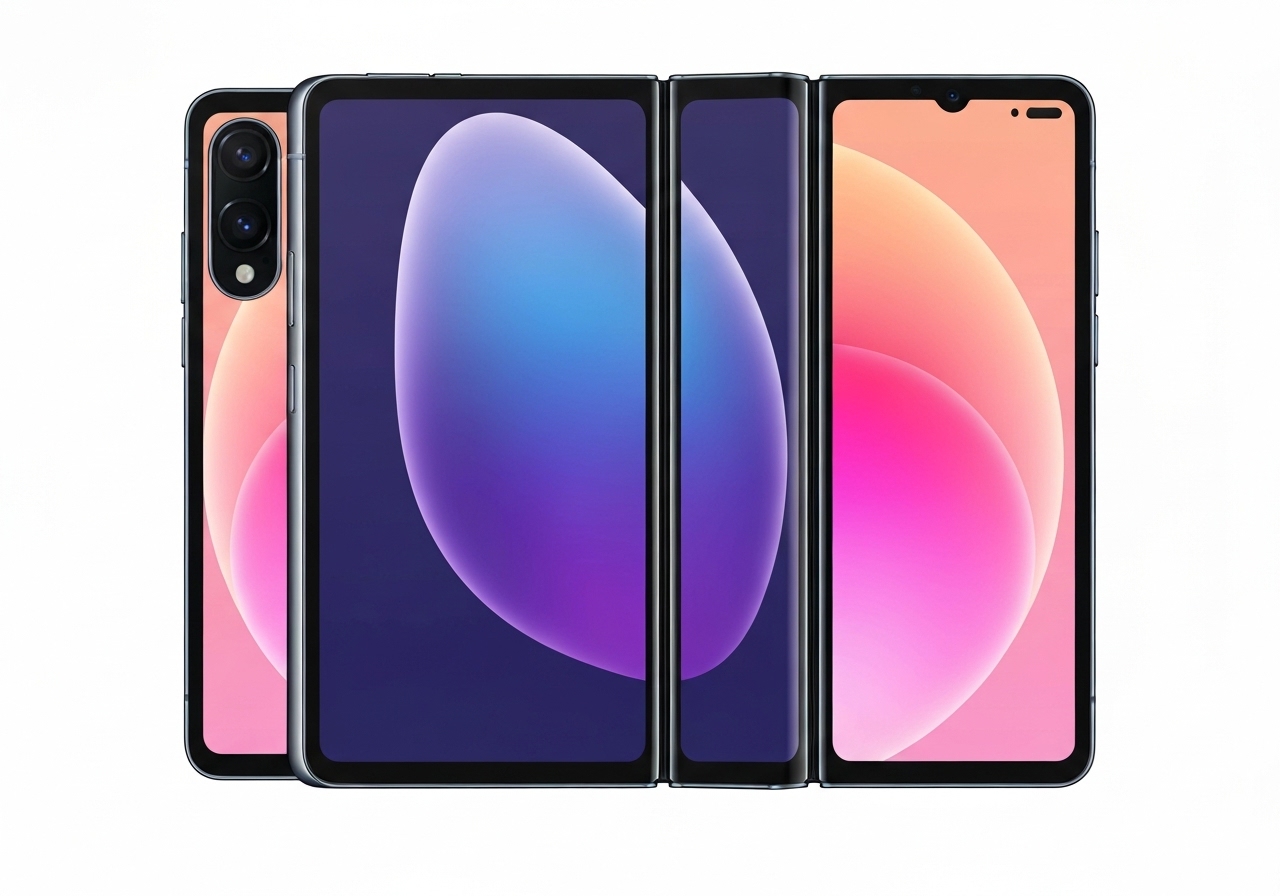
Samsung is reportedly preparing a new foldable codenamed “Wide Fold” that industry outlets say will mirror the display proportions Apple is planning for its first foldable iPhone. Korea’s ET News, citing an unnamed industry source, says the Wide Fold will measure about 5.4 inches when folded and 7.6 inches when unfolded, with a roughly 4:3 aspect ratio. Separate reporting from The Information places Apple’s device at approximately 5.3 inches folded and 7.7 inches open, also favoring a wide, near-4:3 screen. Both companies’ first foldables are currently expected to arrive in the autumn of 2026, setting up a direct product comparison well before launch.
Key Takeaways
- ET News reports Samsung’s Wide Fold will be 5.4 inches folded and 7.6 inches unfolded, adopting a roughly 4:3 aspect ratio when open.
- The Information reports Apple’s foldable will use a 5.3-inch folded panel expanding to 7.7 inches, with proportions similar to large iPads in landscape.
- Both Samsung and Apple are tentatively targeting Fall 2026 for their first foldable launches, per current reporting.
- A 4:3 (or near-4:3) unfolded ratio favors reading, document work and creative tasks but can produce black bars for standard videos.
- Samsung’s recent Galaxy Z Fold 7 already shows how squarer screens affect media playback, with letterboxing visible on many landscape videos.
- Reports rely on unnamed industry sources and machine-translated Korean coverage; key design and final specs remain unconfirmed.
Background
Foldable phones have moved from prototype curiosity to a mainstream product category over the last five years, led by Samsung’s Galaxy Fold line and followed by a range of competitors. Early foldables experimented with book-like and tablet-like formats; manufacturers now test which proportions best bridge phone portability and tablet productivity. Apple has long been rumored to pursue a foldable iPhone, with speculation intensifying as component suppliers and prototype sightings surfaced in recent supply-chain reporting.
Samsung’s approach has historically emphasized the book-style (tall, narrow inner panels) and clamshell styles; the Wide Fold report suggests a different emphasis — a passport-like, wider inner surface that matches tablet-like workflows. Component makers in South Korea and display suppliers in East Asia play central roles in setting the timeline for new designs, which helps explain why early leaks often cite unnamed industry contacts. Market expectations for 2026 reflect product cycles, supplier readiness and the time required to adapt apps and accessories to new aspect ratios.
Main Event
The ET News article—translated in reporting—describes the Wide Fold as a passport-style foldable with a 4:3 screen ratio when unfolded and specific panel measurements: about 5.4 inches closed and 7.6 inches open. That geometry would place it close to the dimensions The Information ascribes to Apple’s device (5.3in closed, 7.7in open) and to the landscape proportions of larger iPads. The overlap in reported measurements has prompted commentators to describe the two devices as targeting the same use cases: reading, creative work and productivity on a compact device.
Bloomberg reporter Mark Gurman earlier characterizes Apple’s rumored design in broader terms, saying the device would resemble two iPhone Airs joined together — a description that suggests Apple’s foldable may prioritize familiar software scaling and premium finishes. Samsung’s Wide Fold, if its reported dimensions hold, would be another manufacturer seeking to balance phone-sized convenience with a larger interior surface. Both companies are expected to emphasize OLED panels, though final panel suppliers and hinge mechanisms remain undisclosed.
Practical implications of a wider, near-4:3 inner screen include improved layout for books, documents and vertical creative tools, but a less ideal fit for conventional 16:9 or 21:9 video content, producing letterbox bars. Samsung’s Galaxy Z Fold 7 already illustrates this compromise: many landscape videos show black bars at top and bottom on its squarer interior display. App developers and streaming services may need to update interfaces to better use these intermediate aspect ratios.
Analysis & Implications
If both Samsung and Apple ship wide, passport-style foldables in Fall 2026, the market will get an immediate point of comparison on display proportions, software scaling and accessory ecosystems. For consumers, the core decision may shift from brand allegiance to which company better adapts apps, multitasking and third-party accessories to a near-4:3 canvas. Developers who optimize for larger square-ish surfaces could gain an early advantage in user experience.
Hardware-wise, matching unfolded sizes (7.6–7.7 inches) means both companies will compete on panel quality, hinge durability, battery life and weight. Apple’s influence in convincing developers to update iOS apps could accelerate its foldable’s utility at launch, while Samsung’s experience shipping multiple foldable generations may give it an edge on reliability and supply. Pricing will also be decisive: foldables remain premium products, and buyers will weigh incremental features against high price tags.
Media playback and content formats form a separate constraint. A 4:3 interior is excellent for document editing, photography and tablets-style interfaces but will display legacy widescreen video with letterboxing unless streaming platforms introduce adaptive UI elements. That trade-off could push manufacturers to implement software workarounds—dynamic letterboxing options, windowed video modes, or aspect-aware UI—to reduce friction for everyday users.
Comparison & Data
| Device (reported) | Folded | Unfolded | Unfolded Aspect | Targeted Launch |
|---|---|---|---|---|
| Samsung Wide Fold (ET News) | 5.4 in | 7.6 in | ~4:3 (passport-style) | Fall 2026 (reported) |
| Apple foldable (The Information) | 5.3 in | 7.7 in | Near 4:3 (iPad-like landscape) | Fall 2026 (reported) |
| Samsung Galaxy Z Fold 7 (ship) | N/A (clamshell open) | N/A | Squarer interior; visible letterboxing | Available 2024–2025 |
The quick table above highlights the close reported panel sizes and shared 4:3 intent. These numbers come from early reporting and industry sources; final consumer models often differ and vendors may alter display diagonals, aspect ratios or hinge geometry before announcement.
Reactions & Quotes
Industry reporting has prompted comments from analysts and journalists about the strategic importance of aspect ratio. Below are representative statements placed in context.
“It will be a ‘passport’ type with a 4:3 screen ratio when unfolded,”
Unnamed industry source cited by ET News
The ET News source framed the Wide Fold as designed for wider productivity tasks; because the source is unnamed and the report was machine-translated, the claim requires independent confirmation prior to treating it as final specification.
“More wide than tall when unfolded,”
The Information (reporting on Apple)
The Information’s coverage emphasized Apple’s reported choice of proportions similar to iPads viewed in landscape. That language underlines the expectation that Apple wants its foldable to function more like a small tablet when opened.
“Looks like two iPhone Airs stuck together,”
Mark Gurman, Bloomberg (characterization)
Bloomberg’s description is interpretive rather than a specification; it suggests Apple may aim for a familiar, closely Apple-family look and feel rather than an experimental form factor.
Unconfirmed
- The exact panel sizes and final aspect ratios for both Samsung and Apple remain unconfirmed by the manufacturers; current figures derive from industry reporting.
- Neither company has officially announced a Fall 2026 release date; that window is based on current media reporting and supply-chain expectations.
- Details about hinge design, final display suppliers, battery capacity and pricing are not yet public and should be treated as speculative.
Bottom Line
Early reports indicate Samsung’s Wide Fold and Apple’s first foldable could converge on a similar display footprint and a near-4:3 unfolded aspect ratio, tilting both designs toward reading and creative workflows rather than pure media playback. If those proportions hold, the devices will demand software updates from app developers and likely prompt accessory makers to design around the new geometry.
Expect most decisive differences to emerge in software polish, ecosystem support and pricing. Samsung brings multi-year foldable experience; Apple brings platform-level influence over developers. Consumers and developers should watch official announcements and hands-on teardowns in 2026 before drawing firm conclusions about which approach delivers the best balance of portability and productivity.
Sources
- The Verge — Technology journalism: original aggregation of reporting and context.
- ET News — South Korean trade/industry reporting: source of the Wide Fold measurements (machine-translated report cited).
- The Information — Technology journalism: reporting on Apple’s reported foldable dimensions and aspect ratio.
- Bloomberg — Business journalism: Mark Gurman’s reporting and interpretations on Apple’s design direction.