
Lead
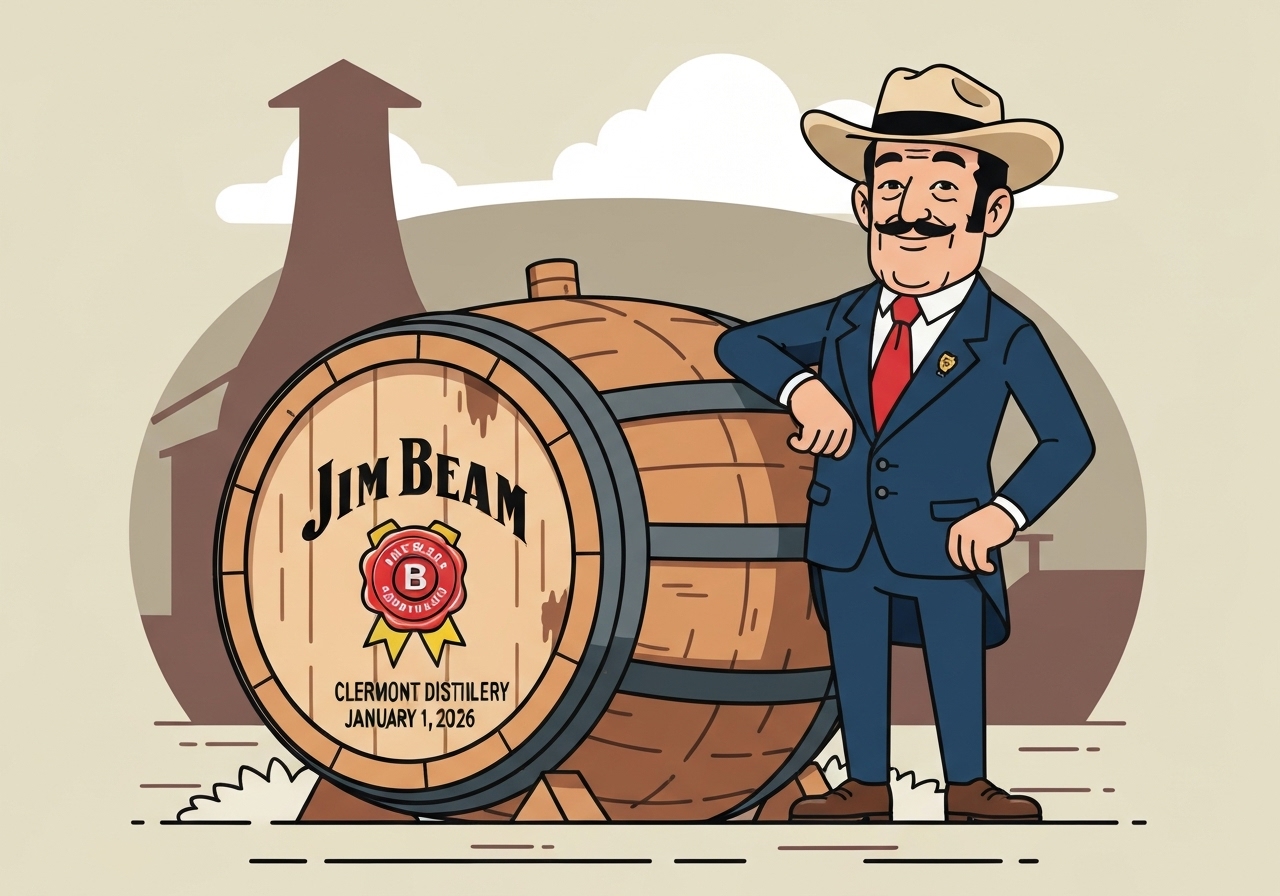
Jim Beam announced it will temporarily halt production at its primary Clermont, Kentucky distillery beginning Jan. 1, 2026, while the site undergoes upgrades. The company — owned by a U.S. subsidiary of Japan’s Suntory Holdings — said the James B. Beam visitor campus will remain open and that distilling will continue at its Fred B. Noe craft facility in Clermont and the Booker Noe distillery in Boston, Kentucky. The pause is presented as a scheduled, temporary pause to enable site improvements; it occurs against a backdrop of weaker U.S. alcohol consumption and falling spirits exports. The decision has prompted industry observers to link company planning with broader market headwinds affecting U.S. whiskey makers.
Key Takeaways
- Jim Beam will stop production at its main Clermont distillery starting Jan. 1, 2026, to carry out site enhancements while keeping the visitor campus open.
- Distilling operations will continue at Fred B. Noe craft distillery (Clermont) and Booker Noe distillery (Boston, Kentucky), maintaining some ongoing production capacity.
- Gallup reports U.S. adult alcohol consumption has declined to 54%, a near 90-year low, reducing domestic demand for spirits.
- The Distilled Spirits Council reported U.S. spirits exports fell 9% in Q2, with shipments to Canada dropping about 85% during the period due to trade tensions.
- Lexington Herald-Leader data show whiskey distillers produced 55 million fewer proof gallons through August year‑over‑year, a 28% decline; a proof gallon equals one U.S. gallon at 50% alcohol.
Background
Jim Beam, one of the largest bourbon producers in the United States, operates a cluster of distilleries and visitor attractions in Clermont, Kentucky. The company is part of a U.S. subsidiary of Suntory Holdings, a multinational beverage conglomerate headquartered in Japan. The Clermont complex includes the main production site and the James B. Beam campus, a significant tourism draw for bourbon visitors.
Over the past three years the U.S. spirits sector has faced multiple pressures: changing consumer habits at home, rising interest in lower‑alcohol and craft alternatives, and international trade frictions. In 2025, Gallup recorded a steep fall in the share of adults who drink alcohol, while industry trade data show export volumes and revenues have contracted after tariffs and retaliatory measures affected key markets.
Main Event
On Dec. 22, 2025, Jim Beam notified media that production at its Clermont main distillery will be paused starting Jan. 1, 2026. The company framed the halt as temporary and linked it to an investment program: “while we take the opportunity to invest in site enhancements,” the company wrote in an email to reporters. Operationally, the pause will focus on large‑scale production lines; smaller craft distillation at Fred B. Noe and Booker Noe will continue, ensuring some volume remains in the supply chain.
The company emphasized that the James B. Beam campus will remain open for visitors during the upgrade work, signaling a desire to preserve tourism revenue and brand engagement even while primary production slows. Local managers have been quoted describing the work as planned maintenance and modernization rather than a closure driven solely by demand collapse.
Industry observers say the scheduling of refinery or distillery upgrades often aligns with lower seasonal demand windows to reduce commercial disruption. Jim Beam’s announcement follows a pattern among large producers who time capital projects to periods when domestic and export volumes are down.
Analysis & Implications
The pause at Clermont has multiple implications. Short term, customers and distributors may see modest shifts in allocation if large‑format bottling lines or maturation runs are interrupted. Because craft distillation will continue, Jim Beam can sustain some product offerings, but large‑scale output from the main plant likely accounts for a sizeable share of the brand’s aged stocks and high‑volume SKUs.
Strategically, the move signals an investment in production infrastructure despite near‑term demand weakness. Companies that use downtime for upgrades can emerge with lower operating costs or higher yield per mash, which may be critical if consumer patterns continue to shift away from high‑volume spirit consumption.
On the trade front, export volatility complicates capacity planning. The reported 9% decline in U.S. spirits exports in Q2 and the sharp fall in Canadian shipments reduce the incentive to maintain peak production levels. If tariffs or trade measures persist, producers may adjust run rates, prioritize certain markets, and delay expansion projects that depend on export growth.
For the Kentucky economy and local employment, a temporary pause has mixed effects: onsite construction and upgrade work can create short‑term jobs and contractor activity, but a reduction in production hours could reduce overtime and ancillary work tied to bottling and logistics.
Comparison & Data
| Metric | Reported Change |
|---|---|
| U.S. adults who drink alcohol (Gallup) | 54% (near 90‑year low) |
| U.S. spirits exports (Q2) | -9% |
| U.S. exports to Canada (Q2) | -85% |
| Whiskey production through Aug. (YoY) | -55 million proof gallons (-28%) |
Those figures show both demand‑side weakness (domestic consumption) and distributive shocks (exports). The drop in proof gallons produced is a direct operational metric that many distillers watch closely; it combines changes in run rates, aging releases and inventory drawdown. For comparison, prior years of growth in bourbon exports helped justify investment in new capacity — the current reversal forces firms to reassess timing.
Reactions & Quotes
Jim Beam’s corporate communication framed the pause as planned investment to improve the site’s long‑term operations while preserving the visitor experience.
“We will temporarily halt production at our Clermont distillery while we take the opportunity to invest in site enhancements.”
Jim Beam (company email to media)
The industry trade group highlighted export declines in its reporting, linking tariffs and market disruption to lower shipments.
“Exports of U.S.-produced spirits fell 9% in the second quarter,”
Distilled Spirits Council (trade report)
Regional reporting emphasized the scale of the production decline among whiskey distillers through August, a metric used by both businesses and regulators to track sector health.
“Through August, whiskey distillers had produced 55 million fewer proof gallons this year than a year ago, a decline of 28%.”
Lexington Herald‑Leader (local reporting)
Unconfirmed
- It is not confirmed whether bottling lines at the Clermont complex will be fully idle or partially rerouted during the production pause.
- No public timetable has been released specifying the expected duration of construction work or the exact date production will resume beyond the Jan. 1, 2026 start of the pause.
- Details on whether the pause will affect specific aged‑stock releases or allocation to export markets have not been publicly disclosed.
Bottom Line
Jim Beam’s scheduled pause at the Clermont main distillery is billed as a temporary, investment‑driven project while keeping visitor operations and smaller craft distillers running. In isolation, the move aligns with normal capital‑project timing, but when viewed alongside falling domestic drinking rates and shrinking export volumes it looks like a risk‑management step amid market weakness.
Observers should watch three signals in the months ahead: the duration of the pause and scope of upgrades, allocation changes to domestic versus export channels, and whether other large producers adopt similar timing for maintenance or capacity adjustments. Those indicators will show whether this is a short corrective cycle or the start of broader industry rebalancing.
Sources
- CBS News — national news outlet reporting company announcement (media)
- Distilled Spirits Council — trade organization report on exports and industry data (trade group)
- Lexington Herald‑Leader — local reporting on whiskey production trends (local newspaper)