
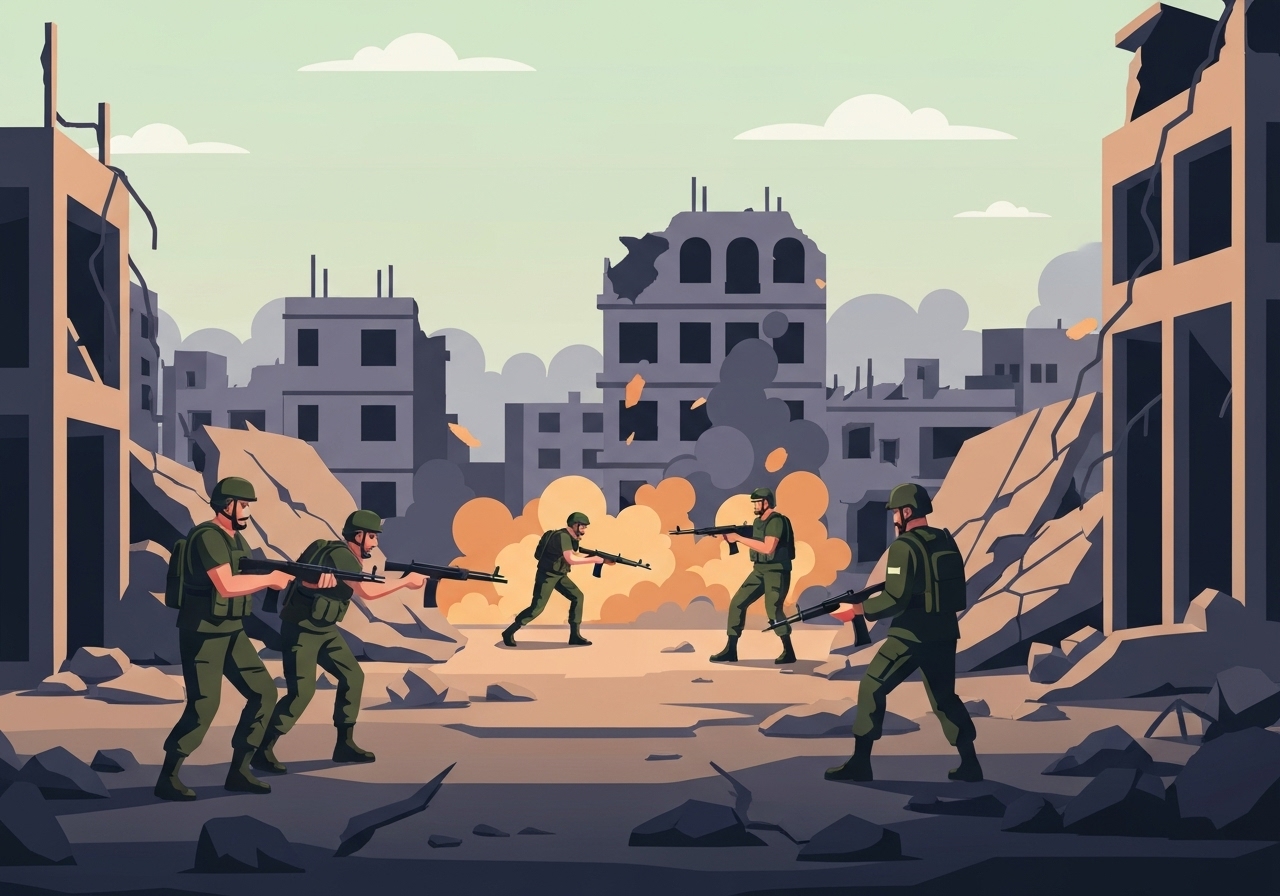
Lead: On Monday in Aleppo, exchanges of heavy fire between Syrian government forces and the Kurdish-led Syrian Democratic Forces (SDF) left at least three people dead and 31 wounded, CNN and local authorities reported. The skirmishes occurred as high-level negotiations continued over a March 10 agreement that calls for integration of SDF-held institutions into Syria’s state framework; the clashes took place less than eight days before a key deadline in that accord. Both the Syrian Defense Ministry and SDF media accused the other of initiating the violence, and later said they had paused attacks amid de-escalation contacts. Turkish Foreign Minister Hakan Fidan — visiting Damascus the same day — said Ankara supports the talks and urged a negotiated outcome.
Key takeaways
- Casualties: At least three people were killed and 31 others injured during Monday’s clashes in Aleppo, according to combined reports from local health authorities and SDF media.
- Local reports: The Damascus-run Aleppo Health Directorate said at least two civilians were killed and eight civilians injured by what it described as SDF shelling of government-held neighbourhoods.
- SDF account: SDF media reported at least one civilian fatality and 23 wounded, including six security personnel, after what it described as mortar and heavy-weapon strikes by pro-government factions.
- Ceasefire context: The violence erupted fewer than eight days before a deadline tied to a March 10 agreement that envisages nationwide ceasefire measures and the gradual integration of civil and military institutions in the northeast into state structures.
- Mutual ceasefire claim: Both sides issued statements accusing the other of initiating the confrontation but later said they had halted attacks amid ongoing de-escalation contacts.
- Regional diplomacy: The clashes coincided with a visit by Turkish Foreign Minister Hakan Fidan, who publicly backed the negotiation process and warned against non-negotiated alternatives.
- Strategic balance: The US-backed SDF remains the most powerful non-state armed actor in Syria and controls strategic territory, principally in the northeast, complicating reintegration plans.
Background
The Syrian conflict has fragmented authority across large swaths of the country since 2011, producing multiple local power structures. The SDF — trained and supported by the United States in the campaign against the Islamic State — carved out consolidated control in the northeast and established civil and security institutions distinct from Damascus. Over recent years, Damascus has sought to reassert sovereignty across contested areas, increasingly pressing the SDF to fold its institutions into the state framework.
On March 10 a framework agreement was announced, committing both sides to a nationwide ceasefire and a phased integration of SDF civil and military components into Syrian state institutions. That deal set a timetable and technical talks, but implementation has been slow and sensitive; key sticking points include command arrangements, local security deployment, and how to accommodate Kurdish political demands without alienating Arab communities or regional actors. External actors — notably Turkey and the United States — have also influenced incentives and constraints on both Damascus and the SDF.
Main event
The exchanges in Aleppo began early Monday, with both sides reporting incoming fire and shelling across front lines inside the city. The Damascus-run Aleppo Health Directorate reported at least two civilian deaths and eight wounded in government-held areas after what it described as SDF shelling. SDF media, led by Farhad Shami, reported a different toll: one civilian killed and 23 injured, including six security members, following mortar and heavy-weapon strikes they attributed to factions linked to the government.
Each side issued statements accusing the other of initiating hostilities. The Syrian Defense Ministry said its forces were firing back at SDF positions that allegedly targeted homes, civilian movements and army or security deployments in Aleppo. The SDF characterized the strikes as attacks by pro-government factions on neighborhoods under its control and framed its response as defensive.
Later Monday both the Syrian Defense Ministry and the SDF said they had halted their respective attacks. The SDF said the pause was “in response to ongoing de-escalation contacts,” while government statements framed the temporary halt as conditioned on security concerns and further negotiations. The pause did not immediately resolve competing narratives over who started the exchanges.
The violence coincided with a high-profile diplomatic moment: Turkish Foreign Minister Hakan Fidan was in Damascus and publicly urged a negotiated political path, framing integration through dialogue and reconciliation as essential to Syria’s stability. Ankara’s longstanding hostility to the SDF — which Turkey links to the PKK — adds another layer of regional pressure on the talks.
Analysis & Implications
Politically, the clashes underscore the fragility of the March 10 agreement’s implementation phase. With a deadline approaching in less than eight days, armed confrontations risk undermining trust between negotiating teams and hardening conditions on the ground that make technical integration more difficult. The mutual pauses indicate some willingness to de-escalate, but repeated flare-ups have historically weakened momentum for institutional integration.
Security implications are immediate: renewed local fighting in Aleppo — a city with mixed control and a dense urban population — raises the prospect of civilian displacement and disruption of services. Health directorate casualty figures and SDF injury reports both point to cross-line fire affecting residential areas, which could increase humanitarian strain if the pattern repeats or spreads to adjacent districts.
Regionally, Turkey’s active engagement and public statements reflect Ankara’s interest in shaping outcomes that address its security concerns regarding Kurdish armed groups. Turkey’s posture can constrain concessions the SDF is willing to make and may push Damascus to adopt firmer positions. Conversely, US backing of the SDF complicates Damascus’s leverage, since Washington’s support has previously deterred some unilateral advances against SDF-held areas.
Economically and administratively, integrating SDF institutions into the Syrian state raises complex questions about personnel, budgeting, and legal authority. Practical integration will require agreed timelines for security-sector realignment, recognition of local civil administrations, and mechanisms to protect minority rights and local governance — tasks that are administratively heavy and politically sensitive.
Comparison & Data
| Metric | Reported figure (Monday) | Source |
|---|---|---|
| Confirmed killed | At least 3 | CNN / local health bodies |
| Reported injured | 31 total (combined reports) | CNN / SDF media / Aleppo Health Directorate |
| Deadline relative timing | Less than 8 days before March 10 agreement deadline | CNN reporting |
The table summarizes the core numerical claims reported on Monday. Differences between the Syrian Health Directorate’s and SDF media’s casualty tallies are consistent with prior incidents where each side provides distinct counts reflecting their focal areas and definitions (civilian vs. combatant). This divergence highlights a persistent challenge for independent casualty verification in conflict zones.
Reactions & quotes
Officials and observers reacted quickly, framing the clashes through competing security and political lenses. Damascus emphasized its narrative of defending residents and state installations; the SDF underscored the civilian harm it says resulted from pro-government strikes. External actors voiced support for negotiation while warning against unilateral measures.
“The SDF has not shown sufficient seriousness in implementing the March 10 agreement,”
Syrian Foreign Minister Asaad Hassan al-Shaibani (state statement reported by SANA)
Syrian state media quoted Foreign Minister Asaad Hassan al-Shaibani accusing the SDF of insufficient commitment to the March 10 framework and saying Damascus had submitted a proposal under review. That framing signals Damascus’s attempt to press a political momentum narrative ahead of the agreement deadline.
“Integration must occur through dialogue and reconciliation; alternative paths would undermine Syria’s security,”
Turkish Foreign Minister Hakan Fidan (joint news conference)
During a joint news conference in Damascus, Turkish Foreign Minister Hakan Fidan publicly backed the talks and warned that non-negotiated approaches would jeopardize stability. Ankara’s statement serves both as encouragement for diplomacy and a reminder of Turkey’s security priorities vis-à-vis Kurdish forces.
“We halted our attacks in response to ongoing de-escalation contacts,”
SDF media statement (Farhad Shami)
The SDF’s public communications framed the pause as conditional on de-escalation, indicating tactical flexibility while preserving political leverage in talks. Each quoted line should be read alongside the competing casualty tallies and operational claims from the Defense Ministry.
Unconfirmed
- Attribution of the initial strike: Claims that pro-government factions initiated the first strikes and counterclaims by the SDF remain contested; independent verification is not yet available.
- Extent of sustained fighting: It is unclear whether the pause announced by both sides will hold beyond immediate de-escalation contacts or whether the confrontation represents a temporary flare-up.
- Details of Damascus proposal: Precise contents of the proposal Damascus reportedly presented to the SDF have not been publicly disclosed and remain unverified.
Bottom line
The Aleppo clashes highlight how volatile implementation of the March 10 agreement remains as the deadline nears. Even limited exchanges in mixed-control urban areas can produce civilian harm, erode trust between negotiating teams, and complicate technical integration work that requires sustained cooperation.
Diplomatic engagement — including Turkey’s public support for talks — creates pressure to find negotiated solutions, but competing security priorities and unresolved technical questions mean the process is fragile. Close monitoring, transparent mechanisms for verifying incidents, and third-party facilitation could be decisive in determining whether the March 10 framework moves from agreement to durable implementation.
Sources
- CNN — international news outlet reporting on the Aleppo clashes and related statements.
- SANA (Syrian Arab News Agency) — Syrian state media reporting official Damascus statements (state/official source).
- Republic of Turkey Ministry of Foreign Affairs — official statements and press releases from the Turkish government (official source).
- SDF Press Office — SDF media statements and casualty figures (organization/official source).