
Lead
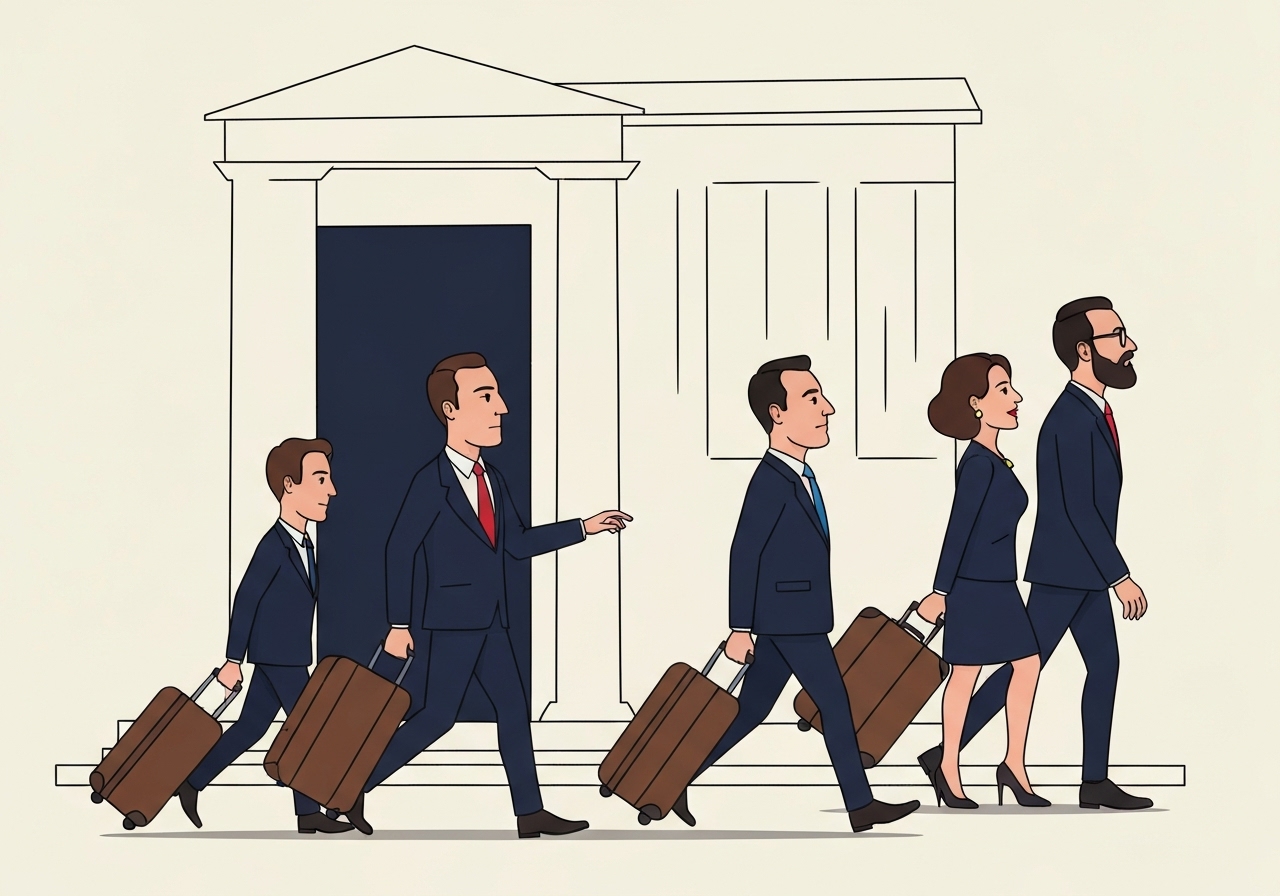
On Dec. 22, 2025, the Trump administration directed nearly 30 U.S. ambassadors—career foreign service officers appointed under the Biden administration—to return to the United States within weeks, with many told to leave by mid-January. The move, announced to affected diplomats by phone according to the union representing career officers, was not accompanied by a public explanation from the White House. If implemented, the order would create a significant temporary gap in the American diplomatic corps even as the president has emphasized diplomacy as a tool for resolving conflicts. The abrupt notifications and lack of formal process have drawn sharp criticism from the American Foreign Service Association.
Key Takeaways
- Nearly 30 career U.S. ambassadors were instructed on or around Dec. 22, 2025, to return to the United States, with many given deadlines in mid-January.
- Affected envoys are career foreign service officers who were nominated under the Biden administration and confirmed by the Senate; their typical tours run three to four years.
- The American Foreign Service Association (AFSA) says this is the first mass recall of career ambassadors in the history of the Foreign Service and called the notification method irregular.
- The White House has not issued a formal public announcement explaining the recalls, and the State Department did not provide an explanatory statement at the time of reporting.
- The action could leave critical embassies understaffed during a period of diplomatic tension or negotiation, raising concern among lawmakers and foreign policy experts.
- Political-appointee ambassadors customarily tender resignations at the start of a new administration; career diplomats have historically remained through a standard tour unless reassigned for policy or personnel reasons.
Background
The United States maintains a diplomatic network staffed by both career foreign service officers and political appointees. Career diplomats are professionals who progress through the State Department and are typically assigned multi-year postings; political appointees are often replaced at transitions between administrations. Historically, mass departures of career ambassadors have been rare, and the process for replacing them generally follows established personnel and Senate-confirmation procedures.
The American Foreign Service Association represents career diplomats and maintains an archive of personnel precedents. AFSA officials reviewed their records and reported they could not find a comparable, documented recall of this scale since the modern Foreign Service was established. The distinction between career and political ambassadors is central to diplomatic continuity: career appointees are intended to provide institutional memory and operational stability across administrations.
Main Event
According to union officials, many of the recalled envoys were notified abruptly, typically by phone, and told they must depart by mid-January. The affected officers serve at embassies and missions worldwide and were originally placed in those roles after nomination by President Biden and confirmation by the Senate. The timeline given to several diplomats allows only weeks to wrap up duties, transfer files, and brief interim officials or deputies.
The White House has not published an official list or rationale for the recalls, and the administration declined to provide a public explanation as of Dec. 22, 2025. State Department offices that normally coordinate personnel transitions did not issue an explanatory statement to reporters covering this development. Career diplomats and their union officials said the process diverged from customary practices for notifying and transitioning senior staff.
In past transitions, political appointees typically offer resignations and are replaced promptly; career diplomats are usually rotated on a schedule tied to their tour length and operational needs. The current recalls appear to focus on career officers rather than political appointees, which is the unusual element that has prompted union and congressional attention. Embassy staffs will need to rely on deputies and locally employed personnel, or temporary chargés d’affaires, until successors are nominated or detailed in place.
Analysis & Implications
The immediate operational impact will vary by post: embassies with greater staffing depth and experienced deputies may absorb short-term gaps, whereas smaller missions could face disruptions to consular services, security cooperation, and ongoing negotiations. Diplomatic continuity matters most at posts engaged in active crisis management or multilateral negotiations; hurried departures can slow decision-making and reduce on-the-ground institutional knowledge.
Politically, removing career ambassadors en masse raises questions about personnel norms and the separation between nonpartisan foreign service professionals and political direction. If the recalls are part of a broader strategy to realign diplomatic priorities, the administration will still need to manage Senate-confirmation timelines for replacements—an often-lengthy process that can leave roles vacant for months.
Economically and strategically, the United States risks diminished influence in specific theaters if ambassador-level representation is absent during key moments. Host countries and partners often view the presence of an ambassador as a signal of engagement; an extended pattern of vacancies could complicate bilateral cooperation on trade, security, and public diplomacy. Conversely, the administration may be recalibrating posts to match new policy priorities, but the lack of transparency makes that claim difficult to assess.
Comparison & Data
| Item | Known Value |
|---|---|
| Recalled ambassadors | Nearly 30 (Dec. 22, 2025) |
| Typical ambassador tour | 3–4 years |
| Public explanation | None issued by White House/State (as of Dec. 22, 2025) |
The table above summarizes verifiable facts reported so far: the scale of the recall (nearly 30), the usual duration of an ambassadorial tour (three to four years), and the absence of a formal administration explanation. These data points frame how unusual the personnel action appears relative to established norms for ambassadorial rotations and transitions.
Reactions & Quotes
Union leaders representing career diplomats publicly criticized the notification method and the lack of transparency, saying the practice diverged from established norms and endangered institutional continuity.
“Those affected report being notified abruptly, typically by phone, with no explanation provided,”
American Foreign Service Association (AFSA), Nikki Gamer
Lawmakers and foreign policy observers urged clarity from the administration on both the scale and the rationale, stressing the need for uninterrupted representation at key posts.
“The administration has not provided a public explanation for these actions,”
White House (no formal public announcement)
Unconfirmed
- Whether the recalls represent an organized personnel purge or a routine reshuffle remains unconfirmed and unsupported by a public administration statement.
- The exact list of affected embassies and the total number of recalled officers has not been officially published and may change as the administration or State Department provides further details.
- Any long-term replacement timetable and whether successors will be career officers or political appointees remains unconfirmed.
Bottom Line
The December 22, 2025, directive to nearly 30 career ambassadors to return to the United States in a matter of weeks is an uncommon personnel action that departs from established norms for managing career foreign service rotations. The immediate operational risks include gaps in leadership at embassies, potential slowdowns in diplomacy, and strains on embassy staff asked to cover senior duties on short notice.
Absent a public rationale from the White House or a formal explanation from the State Department, questions will persist about intent and timing. Congress, the AFSA, and foreign partners are likely to press for transparency; the pace of nominations and Senate confirmations will determine whether the vacancies become protracted or are quickly remedied.
Sources
- The New York Times (media report)
- American Foreign Service Association (AFSA) (union statement/organization)
- U.S. Department of State (official government information on diplomatic appointments)