
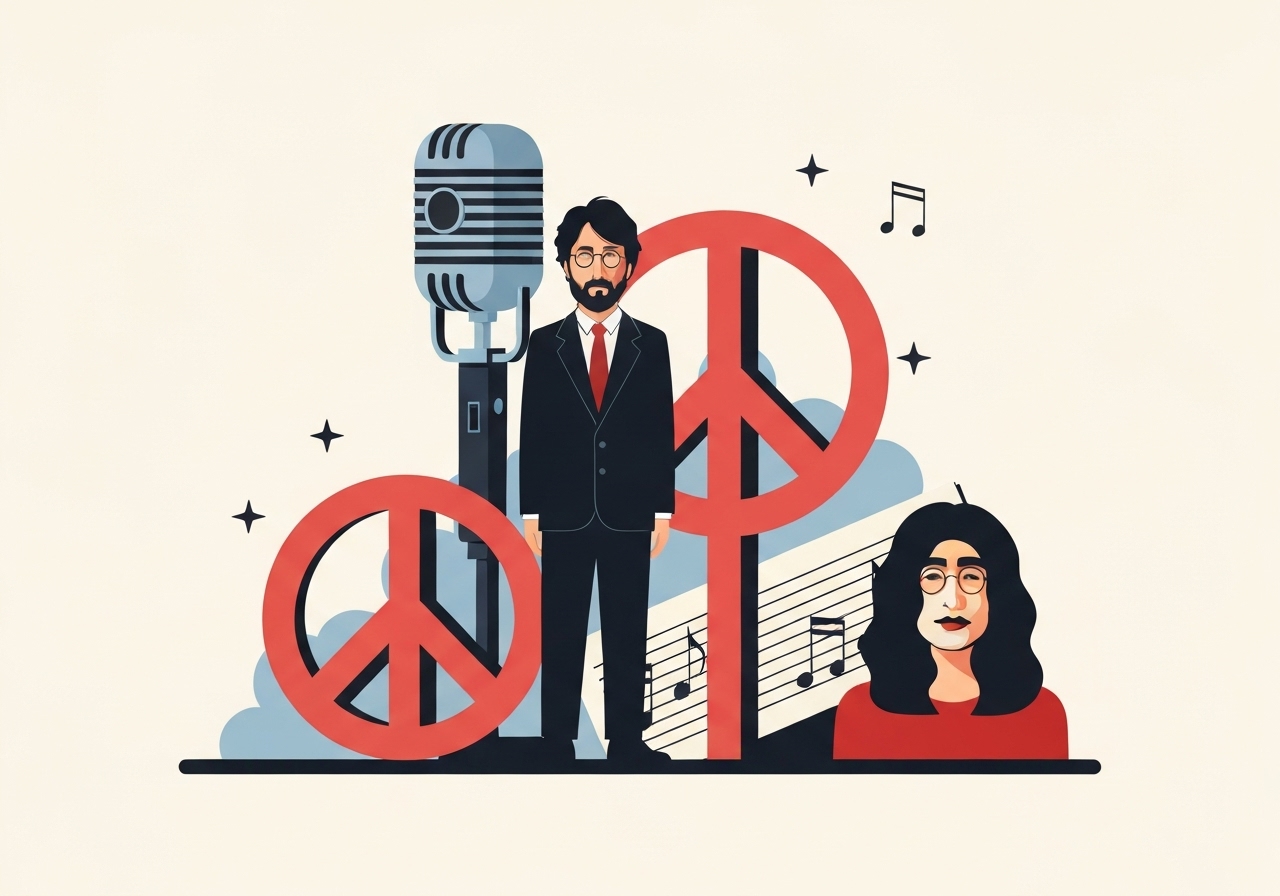
— Sean Ono Lennon spoke in New York about the role he now plays preserving the cultural and musical legacy of his parents, John Lennon and Yoko Ono. The conversation covered his recent projects — including an 11-minute animated short tied to his parents’ song that won an Academy Award last year — and the HBO documentary about John and Yoko’s 1972 Madison Square Garden benefit. Lennon described his stewardship as both personal duty and a public effort to keep the music and its messages alive for younger listeners. He also discussed new recordings with longtime collaborators and the delicate choice not to let nostalgia define contemporary work.
Key takeaways
- Interview date and setting: The interview was published December 21, 2025, with Sean Ono Lennon speaking in New York’s Washington Square Park.
- New short film: Lennon helped produce an 11-minute animated short, “War Is Over!”, which won the Academy Award for best animated short in 2024 and is now available on YouTube.
- Documentary release: HBO released “One to One,” a film about John and Yoko’s 1972 Madison Square Garden benefit, including newly surfaced home-video and recorded material.
- Archival discovery: The documentary team located phone recordings made by John and Yoko as a counter to FBI surveillance, material Sean said he had not previously heard.
- Musical work: Sean produced the documentary’s music (released in a box set) and is recording a new album with the Claypool Lennon Delirium — his third with that project.
- Collaborations among next generation: Sean has recorded a new song with James McCartney and Zak Starkey; the trio stress the collaboration is organic, not an attempt to recreate The Beatles.
- Family responsibilities: With Yoko Ono aged 92, Sean says he has taken on public-facing work around the archive and presentation of his parents’ art and political messaging.
Background
John Lennon and Yoko Ono’s collaboration combined music, visual art, and political activism, reaching a global audience in the late 1960s and early 1970s. Their 1972 benefit concert at Madison Square Garden — the subject of HBO’s “One to One” — came during Lennon’s early years living in New York, a period marked by his high-profile immigration fight with the Nixon administration linked to his anti-war activism. That era produced public statements, performances, and creative experiments that have since been curated by several estates and institutions.
Sean Ono Lennon, born in 1975, has pursued a varied career as a performer, producer and songwriter while also overseeing archival and release projects tied to his parents. Over the past decade, heirs, record companies and cultural institutions have increasingly digitized archives, issued box sets, and authorized documentaries — a trend that raises questions about curation, access, and the emotional stakes for family custodians. Yoko Ono’s long career as an artist and curator has set a standard for presenting John’s material; now in her 90s, some of those duties have shifted.
Main event
Lennon described his work on the short film “War Is Over!”, made in collaboration with animator Dave Mullins, as an effort to reframe a well-known song so listeners would reengage with its message. The 11-minute piece uses visual storytelling — including an image of two soldiers playing chess across fronts — to renew attention to the original recording rather than simply repackaging it for nostalgia. Sean said the film’s Oscar win last year felt intensely personal: a public recognition in a ceremony he found emotionally moving.
The HBO documentary “One to One” brings to light footage from John and Yoko’s 1972 concert and additional archival material that Sean says he had not previously seen. Among the discoveries were home video clips and phone recordings his parents made, reportedly as a response to FBI surveillance; those recordings provide fresh context about the couple’s media strategy and privacy concerns during a fraught political moment. Sean produced the music for the documentary, which was also issued as a box set of recordings and related material.
On his own creative front, Sean is preparing a new Claypool Lennon Delirium album, described as whimsical prog and experimental psych rock, and noted that collaboration remains a core motivation. He and fellow musicians James McCartney and Zak Starkey recorded a track together, but the trio emphasize that their work is driven by friendship and musical interest rather than by any plan to evoke or reproduce The Beatles. Sean framed his custodial role as both familial — “it’s a personal thing” — and civic: he wants younger audiences to recognize the cultural value of the music and the activism it carried.
Analysis & implications
The stewardship of a major cultural legacy requires balancing historical fidelity with contemporary relevance. Sean’s efforts illustrate a common approach: use new formats (animated shorts, restored footage, curated box sets) to surface material for audiences who did not experience the original moment. That strategy can expand reach, but it also risks reshaping interpretation when editorial choices prioritize particular narratives or aesthetics.
Archival revelations — such as the phone recordings made by John and Yoko — can alter historians’ and fans’ understanding of state surveillance and the couple’s tactics. For scholars of 20th-century political dissent, such primary material is valuable; for family members it is intimate. The dual nature of these sources complicates decisions about public release, annotation and contextual framing, especially when legal or ethical sensitivities persist.
Commercially, curated releases and high-profile documentaries sustain catalog sales and streaming interest in legacy artists, creating revenue and renewed cultural influence. For rights holders and estates, the choice of release timing and accompanying interpretive material can shape both scholarship and public memory. Sean’s emphasis on authenticity and restraint suggests a conscious effort to avoid commodifying the past purely for spectacle.
Comparison & data
| Item | Year | Significance |
|---|---|---|
| Madison Square Garden concert | 1972 | Only full-length John & Yoko concert together; focal point of HBO documentary |
| “War Is Over!” short film | 2024 | 11 minutes; won Academy Award for Best Animated Short (2024) |
| Sean’s Claypool Lennon Delirium albums | Ongoing | New release is his third with the project |
The table above places recent releases in historical perspective: the 1972 concert remains a single pivotal public performance, while modern releases (a 2024 Oscar-winning short and newly curated box sets) both reactivate and reinterpret archival material. This pattern — one landmark live event followed by periodic archival rediscovery — is typical for artists of the Beatles era, where periodic reissues and newly found footage prompt waves of renewed interest.
Reactions & quotes
“I love writing and recording, and I hate finishing.”
Sean Ono Lennon
Sean used that line to explain his creative temperament: he enjoys the process of making music and wrestles with closure, which informs how he approaches both his own albums and curated releases of his parents’ work.
“It’s a personal thing.”
Sean Ono Lennon
He said this when describing why he feels obligated to help manage the family legacy, stressing the emotional duty he feels to honor his parents’ contributions without exploiting them.
“She’s good. I mean, you know, she’s 92.”
Sean Ono Lennon
Lennon used this remark to update the public about Yoko Ono’s status: while she has slowed and retired from active public curation, Sean indicated he is stepping into more visible archival and stewardship tasks on her behalf.
Unconfirmed
- Reports that the three sons of the Beatles have been formally offered a large reunion stage event remain unverified; Sean said invitations are common but did not confirm any specific offer.
- Details about the provenance and chain of custody for certain phone recordings have not been independently corroborated in public records reviewed for this piece.
- No public timetable has been announced for further archival releases or a comprehensive authorized biography tied to the new material.
Bottom line
Sean Ono Lennon frames his custodial role as a mix of filial obligation and public-minded curation: he wants to keep the music and the activism of John and Yoko visible without reducing it to nostalgia or spectacle. Recent projects — an Oscar-winning short and an HBO documentary with newly surfaced material — have opened fresh avenues for engagement and scholarship while also raising questions about how archives are shaped and presented.
For listeners and scholars, the coming months are likely to bring more curated releases and debates about context, access and intent. Sean’s stated priority — to encourage younger generations to pay attention to the music and its messages — will guide how these materials are packaged and promoted, and how the legacy of John and Yoko is negotiated in the public sphere.