
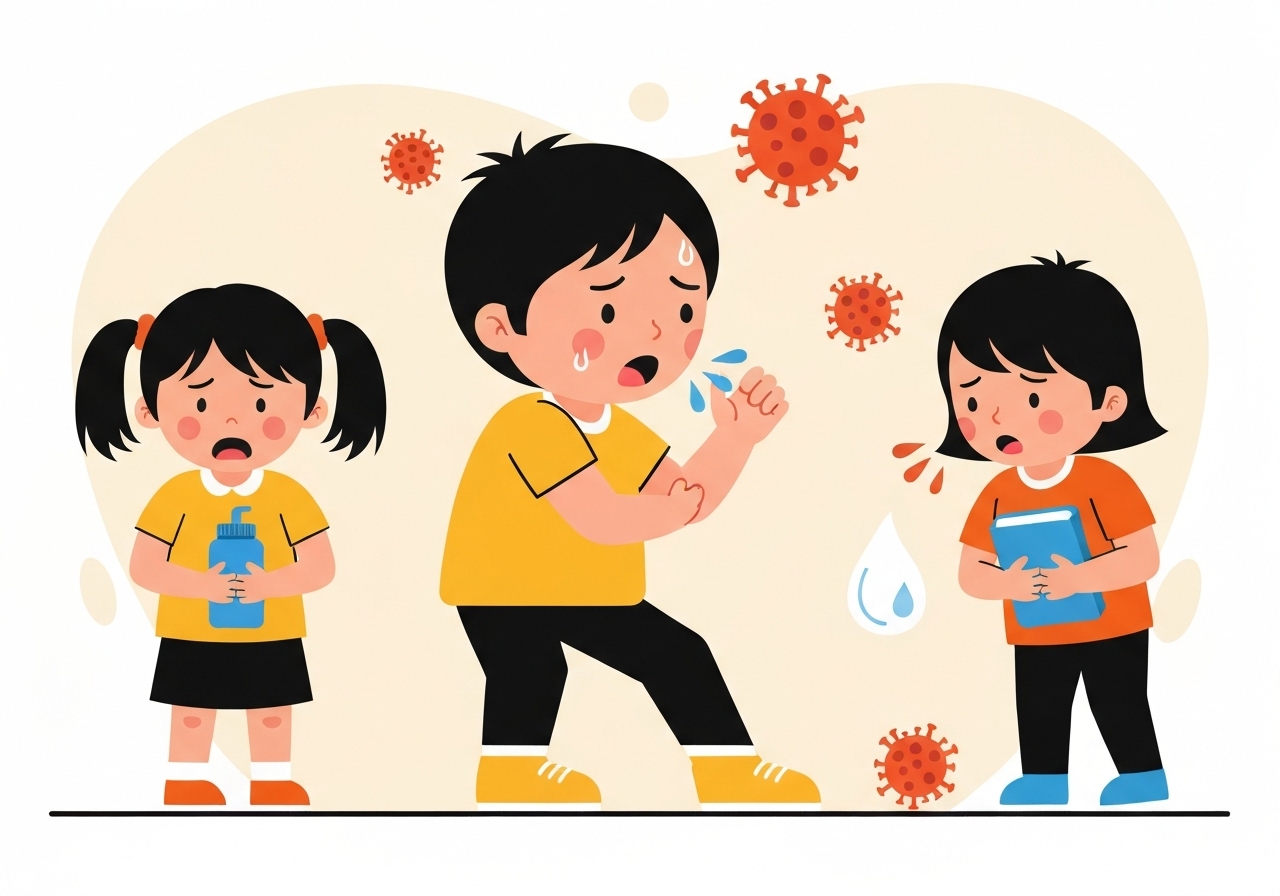
California is experiencing an unusually early rise in influenza activity driven in part by a recently emerged H3N2 subclade. Wastewater monitoring in the Bay Area and test positivity in Los Angeles and Orange counties have climbed, and hospitals are reporting more flu-related visits. Clinicians warn this pattern resembles earlier, intense seasons observed in the Southern Hemisphere and may disproportionately affect children under 10. Public health officials are urging vaccination and early antiviral treatment as the season unfolds.
Key Takeaways
- WastewaterSCAN and local health departments report sharp increases in flu viral material in San Francisco, San Jos, Sunnyvale and Palo Alto sewer samples.
- Test positivity and emergency visits for influenza are rising in Los Angeles and Orange counties, with hospitalizations beginning to increase.
- A novel H3N2 subclade K emerged toward the end of summer after vaccine strain selection, raising questions about seasonal vaccine match.
- UK data show current vaccines were about 70 to 75 percent effective at preventing hospitalization in children and 30 to 40 percent effective in adults, according to CDC summaries.
- Three pediatric flu deaths have been reported nationally this season so far; during the 2024-25 season 280 children died and an estimated 38,000 people died overall.
- Vaccination coverage among children age 6 months to 17 years was estimated at 40.8 percent in early December, below pre-pandemic levels.
Background
Influenza viruses circulate seasonally in temperate regions, typically peaking in winter months. Public health authorities select vaccine strains in the spring to match expected circulating viruses in the coming season; this year a subclade labeled K of H3N2 surfaced after those decisions were finalized. Wastewater surveillance has become a complementary early warning system because it can detect rising virus concentrations before clinical case counts peak.
In past seasons, shifts in dominant flu variants have altered vaccine effectiveness and clinical impact. The Southern Hemisphere’s 2025 winter saw an early, intense H3N2 wave that hit children particularly hard, prompting concern in Northern Hemisphere public health circles. Local stakeholders include county public health departments, health systems such as Kaiser Permanente, and national agencies including the CDC and WHO, all of which track severity indicators and advise prevention measures.
Main Event
Since October 1, the official start of the respiratory virus season, the CDC estimates at least 1,900 flu-related deaths, 49,000 hospitalizations and 4.6 million illnesses nationwide. In California, wastewater and laboratory indicators are rising earlier than usual in parts of the state, and clinicians are seeing higher case counts than typically observed at this time of year. At Kaiser Permanente Southern California, most flu cases so far have been managed in outpatient clinics, though physicians note hospital admissions usually rise after the Christmas period.
State data identify the H3N2 subclade K as an active contributor to the early uptick. That subvariant was detected months after vaccine strain selection, prompting uncertainty about how well the current vaccine will prevent symptomatic infection. National surveillance so far indicates severity measures remain lower than in the worst recent seasons, but the pattern of early spread mirrors countries that experienced stronger flu seasons earlier in the year.
Clinicians are emphasizing prompt diagnosis and antiviral treatment for high-risk patients and young children. Public health guidance from Los Angeles County and the Orange County Health Care Agency recommends vaccination for everyone aged 6 months and older and highlights that it takes about two weeks to build protection after immunization. Emergency departments are already seeing incremental increases in flu-related visits and some hospital wards are preparing for potential surges.
Analysis & Implications
The emergence of H3N2 subclade K after vaccine strain selection is the core uncertainty for this season. If the subclade becomes dominant, vaccine effectiveness against symptomatic infection could be lower than anticipated, but current evidence suggests vaccines still reduce risk of hospitalization and death substantially. This distinction matters for public messaging: vaccination may not prevent all infections, but it remains a key tool to keep severe outcomes and hospital burden down.
Children under age 10 face particular risk for several reasons. Historically, H3N2 seasons and mismatched vaccines have produced higher hospitalization rates among young children. Southern Hemisphere experience this year showed an early and intense wave that disproportionately affected pediatric populations, and U.S. clinicians caution that similar dynamics could play out if transmission accelerates here.
Lower vaccination coverage among children raises the stakes. With an estimated 40.8 percent of children vaccinated by early December, protection at the population level is weaker than in pre-pandemic seasons, increasing the likelihood that more children will be infected and some will develop severe complications. Health systems may see strain in pediatric emergency and inpatient services if cases escalate rapidly.
Comparison & Data
| Metric | This Season / Recent |
|---|---|
| Children vaccinated by early December | 40.8% (2025) |
| Children vaccinated by early December (2019-20) | 51.2% |
| Children vaccinated by end of last season | 49.8% |
| Child deaths in 2024-25 season | 280 |
| Estimated deaths last season (total) | ~38,000 |
These figures show declining pediatric vaccination coverage compared with earlier seasons and large mortality in the prior year, underlining vulnerability if a mismatched H3N2 wave accelerates. Wastewater signals and test positivity provide early indication of rising community transmission, and historical comparisons to Southern Hemisphere outbreaks offer one scenario for what could happen here.
Reactions & Quotes
Public health and clinical leaders have been measured in tone, urging preparedness while noting remaining uncertainties.
We are starting to see a sharp rise in flu cases a few weeks earlier than usual, similar to what was observed in the Southern Hemisphere.
Dr. Elizabeth Hudson, Kaiser Permanente Southern California (regional infectious disease director)
The current vaccine continues to provide strong protection against hospitalization, especially in children, even if strain changes affect symptomatic illness.
U.S. Centers for Disease Control and Prevention (federal public health agency)
Wastewater and local surveillance show increased viral signals across multiple Bay Area communities, which can precede clinical case increases.
Santa Clara County Public Health Department / WastewaterSCAN (local public health / surveillance network)
Unconfirmed
- It is not yet established whether H3N2 subclade K will become the dominant strain across California; ongoing sequencing will determine its prevalence.
- The precise degree to which subclade K reduces protection against symptomatic infection is unclear; laboratory and field studies are still in progress.
- Projections that this season will match the severity seen in Australia are conditional on transmission dynamics that may differ regionally.
Bottom Line
California is seeing an early uptick in influenza activity, with wastewater data and clinical indicators signaling rising transmission. The emergence of H3N2 subclade K after vaccine strain selection introduces uncertainty, but existing evidence indicates vaccination still substantially reduces the risk of hospitalization and death.
Given low pediatric vaccination coverage and early signals from the Southern Hemisphere, clinicians and health departments are reasonably concerned that children under 10 could bear a disproportionate share of severe outcomes. Public health priorities for the coming weeks are to increase vaccine uptake, ensure rapid antiviral access for high-risk patients, and monitor surveillance data closely to guide resource deployment.
Sources
- Los Angeles Times (News outlet)
- California Department of Public Health (State public health agency)
- U.S. Centers for Disease Control and Prevention (Federal public health agency)
- World Health Organization (International public health agency)
- WastewaterSCAN (Wastewater surveillance network)
- Santa Clara County Public Health Department (Local public health agency)
- Kaiser Permanente Southern California (Health system)
- National Immunization Survey (Vaccination coverage data, CDC)