
Lead
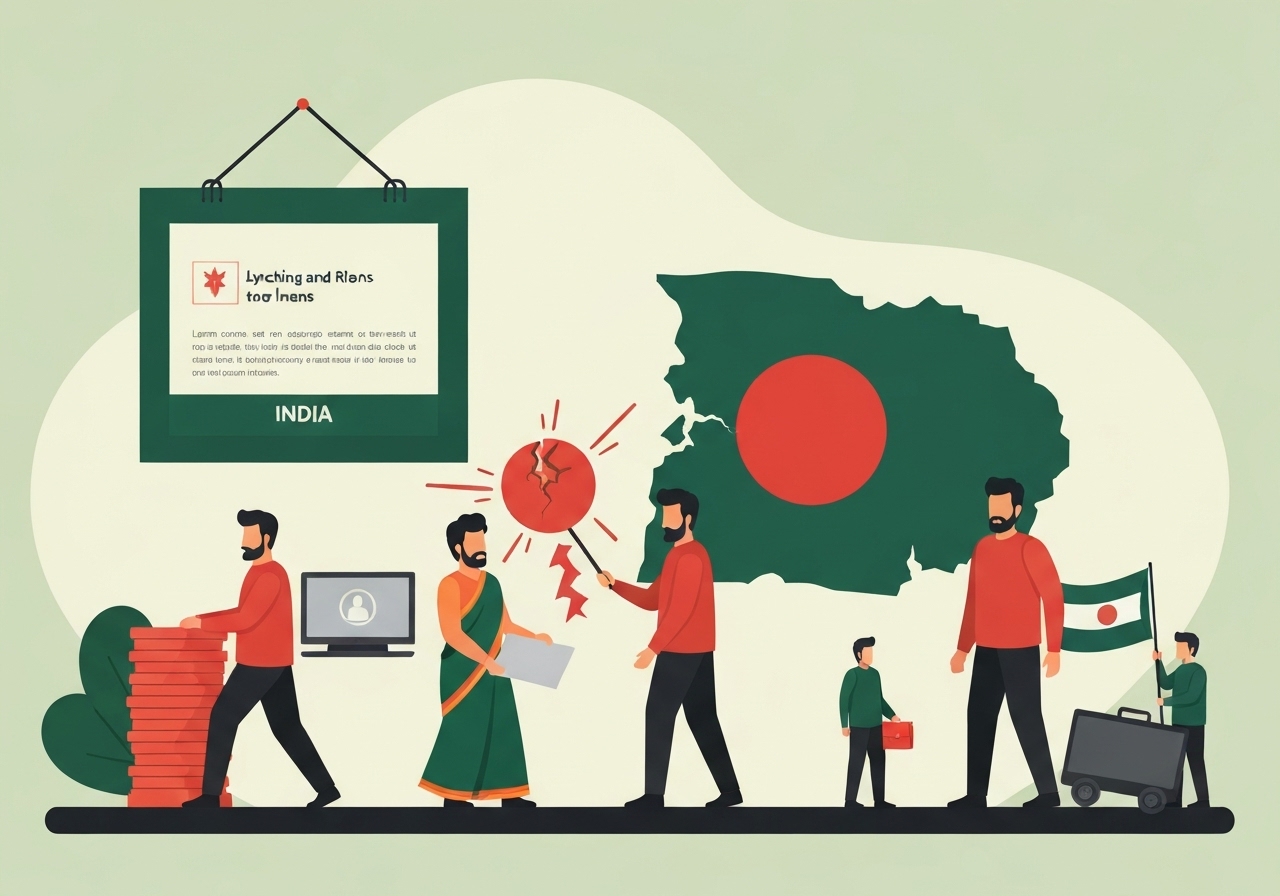
The killing of 27-year-old Dipu Chandra Das in Mymensingh and widespread demonstrations in Dhaka have intensified a diplomatic rift between India and Bangladesh. In the days that followed, Hindu nationalist rallies in India and anti-India demonstrations in Bangladesh prompted both capitals to suspend some visa services and summon each other’s envoys. Bangladeshi authorities say 12 people were arrested over Das’s lynching; Dhaka’s interim government has pledged prosecutions while New Delhi has expressed alarm. The episode has sharpened existing political fault lines ahead of Bangladesh’s 12 February national election.
Key Takeaways
- Victim and location: Dipu Chandra Das, 27, a Hindu garment worker, was lynched in Mymensingh and his body was publicly burned; Bangladeshi police report 12 arrests in the case.
- Triggering context: The violence unfolded amid large protests over the murder of student leader Sharif Osman Hadi in Dhaka, which fueled claims that the main suspect fled to India (unconfirmed by police).
- Diplomatic fallout: India and Bangladesh have suspended some visa services, summoned each other’s high commissioners and traded accusations about the safety of diplomatic premises.
- Civil unrest: Demonstrations included a stone-throwing attack on the Indian assistant high commission in Chittagong; 12 suspects were detained there earlier and later released without charge.
- Political backdrop: The interim government led by Nobel laureate Muhammad Yunus faces elections on 12 February; the Awami League is barred from the vote, raising stakes for stability.
- Social concerns: Analysts and rights groups warn of rising mob violence and growing assertiveness by hardline religious elements targeting minorities, media and cultural institutions.
- Regional implication: Experts warn instability in Bangladesh has direct security and political consequences for India’s northeast and bilateral cooperation.
Background
India and Bangladesh were long described as close neighbours with deep political and economic ties, but relations have periodically been strained by border, trade and political disputes. For many Bangladeshis, perceptions of Indian dominance were aggravated during Sheikh Hasina’s 15-year rule; those tensions intensified after Hasina sought refuge in India following her removal. That shift has been a recurring theme in public discourse and political mobilisation on both sides of the border.
Bangladesh’s interim administration, led by Muhammad Yunus, took office amid heightened political polarisation and pressure to organise credible elections by 12 February. The Awami League—Hasina’s party—has been barred from contesting, a move that reshapes party dynamics and opens space for the Bangladesh Nationalist Party (BNP) and Islamist groups like Jamaat-e-Islami to influence the post-election landscape. Observers say a fragile security environment and contested legitimacy make the interim period particularly sensitive.
Main Event
The immediate flashpoint was the brutal killing of Dipu Chandra Das in Mymensingh after accusations that he insulted the Prophet Muhammad. Video footage circulated online showing Das attacked by a mob, his body later tied to a tree and burned, which inflamed reactions across the border. Bangladeshi police said they arrested 12 people in connection with the lynching and pledged investigations; the interim government condemned the act and promised accountability.
At the same time, Dhaka was rocked by protests over the killing of student leader Sharif Osman Hadi in the capital. Supporters of Hadi alleged that the prime suspect had links to the Awami League and had fled to India—a claim Bangladeshi police said they could not confirm. The convergence of these incidents fuelled mutual recriminations between Dhaka and Delhi, with each side accusing the other of failing to protect diplomatic missions and of stoking unrest.
Public order incidents included a thrown-stone attack on the Indian assistant high commission in Chittagong; authorities detained 12 people in that case but later released them without charge. In India, Hindu groups staged protests outside Bangladeshi diplomatic premises in Delhi, which Dhaka called “unjustifiable”. Both countries temporarily suspended certain visa services in cities including Delhi, and each summoned the other’s high commissioner to register security complaints.
Analysis & Implications
The episode underscores how domestic turbulence in Bangladesh can rapidly translate into bilateral friction with India. The lynching of a minority worker and the murder of a prominent student leader are both domestic crises that carry international repercussions because of strong people-to-people ties and porous border communities. Authorities in both capitals now face competing pressures: to show firmness domestically while avoiding steps that could irreparably damage a strategically important relationship.
Politically, the timing ahead of the 12 February election magnifies risk. The interim government’s limited mandate and contested legitimacy constrain its capacity to deploy long-term reconciliation measures; at the same time, opposition and hardline groups have incentives to use anti-India narratives to mobilise supporters. Analysts warn that such rhetoric can dehumanise critics by labelling them “pro-India,” creating cover for attacks on minorities, journalists and cultural institutions.
Security-wise, India sees stability in Bangladesh as critical to its own northeastern region; Delhi’s willingness to re-engage will likely hinge on who forms the next elected government. A diplomatic reset may be possible with an elected administration, but trust deficits—exacerbated by public anger, reciprocal protests and attacks on missions—mean any rapprochement will require careful, staged confidence-building measures and guarantees for minority protection and mission security.
Comparison & Data
| Item | Count/Date | Notes |
|---|---|---|
| Lynching arrests | 12 | Arrested in Das case, according to Bangladeshi police |
| Detained after Chittagong attack | 12 | Detained then released without charge |
| Scheduled national election | 12 February | Interim government led by Muhammad Yunus in place |
The table underlines the immediate enforcement responses and the looming electoral milestone that frames the crisis. While arrests signal official action, the release of suspects in related incidents has also contributed to perceptions of uneven accountability. The election deadline introduces a narrow window for restoring order before a new government assumes full authority.
Reactions & Quotes
Former Indian high commissioner Riva Ganguly Das warned publicly that escalation must be avoided, reflecting concern among seasoned diplomats about unpredictable spillover effects. Her comments came as both capitals assessed security at missions and weighed limited diplomatic reprisals.
I sincerely hope tensions don’t escalate further on both sides; the volatile situation in Bangladesh makes it difficult to predict which way things will go.
Riva Ganguly Das (former Indian high commissioner to Dhaka)
Bangladeshi analysts and civil society figures highlighted the domestic drivers of the unrest and cautioned that hardline rhetoric could normalise violence against minorities and critics. Such statements aim to shift attention to patterns of domestic polarisation rather than only external interference.
Hardline elements of society now see themselves as the mainstream, and they don’t want to see pluralism or diversity of thought in the country.
Asif Bin Ali (political analyst)
The interim administration, represented by statements from Nobel laureate Muhammad Yunus’s government, condemned the lynching and pledged legal action, attempting to signal that the state will enforce accountability even amid its transitional mandate.
There is no place for such violence in the new Bangladesh; those responsible will be brought to justice.
Bangladesh interim government (official statement)
Unconfirmed
- The claim that the principal suspect in Sharif Osman Hadi’s murder fled to India remains unverified by Bangladeshi police and lacks independent confirmation.
- Reports suggesting organised Islamist groups coordinated recent attacks on media and cultural sites are contested and not fully substantiated by public evidence.
- The precise number of people involved in the mob that killed Dipu Chandra Das and the chain of command behind the attack remain under investigation.
Bottom Line
The lynching of Dipu Chandra Das and the parallel unrest over Sharif Osman Hadi’s death have amplified a bilateral crisis that mixes domestic fragility with geopolitics. Immediate steps by both governments—arrests, public condemnations and limited visa measures—respond to acute pressures but do not, on their own, rebuild trust. Restoring normalised India–Bangladesh relations will require credible investigations, protection for minorities, secure diplomatic premises and disciplined public rhetoric from political leaders on both sides.
With elections set for 12 February, the next government will be pivotal: an elected administration could provide the mandate to pursue bilateral confidence-building, but the transition period is when missteps or provocative statements are likeliest to widen the rift. Domestic accountability and careful diplomacy are the most direct tools to prevent further escalation and to protect civilians caught between politics and communal mobilisation.
Sources
- BBC (international news outlet) — primary reporting on the incidents, arrests, diplomatic moves and statements referenced above.