
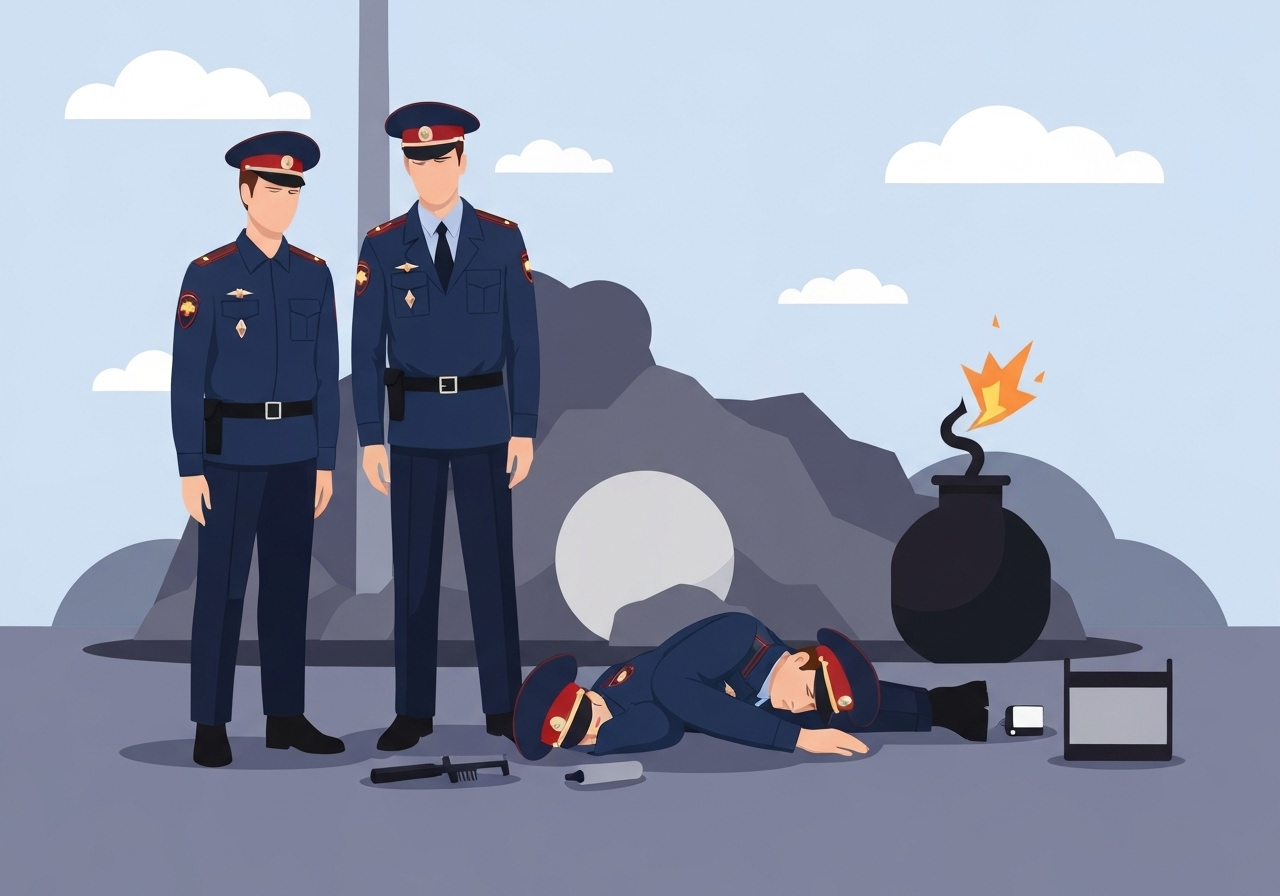
On Wednesday in central Moscow, two police officers were killed by an explosive device after they approached a man acting suspiciously near the spot where Lieutenant General Fanil Sarvarov was killed two days earlier by a car bomb. Russia’s State Investigative Committee said a third person also died in the blast and that criminal cases were opened for the murder of law enforcement officers and illegal trafficking of explosives. Unofficial Russian Telegram channels reported the suspected bomber detonated when approached; Reuters said it could not independently verify that account. Russian authorities have said they suspect Ukraine in the earlier assassination of the senior general; Ukraine offered no official comment.
Key Takeaways
- Two police officers were killed by an explosive device in central Moscow on Wednesday near the scene of a recent car-bomb killing of a senior general.
- The State Investigative Committee reported a third fatality and has opened criminal investigations for murder of law enforcement and illegal trafficking of bombs.
- Lieutenant General Fanil Sarvarov, 56, had been killed by a car bomb two days earlier at a nearby location; Russian officials have blamed Ukraine for that attack.
- Unofficial Telegram channels claimed the person who set off the bomb was among the dead and detonated when approached; Reuters could not independently confirm this claim.
- Myrotvorets, an unofficial Ukrainian database site, updated its entry to say Sarvarov had been “liquidated,” a term it uses for targeted individuals.
- Russian authorities are treating the incidents as linked in timing and proximity, and investigations cite clauses covering attacks on law enforcement.
Background
The incidents come amid a nearly four-year-old conflict that has seen a number of high-profile killings of Russian military figures and prominent supporters of the war in Ukraine. Ukrainian military intelligence has previously taken responsibility for several such attacks, while Russia has repeatedly accused Ukrainian services of conducting targeted operations inside Russian territory. Those operations, claims and retaliatory narratives have heightened security activity around military and government sites in major Russian cities.
Lieutenant General Fanil Sarvarov, the head of the General Staff’s army operational training directorate, was killed by a car bomb on Monday at a location later identified as very close to Wednesday’s explosion. Russian investigators linked the two incidents by geography and timing; their statements emphasize the targeting of law enforcement and the use of improvised explosive devices. International and independent outlets have noted a pattern of assassinations but have not independently verified the full chain of responsibility in each case.
Main Event
According to Russia’s State Investigative Committee, two officers who approached a man acting in a suspicious manner were killed by an explosive device, and a third person also died in the blast. The committee said it opened criminal cases under articles that address the murder of law enforcement officers and the illegal handling or trafficking of explosive devices, signaling an intent to treat the incident as a serious terrorist-style crime.
Unofficial Russian Telegram channels reported that the suspected bomber detonated the device when approached by officers and that the bomber was among the dead. Reuters explicitly noted it could not independently confirm those channel reports, and the investigative body did not publicly identify the third fatality in its initial statement. Local emergency services responded to the scene and cordoned off nearby streets while investigators collected evidence.
The blast occurred a short distance from where Lieutenant General Sarvarov was killed on Monday by a car bomb. Moscow authorities and state media have emphasized the proximity and timing of the two attacks, framing them as part of a worrying escalation in targeted violence against military figures and security personnel in recent months. There has been no public, verifiable claim of responsibility for either attack at the time of reporting.
Analysis & Implications
The rapid succession of these incidents compounds security and political challenges for Russian authorities. If attacks of this nature continue inside major cities, Moscow may broaden countermeasures that could include intensified domestic intelligence operations, increased checkpoints and expanded surveillance authority for law enforcement. Such steps would likely have civil liberties and administrative implications within urban centers.
Internationally, Moscow’s attribution of the earlier killing to Ukrainian intelligence — if repeated and formalized in evidence — could increase tensions and be used to justify diplomatic or covert responses. Conversely, a lack of publicly verifiable proof leaves room for competing narratives, which can complicate international responses and media coverage. Independent verification remains central to how foreign governments and observers judge responsibility and proportionality.
Economically, persistent attacks on military or security figures can raise insurance and security costs for businesses operating in affected areas and could influence investor perceptions of safety in key Russian urban markets. For the Russian military establishment, the deaths of senior officers and the targeting of police on the streets may prompt internal reviews of protection protocols, travel and public engagements for high-ranking personnel.
Comparison & Data
| Date (relative) | Location | Victims | Publicly cited suspicion |
|---|---|---|---|
| Monday | Central Moscow (car bombing) | Lieutenant General Fanil Sarvarov, 56 | Russia suspected Ukrainian intelligence |
| Wednesday | Very close to Monday site | Two police officers and a third person | Investigators opened criminal cases; Telegram channels claim attacker among dead |
The table summarizes the two linked incidents by the relative days reported. Public accounts so far rely on official Russian investigative statements, unofficial Telegram reporting and international wire services; independent verification of perpetrator identity and motive remains incomplete. These events fit into a broader pattern of high-profile targeted killings during the conflict period but differ in location and target type.
Reactions & Quotes
Russian investigative authorities framed the Wednesday explosion as a lethal attack on law enforcement and indicated a formal criminal response. The initial public wording stressed both the fatal outcome and the legal categories being applied.
“They were killed by an explosive device,”
State Investigative Committee (official statement)
Unofficial channels claimed the attacker triggered the device when approached; international outlets noted those reports could not be independently verified.
“The bomber was one of those killed,”
Unofficial Russian Telegram channels (unverified)
Separately, Myrotvorets updated its entry on Sarvarov to describe him as “liquidated,” a term the site uses to denote targeted removals. The update reflects the way some online databases document figures linked to the conflict, though the site is not an official government source.
“The 56-year-old general had been ‘liquidated,'”
Myrotvorets (unofficial database)
Unconfirmed
- Whether the person who detonated the device was the same individual reported as among the dead by Telegram channels has not been independently verified.
- No publicly released, independently corroborated forensic evidence has yet tied the Wednesday blast to the same perpetrators or methods used in the Monday car bomb.
- Russia’s assertion that Ukraine was responsible for the general’s car bomb has not been substantiated in public with forensic or intelligence evidence available to independent media at this time.
Bottom Line
The Wednesday explosion that killed two police officers near the scene of Lieutenant General Fanil Sarvarov’s car-bomb killing intensifies security and political pressures in Moscow. Russian investigators are treating the event as a criminal attack on law enforcement and have opened formal cases, but key details about the bomber’s identity and motive remain unconfirmed in open-source reporting.
Absent independent verification of responsibility, the incidents are likely to be used by different sides to advance narratives useful to their audiences: Moscow to underscore domestic security threats and attribute blame externally, and unofficial channels to signal operational reach. For readers, the primary takeaway is that while official claims and unofficial reports exist, impartial evidence and corroboration are still needed to establish who carried out these attacks and why.