
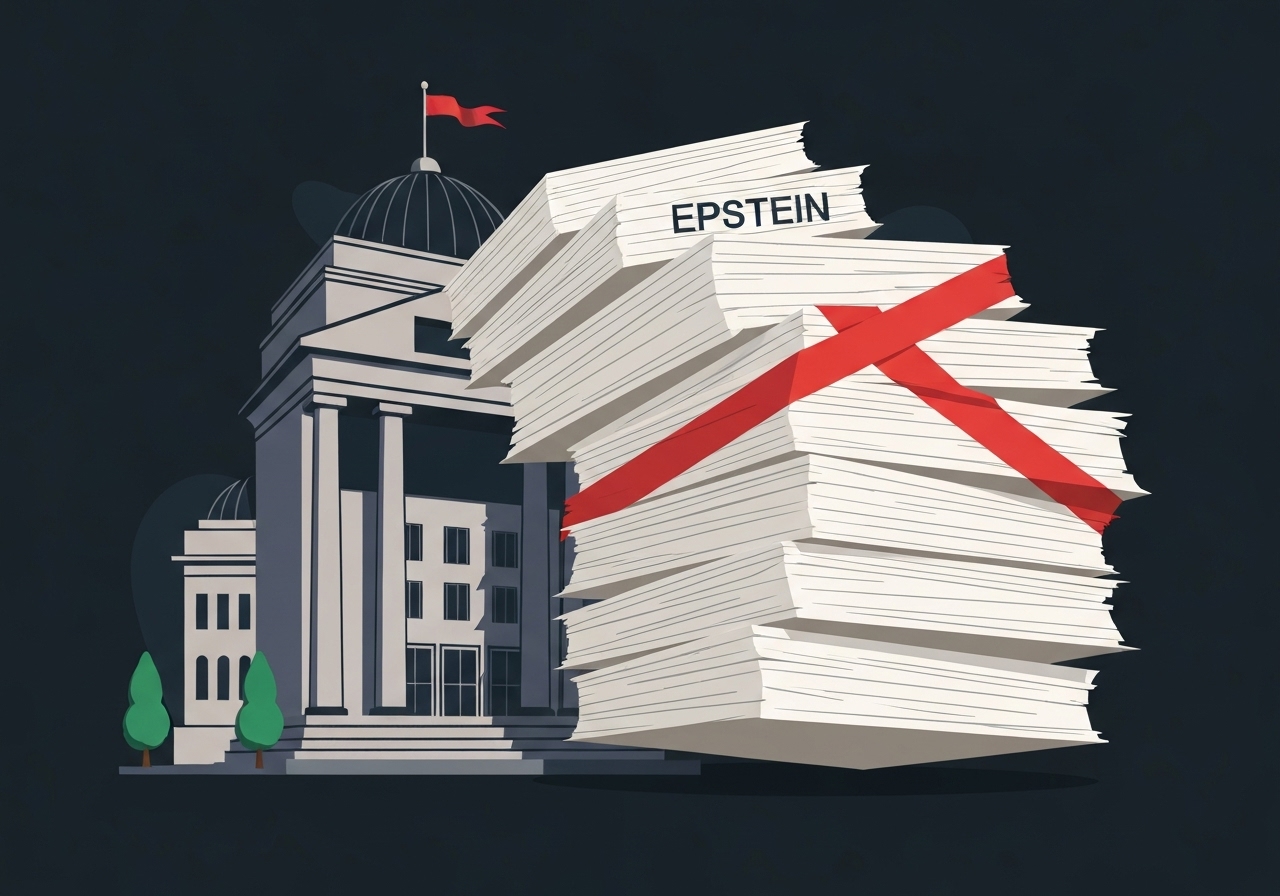
Lead: On Wednesday, the U.S. Department of Justice announced that the F.B.I. and the U.S. Attorney’s Office in the Southern District of New York had identified more than one million additional documents potentially related to the Jeffrey Epstein investigation, expanding the collection already under review. The discovery comes after the department had publicly released roughly 130,000 pages to comply with a congressional disclosure law and after a statutory deadline of Dec. 19, 2025. Federal officials said the newly found material will lengthen the timeline for public release while they review and redact sensitive information. The announcement immediately drew bipartisan criticism from lawmakers who said the delay undermined the law’s intent.
Key Takeaways
- The Justice Department says over 1,000,000 additional pages potentially linked to Jeffrey Epstein were located this week, on top of roughly 130,000 pages already publicly released.
- Nearly 200 lawyers from the national security division were assigned to review material in late November; officials requested more volunteer reviewers over the holiday break.
- Congressional mandate set a Dec. 19 deadline for disclosure, but the law permits withholding material that would identify victims or jeopardize ongoing federal investigations.
- Some photographs and other items briefly removed after earlier uploads were later restored; the department cited victim-protection and investigative concerns for redactions.
- Democratic leaders, including Representative Robert Garcia and Senator Chuck Schumer, publicly urged immediate and full compliance with the statute and called the delay unacceptable.
Background
The disclosure requirement arose from bipartisan pressure after long-running public outrage over how Jeffrey Epstein’s prior plea deal and investigations were handled. Congress enacted legislation directing the Justice Department to make public the bulk of its files related to Epstein, while carving out exemptions to protect victims and ongoing probes. That law set a firm deadline for disclosure and left judgments about redactions to the department, with narrow legal exceptions.
Jeffrey Epstein was a federally convicted sex offender whose network and activities drew investigations by the F.B.I. and the Southern District of New York; Ghislaine Maxwell, a central figure in related prosecutions, was convicted in 2021. Many advocates, journalists and members of Congress have since pressed for transparency to understand the full extent of Epstein’s contacts and any lapses by officials. The recent releases — and the new revelation of more material — occur against that backdrop of sustained public demand for full disclosure.
Main Event
Department officials said the F.B.I. and the U.S. Attorney’s Office in the Southern District of New York notified the Justice Department this week that they had discovered over a million documents that may be relevant to the Epstein file. The deputy attorney general, Todd Blanche, earlier indicated that a large volume of material was under active review and that the review process would extend for weeks beyond the Dec. 19 deadline.
Justice Department spokespeople emphasized the legal duty to protect victims’ identities and preserve the integrity of ongoing investigations, noting the statutory exemptions that permit redaction or temporary withholding. According to internal department notices reported by multiple sources, nearly 200 lawyers from the national security division had been assigned to the review in late November and an emergency plea for volunteer reviewers went out over the holiday period.
The department’s public uploads have already encountered problems: photographs and other pages were briefly removed after the initial release amid concerns they might reveal victim identities or sensitive investigative detail; some items were later restored after review. Officials said they are working to avoid similar inadvertent disclosures while completing legally required redactions.
Analysis & Implications
Legally, the department is navigating a narrow path between statutory transparency and protection of victims and active investigations. The statute requires broad public disclosure but allows the government to withhold records that would identify victims or pose a risk to ongoing probes. That balance gives prosecutors substantial discretion but also exposes them to political scrutiny when disclosure deadlines are missed.
Politically, the delay has immediate consequences. Opponents of the administration framed the discovery and revised timeline as obstructionist; supporters argued that careful review is necessary to protect victims and legitimate national-security or investigative interests. In the polarized environment surrounding the case, even routine procedural safeguards are quickly cast as partisan maneuvers.
For victims and advocates, the extended review is a double-edged sword: it may prevent harmful exposures but also prolongs public uncertainty and delays potential accountability or clarifying information. The eventual public release could affect pending civil litigation, media reporting and historical record, depending on the scope of redactions and the completeness of the archive.
Operationally, the newly disclosed volume raises practical questions about resources, timelines and precedent. Reviewing and redacting more than a million additional pages is a large logistics challenge; the department has mobilized dozens of attorneys but may need more staff or extended timeframes, setting a new reference point for how agencies handle mass document disclosures under congressional mandates.
Comparison & Data
| Item | Pages | Date |
|---|---|---|
| Pages released publicly (cumulative before new notice) | ~130,000 | Through Dec. 19–24, 2025 |
| Batch released around Dec. 19 | ~100,000 | Dec. 19, 2025 |
| Newly reported additional documents | >1,000,000 | Dec. 24, 2025 |
| Lawyers assigned to review | ~200 (national security division) | Late Nov. 2025 onward |
These figures illustrate the scale shift: what appeared to be a large, but finite, disclosure effort doubled in scope once the newly identified documents were reported. The jump from roughly 130,000 publicly released pages to potentially well over a million more documents changes the resource and time estimates for completing redactions and posting materials online.
Reactions & Quotes
Lawmakers and advocacy groups voiced immediate concern that the discovery and subsequent delay undermined the statutory timeline and public trust. Below are representative statements placed in context.
“It’s outrageous that the D.O.J. has illegally withheld over one million documents from the public.”
Representative Robert Garcia (House Oversight Committee Democrat)
Representative Garcia framed the announcement as noncompliance with the congressional deadline and called for immediate release; his statement reflects broader Democratic impatience with the administration’s handling of the disclosure.
“Justice delayed is justice denied. Release the files. Follow the law.”
Senator Chuck Schumer (Senate Minority Leader)
Senator Schumer used public messaging to press for transparency and to emphasize the political stakes in New York, where many Epstein-related investigations were centered.
“We have lawyers working around the clock to review and make the legally required redactions to protect victims, and we will release the documents as soon as possible.”
U.S. Department of Justice (public statement)
The department’s statement underscores its stated priorities — protecting victims’ privacy and national security — while acknowledging the staffing-intensive nature of the review.
Unconfirmed
- Whether the newly discovered documents contain previously unknown victims or materially new allegations has not been independently confirmed.
- The exact composition of the newly reported files (e.g., emails, attachments, photographs) and how many unique pages they encompass remain unclear pending inventory and review.
- How many additional lawyers or contractors will be ultimately required to complete redactions and when the full release will occur remains undetermined.
Bottom Line
The Justice Department’s announcement that more than a million additional documents related to Jeffrey Epstein have been identified significantly alters the timeline for public disclosure and raises resource and trust questions. The department is legally permitted to withhold material that would identify victims or harm active investigations, but the scale of the new material has already widened political scrutiny and intensified demands for accountability.
How the Justice Department balances rapid transparency with victim protection will shape public confidence in the outcome. Expect continued congressional oversight, intensified media attention, and a protracted review process; the final, redacted archive will determine whether the disclosure satisfies legal requirements and public expectations.