
Lead
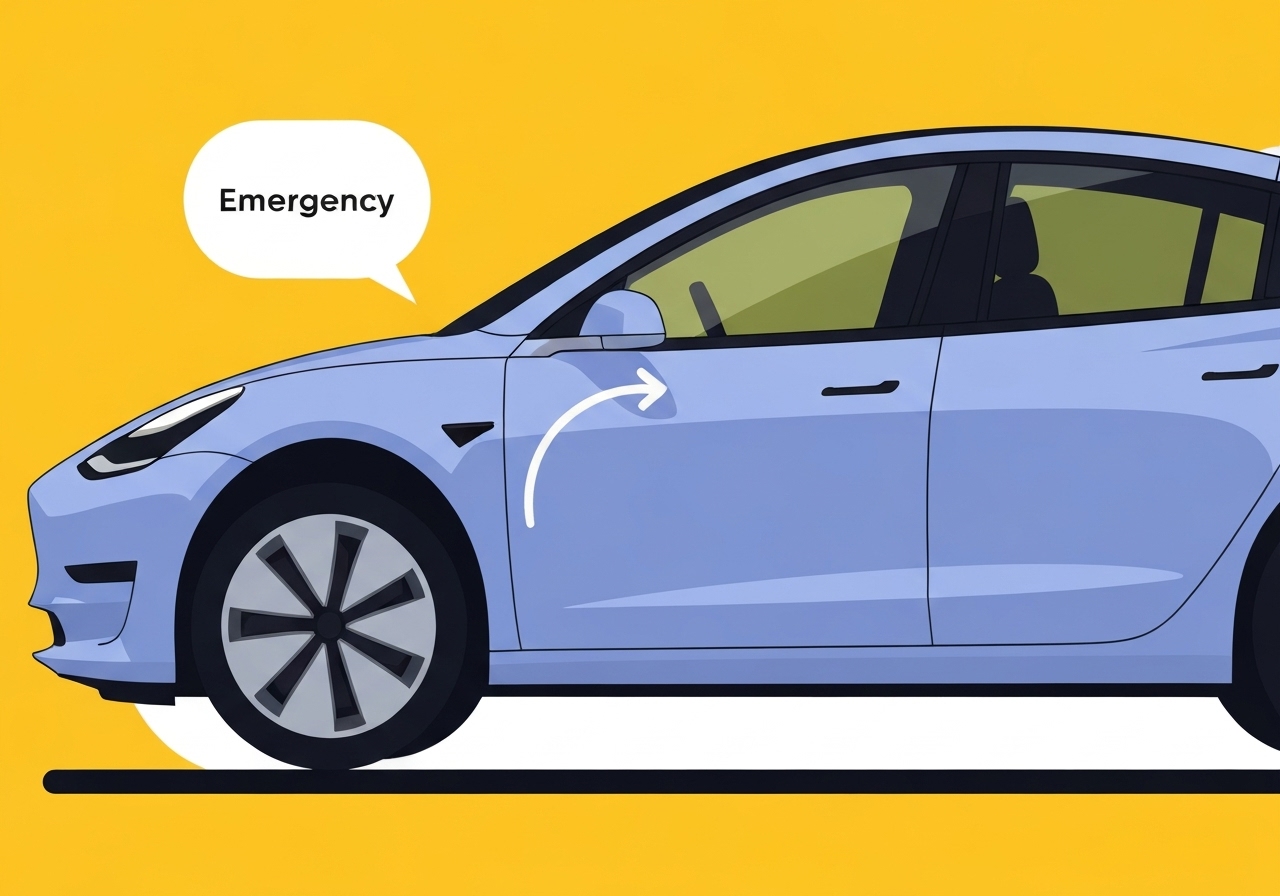
U.S. safety regulators opened an inquiry on Dec. 23 into the emergency door-handle design of certain Tesla Model 3 cars after a vehicle owner alleged the manual release is hard to find in a crisis. The National Highway Traffic Safety Administration (NHTSA) says the complaint followed a 2022 Model 3 fire in which the driver said he had to exit through the rear window. The agency’s online filing indicates the probe covers roughly 179,000 Model 3 vehicles from the 2022 model year. Tesla did not immediately respond to media requests for comment.
Key Takeaways
- NHTSA opened its inquiry on Dec. 23 after receiving a complaint about the Model 3’s emergency mechanical door release.
- The inquiry’s scope covers approximately 179,000 Model 3 cars from the 2022 model year, per the NHTSA filing.
- The complainant reported escaping through a rear window after a 2022 Model 3 caught fire and said the manual release was “hidden, unlabeled and not intuitive.”
- Recent precedent includes a 2023 Tacoma crash in which a door-handle issue reportedly impeded rescue; that incident left one person dead and another severely injured.
- Bloomberg has reported at least 15 deaths over the past decade tied to situations where Tesla doors could not be opened after crashes and fires.
- NHTSA inquiries can lead to further investigation steps, including a formal defect investigation or safety recall if evidence supports a safety-related defect.
Background
The Tesla Model 3 has been under public and regulatory scrutiny since its introduction, as electric-vehicle design choices—such as electronic latching and software-dependent systems—intersect with traditional rescue practices. Automakers increasingly favor electronic actuators for door operation to integrate safety systems and crash sensing, but those systems can fail or be disabled in severe collisions or fires. Manual mechanical releases are intended as a backup, yet design and labeling vary across models and years. First-responder groups and safety advocates have repeatedly said that if a manual release is hard to locate or operate under stress, occupants and rescuers are at greater risk.
Federal oversight of vehicle safety rests with NHTSA, which reviews complaints, conducts engineering analyses and can open Preliminary Evaluations or defect investigations. A single complaint can trigger a preliminary inquiry to determine whether a broader pattern exists. Over the past decade, Tesla has faced multiple probes and recalls addressing software, battery and hardware concerns; regulators now face pressure to assess whether design choices that rely on electronics create unique rescue challenges.
Main Event
On Dec. 23, NHTSA posted an online filing indicating it had received a complaint from a Tesla owner alleging the Model 3’s mechanical emergency door release is difficult to find. According to the filing and the owner’s account on an Atlanta local television report, the driver escaped through a rear window after a 2022 Model 3 caught fire because they could not locate an intuitive manual release. The filing states that the complaint describes the mechanical release as hidden and unlabeled.
The NHTSA filing assigns the complaint to an initial review; the agency’s review will assess whether the issue is isolated or indicates a broader, safety-related defect across the covered population of roughly 179,000 vehicles. If NHTSA finds evidence of a defect that presents an unreasonable risk to safety, it can escalate the matter to a formal defect investigation and, ultimately, require a recall or mandate a remedy. Tesla, according to media reports, had not provided an immediate public response to the filing at the time of reporting.
This inquiry arrives against a backdrop of prior incidents tied to Model 3 door responses. In 2023, a high-profile collision in Tacoma, Washington, involved a Model 3 that reportedly accelerated out of control and an accompanying door-handle issue that hampered rescue efforts; court filings and reports said the woman, Wendy Dennis, died and her husband, Jeff Dennis, was severely injured. Such incidents have elevated questions about how electric-door designs behave in crashes and fires and whether manual backups are sufficiently accessible.
Analysis & Implications
At stake is whether a design choice—placing the mechanical release out of plain sight—constitutes a safety defect when occupants or rescuers must act quickly. Emergency egress design affects survivability in fires and entrapment scenarios; human factors research shows that in high-stress, low-visibility conditions, clear labeling and consistent placement of emergency controls materially improve the chance of escape. If NHTSA’s review finds that the design departs from reasonable expectations of accessibility, regulators could press Tesla for software or hardware changes, new labeling, or a recall of affected units.
Legal and liability implications follow: plaintiffs in past cases have argued that insufficiently accessible manual releases prevented timely rescue. A formal NHTSA defect finding would strengthen the position of litigants and potentially lead to civil settlements or court rulings against the manufacturer. For Tesla, repeated safety inquiries can affect consumer confidence, insurance costs, and regulatory scrutiny in multiple markets, even if fixes are limited to labeling or instruction updates.
Practically, a regulatory escalation could prompt quick interim remedies—owner advisories, dealer instructions, or over-the-air software updates to alter door behavior—while a more comprehensive fix might require hardware redesigns for subsequent model years. Because roughly 179,000 2022 Model 3s are implicated, the cost and logistics of any physical modification would be significant; software or information-driven remedies would be faster but may not address hardware accessibility concerns raised by rescuers.
Comparison & Data
| Item | Count / Year |
|---|---|
| 2022 Model 3 vehicles under review | ~179,000 |
| Reported related deaths over past decade (news reports) | At least 15 |
| 2023 Tacoma crash casualties | 1 fatality, 1 severe injury |
The table synthesizes the principal numerical claims linked to the inquiry and reporting to date. The 179,000 figure comes from the NHTSA filing that sets the preliminary scope; the “at least 15” deaths figure was reported by Bloomberg as tied to incidents in which doors could not be opened after crashes and fires. The Tacoma crash numbers are drawn from court filings and news coverage of the 2023 event. Readers should note the difference between vehicles in the current review and broader aggregated incident tallies over many years.
Reactions & Quotes
“The mechanical door release is hidden, unlabeled and not intuitive to locate during an emergency.”
Complainant (NHTSA online filing)
“There have been at least 15 deaths over the last decade in which motors or rescuers were unable to open the doors of a Tesla that had crashed and caught fire.”
Bloomberg (news report)
First-responder groups and safety advocates have urged clearer mechanical backups for electrically actuated systems; automakers argue that modern crash detection and battery-management systems reduce the likelihood of scenarios where occupants cannot exit. NHTSA’s initial step is fact-finding—the agency will evaluate whether reported incidents reveal a consistent, reproducible failure mode that endangers occupants.
Unconfirmed
- Whether the reported design issue affects all 179,000 vehicles in the same way remains unverified; NHTSA’s review seeks to clarify prevalence.
- It is not confirmed that the mechanical release design was the proximate cause of the 15 deaths reported by media outlets; those incidents vary in circumstances and severity.
- Details about the 2022 Model 3 fire that prompted the complaint—such as the fire’s origin and whether electronics were disabled prior to occupancy escape—have not been publicly confirmed.
Bottom Line
NHTSA’s Dec. 23 filing opens an orderly, evidence-focused inquiry into whether a consumer-reported difficulty locating a Model 3 mechanical door release reflects a broader safety problem. The agency’s next steps will determine if the issue is isolated, if engineering analysis shows a defect, and whether remedies such as labeling changes, software updates or recalls are warranted.
Owners of 2022 Model 3s, emergency responders and safety advocates will watch NHTSA’s actions closely; if regulators escalate to a defect investigation, the outcome could reshape guidelines for manual backups on electronically actuated doors and add to ongoing scrutiny of EV design tradeoffs worldwide.