
Lead
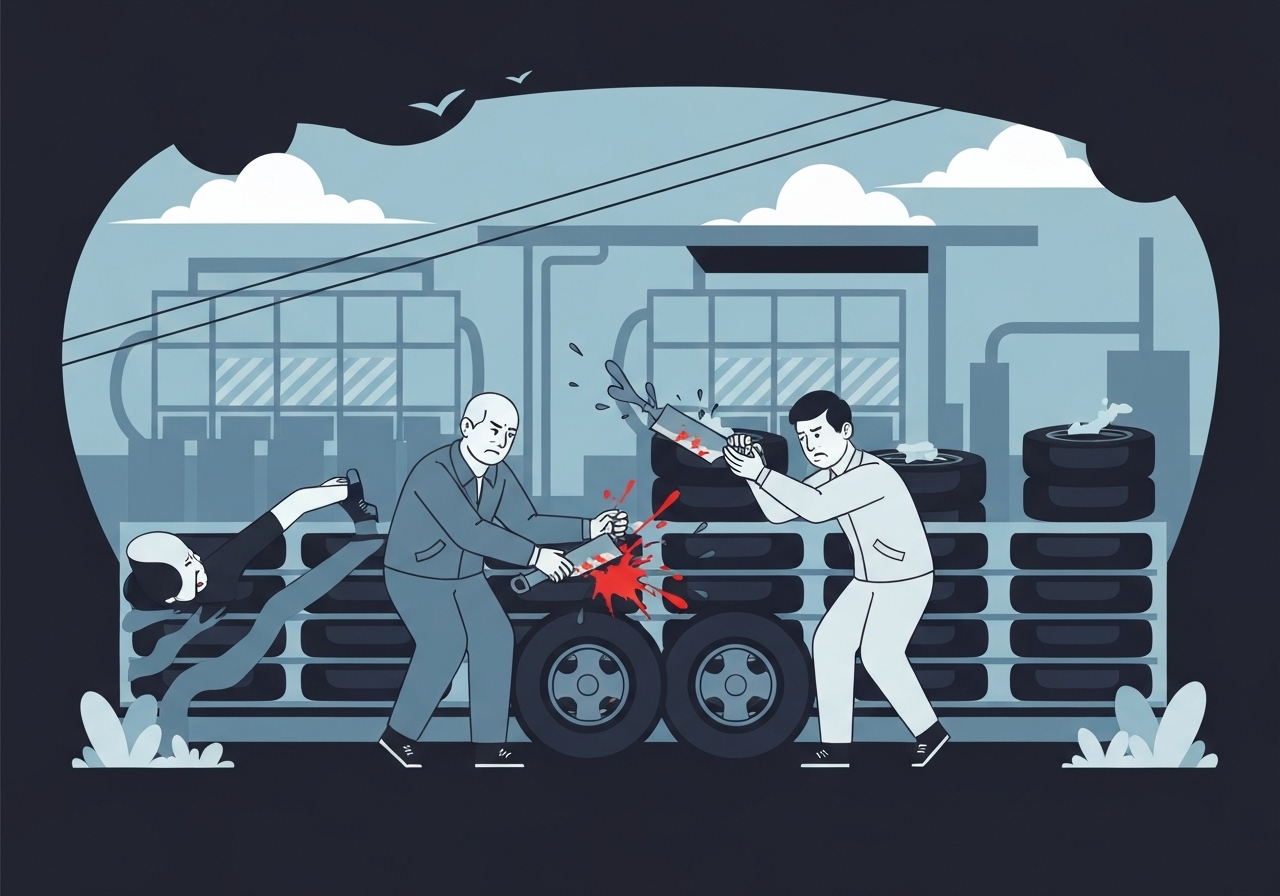
On Friday, December 26, 2025, a 38-year-old man was arrested after attacking workers at the Yokohama Rubber Company plant in Mishima, Shizuoka Prefecture. Officials say eight people were stabbed and seven more were injured after being sprayed with a liquid believed to be bleach, for a total of 15 victims taken to hospitals. Emergency services reported five of the stabbed victims were in serious condition. Local police have charged the suspect with alleged attempted murder; investigators say his motive remains unclear.
Key Takeaways
- Incident date and place: December 26, 2025, at the Yokohama Rubber Company tire plant in Mishima, Shizuoka Prefecture.
- Casualties: 15 people required hospital treatment — eight stabbed and seven exposed to a liquid thought to be bleach.
- Serious injuries: Fujisan Nanto Fire Department said five of the stabbed victims were in serious condition at the time of reporting.
- Suspect: A 38-year-old man was apprehended and arrested by Shizuoka prefectural police on an alleged attempted murder charge.
- Apparent preparation: Japanese media reported the attacker wore a gas mask and was armed with a survival-style knife.
- Ties to site: Investigative reporting indicates the suspect may have had a connection to the factory, though details remain under investigation.
- Public safety context: Violent incidents of this scale are uncommon in Japan, a country with a low homicide rate and strict gun regulations.
Background
Japan records comparatively low rates of violent crime and homicide, a pattern driven in part by strict firearms control and extensive social safety nets. Mass attacks are rare but when they occur they draw intense public attention and immediate policy and corporate scrutiny. Industrial sites such as factories combine workplace vulnerabilities — large numbers of people in contained spaces and varied shift patterns — that can increase the scale of harm if an assailant gains entry.
The Yokohama Rubber Company operates multiple facilities in Japan and globally; the Mishima plant serves as a production site within Shizuoka Prefecture. Local emergency responders and prefectural police coordinate routine drills for industrial accidents, but attacks involving edged weapons and hazardous liquids present different operational and medical challenges. Reporting by national outlets has highlighted that the suspect reportedly had a relationship with the plant, a factor investigators are examining for motive and access.
Main Event
According to the Fujisan Nanto Fire Department, first calls came in on the morning of December 26 after workers discovered an assailant inside the Mishima plant. Responders found eight people who had sustained stab wounds and seven others who had inhalation or skin exposure to a liquid later described by officials as likely bleach; all 15 were transported to nearby hospitals. The department reported five stabbed individuals were seriously injured; more detailed medical updates were not immediately released.
Shizuoka prefectural police said they apprehended a 38-year-old man at the scene and booked him on alleged attempted murder charges. Local media including The Asahi Shimbun and public broadcaster NHK reported that the suspect appeared to be wearing a gas mask and carried a survival-style knife when officers arrested him. Police statements indicated the suspect was taken into custody without deadly force being used by responders.
Witness accounts relayed to regional reporters described chaotic scenes inside the plant as colleagues tried to assist the wounded and shelter in place. Company officials have limited public comment while cooperating with authorities; the factory reportedly halted operations after the attack pending the investigation. Emergency medical teams prioritized stabilizing the most seriously injured before transferring them to surgical centers.
Analysis & Implications
Immediate implications are operational and legal: the factory will face scrutiny over site access controls, worker safety protocols, and emergency preparedness for combined physical and chemical threats. If the suspect had authorized access or employment ties to the plant, that would raise questions about background screening and internal reporting channels. Employers across sectors may reassess point-of-entry measures, visitor controls, and rapid alerting systems for staff.
From a public-safety perspective, incidents that mix edged violence and a corrosive or irritant liquid elevate medical complexity. Bleach (sodium hypochlorite solutions) typically causes irritation to eyes, skin and airways; large exposures can require specialized decontamination and respiratory care. Hospitals in the region mobilized triage capacity to separate penetrating trauma cases from chemical exposure patients, a logistical burden for emergency services.
Politically and societally, the attack is likely to prompt renewed debate in Japan about workplace security and mental-health supports for employees. While rare, such attacks can produce ripples beyond the immediate victims — from reputational damage to supply-chain disruptions if production halts persist. Investigators’ ability to establish motive and access will shape any regulatory or policy responses at the municipal or prefectural level.
Comparison & Data
| Metric | Number |
|---|---|
| People injured | 15 |
| People stabbed (seriously injured) | 8 (5 serious) |
| People exposed to liquid | 7 |
| Suspects arrested | 1 |
The table above summarizes the casualty and arrest counts released by emergency services and police. Analysts contrast this single-location event with Japan’s low overall violent-crime statistics, but caution that workplace attacks, despite being infrequent, can produce disproportionate operational and human costs.
Reactions & Quotes
Five of those stabbed were reported to be in serious condition, according to the responding fire department.
Fujisan Nanto Fire Department (official report)
Shizuoka prefectural police confirmed the arrest of a 38-year-old man on an alleged attempted murder charge and said the investigation into motive is ongoing.
Shizuoka Prefectural Police (official statement)
National media noted the attacker was reportedly wearing a gas mask and carrying a survival-style knife when taken into custody.
NHK / The Asahi Shimbun (news reporting)
Unconfirmed
- Exact motive for the attack remains unestablished; investigative authorities have not publicly released a motive.
- The precise chemical composition of the liquid used has not been confirmed by laboratory analysis in public statements.
- Details about the nature and duration of any prior ties between the suspect and the factory reported by media are under verification by police.
Bottom Line
The December 26 attack at the Mishima Yokohama Rubber plant left 15 people injured and one suspect in custody, highlighting vulnerabilities that can exist at workplaces even in countries with low rates of violent crime. Officials are focused on medical care for the injured and establishing how the attacker gained access and whether any warning signs were missed.
As authorities complete their inquiry, expect heightened scrutiny on factory security practices, employer reporting systems, and emergency response coordination for combined trauma and chemical-exposure incidents. The outcomes of the investigation — particularly on motive and any connection between the suspect and the site — will determine whether policy or legal changes follow.
Sources
- CBS News — news outlet (original report cited by this article)
- Associated Press — news agency (wire reporting referenced by outlets)
- The Asahi Shimbun — national newspaper (investigative reporting on suspect ties)
- NHK — public broadcaster (local reporting)
- Shizuoka Prefectural Government / Police — official (law-enforcement statements)
- Mishima City / local emergency services — official (local response coordination)