
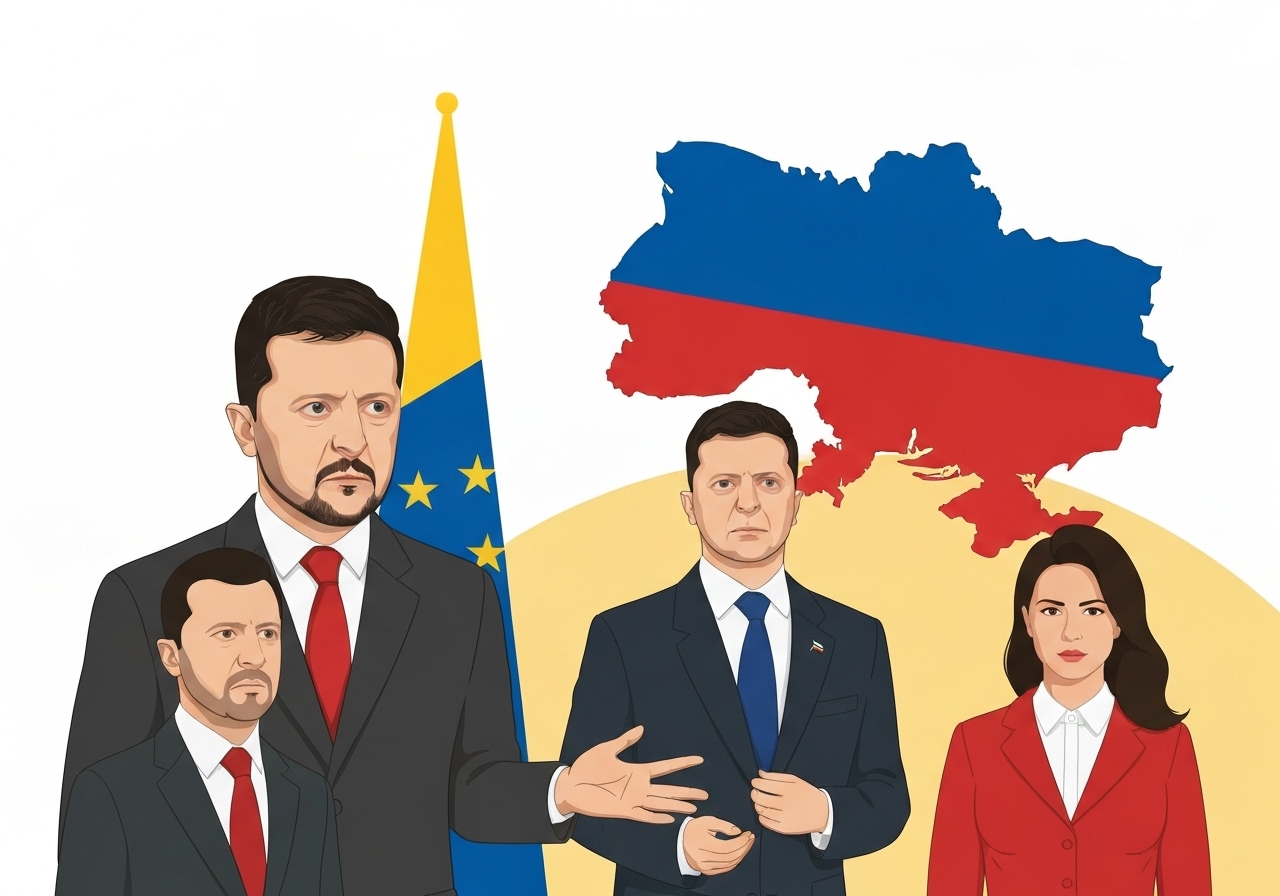
Lead: Russian forces launched strikes on Kyiv as Ukrainian President Volodymyr Zelenskyy traveled to the United States for talks linked to former President Donald Trump. The assault triggered air-defence activity over the capital and raised fresh concerns about security ahead of high-level diplomatic engagements. Ukrainian officials reported disruption to parts of the city; international partners reiterated support while calling for restraint.
Key Takeaways
- Russian strikes targeted Kyiv on the day Zelenskyy departed for the United States to participate in talks related to international backing and security arrangements.
- Air-defence systems were mobilized over Kyiv, and authorities reported interception efforts as the assault unfolded.
- Zelenskyy’s US visit is framed by Kyiv as critical for sustaining military and political support amid ongoing Russian attacks.
- The incident intensified debate in European capitals about burden-sharing on defence and the implications of Western political shifts for Ukraine’s security.
- Domestic Ukrainian concerns about governance and corruption persist concurrently, complicating the government’s political positioning.
- International actors reacted publicly, reiterating support for Ukraine while urging de‑escalation and civilian protection.
Background
The war that began with Russia’s full-scale invasion in 2022 has produced recurring waves of strikes on Ukrainian cities; Kyiv has faced periodic missile and drone attacks since the conflict escalated. Ukraine’s leadership has sought sustained military, financial and diplomatic backing from Western capitals, viewing such support as essential to repel and deter further Russian operations.
Visits by President Zelenskyy to allied countries are often timed to coordinate assistance packages, arms deliveries and political messaging. In the current political landscape, engagements in Washington carry added scrutiny given shifts in domestic US politics and debate over future policy toward Kyiv.
At the same time, Ukraine faces internal pressures: anti-corruption reforms and high-profile investigations have dominated political discourse. These domestic dynamics influence Kyiv’s negotiating position with partners and its ability to sustain long-term reform commitments under wartime strain.
Main Event
On the day of Zelenskyy’s departure for the United States, Russian forces conducted strikes that affected parts of Kyiv, prompting air-defence responses. Emergency services and local authorities reported impacts to infrastructure and disruptions to normal life, and Kyiv’s command centres monitored the evolving situation closely.
Ukrainian officials emphasized that the attacks did not derail the scheduled diplomatic engagement but underscored the precarious security environment in which the president must operate. Kyiv framed the timing as a reminder to international interlocutors of the urgency of continued assistance.
Western capitals issued statements condemning attacks on civilian areas and calling for protection of non-combatants, while some allied officials reiterated the need to maintain military aid channels. The strikes also revived discussions about air-defence capacity across the country and the adequacy of supplies arriving from partners.
Analysis & Implications
The assault on Kyiv during a presidential trip to the United States has both symbolic and practical implications. Symbolically, it signals to domestic and international audiences that Russia may seek to influence diplomatic momentum or to exploit perceived windows of political uncertainty abroad. Practically, it pressures Ukraine to demonstrate resilience while securing urgent materiel and political backing.
If sustained, such attacks complicate Kyiv’s ability to manage both frontline defence and governance reforms. Supporters of Ukraine may view these incidents as reinforcing the case for accelerated deliveries of air-defence systems and additional long-term commitments. Conversely, political uncertainty in key donor countries could temper the pace or scale of new packages.
For NATO and EU members, the event sharpens questions over burden-sharing and the strategic calculus of deeper defence cooperation. Debates in Europe about aligning defence posture with transatlantic partners have been reinvigorated by continued Russian strikes on population centres.
Comparison & Data
While this article does not present a new numeric dataset, the incident fits the pattern of intermittent high-profile strikes on Kyiv observed since 2022. Analysts track frequency and intensity of such attacks as indicators of Russia’s operational tempo and of Ukraine’s evolving air-defence posture. Monitoring trends over time helps partners gauge the scale of materiel needed and the likely horizon for stabilization.
Reactions & Quotes
“We condemn strikes that endanger civilians and critical infrastructure; Ukraine must receive the support it needs to defend its people,” a Western official said in a public statement.
Western government statement (reported)
“Such attacks underscore the urgency of strengthening air-defence capabilities and ensuring uninterrupted assistance,” an analyst noted, placing operational needs at the center of diplomatic talks.
Security analyst (institutional comment)
Unconfirmed
- Precise casualty figures and the full scale of material damage from these specific strikes remain unverified pending official tallies and damage assessments.
- Reports that the timing of the attack was coordinated to directly disrupt Zelenskyy’s US meetings are asserted in some commentary but lack conclusive evidence.
- Allegations that internal security services obstructed anti‑corruption probes into sitting MPs require further independent confirmation and are not verified in primary reporting on the attack.
Bottom Line
The strikes on Kyiv coinciding with President Zelenskyy’s travel to the United States are a stark reminder that Ukraine’s security situation remains acute and deeply intertwined with international diplomacy. While the trip proceeds, the incident is likely to sharpen arguments in favor of accelerated military support, especially for air-defence capabilities.
Longer term, Kyiv must balance immediate defence needs with continuing governance and anti‑corruption reforms to sustain Western political backing. For partners, the episode underscores the persistent uncertainty of the conflict and the strategic importance of clear, durable commitments to Ukraine’s defence and recovery.
Sources
- Politico Europe — news outlet reporting on the Kyiv strikes and diplomatic context