
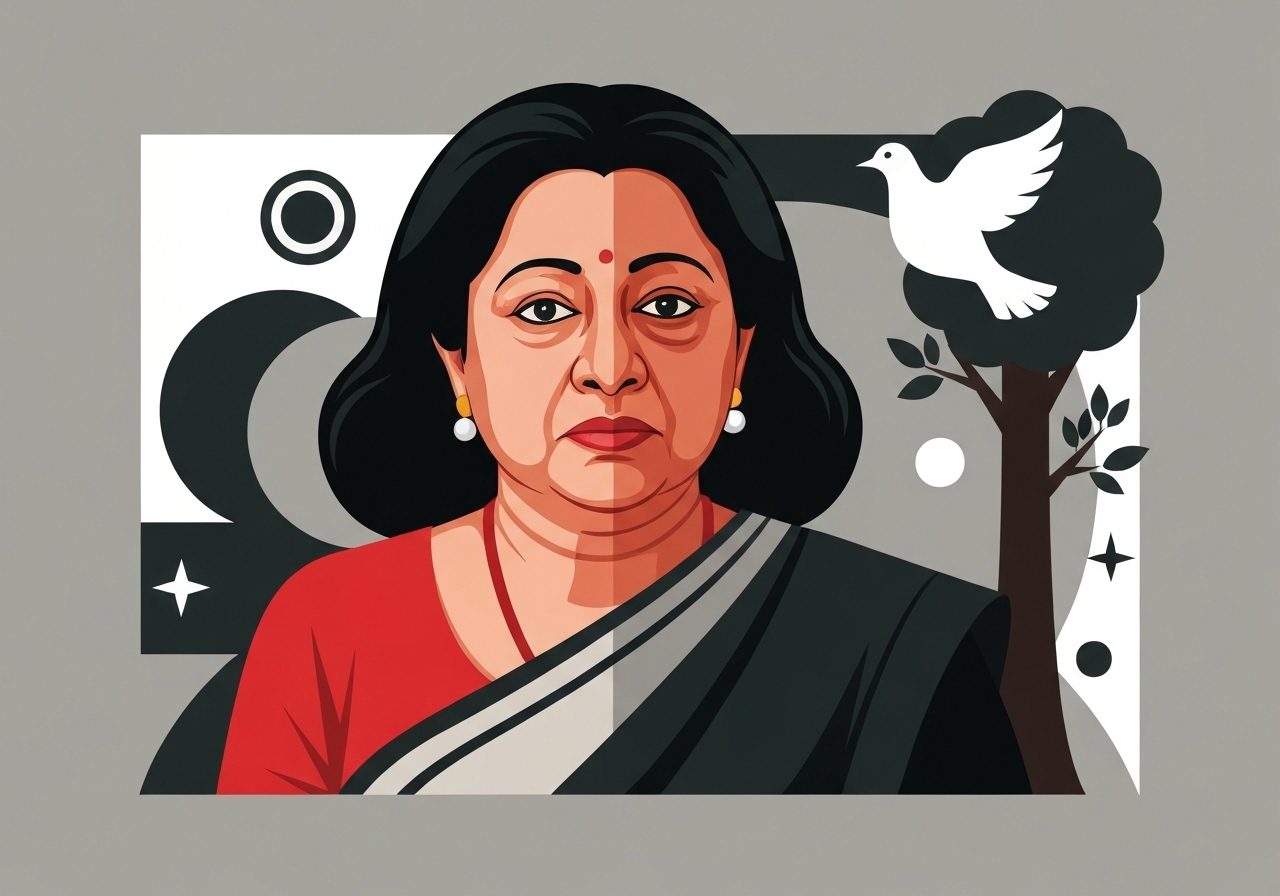
Lead: Khaleda Zia, the first woman to serve as prime minister of Bangladesh and a central figure in the country’s post-independence politics, died on Tuesday at a hospital in Dhaka. She was reported to be 80. The Bangladesh Nationalist Party (BNP), which she led as chairperson, announced her passing on its official social media channel but did not give a cause of death. Her death closes a decades-long cycle of alternating rule and intense rivalry with Sheikh Hasina that shaped Bangladeshi politics.
Key Takeaways
- Khaleda Zia, chairperson of the Bangladesh Nationalist Party, died on Tuesday in Dhaka; reports say she was 80.
- She served three terms as prime minister — two full terms and one abbreviated term — becoming the country’s first female head of government.
- Her political career was defined by a prolonged rivalry with Sheikh Hasina, another dynastic leader who held office repeatedly over recent decades and was toppled after deadly protests last year.
- In later years Ms. Zia faced repeated legal actions and periods of detention or house arrest, and her health declined amid chronic conditions including rheumatoid arthritis, diabetes and advanced liver disease.
- Courts denied several requests for her to travel abroad for treatment after Covid-19 complications in 2021; Bangladesh’s foreign minister then said she could bring doctors to Bangladesh but not travel overseas.
- The BNP made the announcement on its official social channels; detailed official medical information has not been released.
Background
Khaleda Zia rose to national prominence after the end of military rule in the early 1990s and became Bangladesh’s first female prime minister at a time when the country was consolidating its parliamentary democracy. Over successive decades she and Sheikh Hasina — daughter of Bangladesh’s founding president — alternated as the nation’s dominant political leaders, each heading powerful party machines whose competition deeply polarized public life. Her tenure encompassed two full terms and one shortened term in a political environment marked by contested elections, mass mobilizations and periodic military influence.
In the 2010s and into the early 2020s, political fault lines hardened: Ms. Hasina’s administration was accused by critics of eroding democratic norms, while Ms. Zia’s BNP faced legal challenges that resulted in convictions, periods in custody and restrictions on movement for senior leaders. Health issues increasingly limited Ms. Zia’s public role; she spent extended periods under medical care and security protection in Dhaka, and her lawyers sought permission for overseas treatment after complications from Covid-19 in 2021.
Main Event
On Tuesday hospital staff in Dhaka confirmed to party officials that Ms. Zia had died; the BNP posted the news on its official social media account. The party’s announcement gave no medical cause. International and domestic news outlets relayed the party notice while awaiting further official details from medical authorities or family representatives.
Ms. Zia’s last decade was marked by legal battles and confinement that supporters say were politically motivated. She was alternately imprisoned and placed under house arrest as corruption and graft cases accumulated in courts; many of those cases and their timing were criticized by her allies as part of a campaign to marginalize the BNP. Her health record listed chronic conditions — including rheumatoid arthritis, diabetes and advanced liver disease — and she required repeated hospital admissions in recent years.
After contracting Covid-19 in 2021, treating physicians advised overseas care, but the requests to allow her travel were denied by the courts. At the time, Foreign Minister A.K. Abdul Momen said she could bring any physician to Bangladesh for treatment but would not be permitted to leave the country. The restrictions limited access to some kinds of specialized care, supporters argued, and became a focal point for international rights groups and opposition complaints.
Analysis & Implications
Khaleda Zia’s death is likely to recalibrate Bangladesh’s opposition landscape. As the long-serving figurehead of the BNP, her absence may accelerate internal questions about leadership succession and strategy at a moment when the party has been weakened by legal restrictions and the detention of senior figures. Analysts expect a contested transition within the party as rank-and-file members and exile-based leaders jockey for influence.
Regionally, Ms. Zia’s passing removes one of the two dynastic anchors that defined Bangladeshi politics for decades. Her rivalry with Sheikh Hasina framed voter choices and elite alliances; with Ms. Zia gone and Ms. Hasina removed from office last year, political realignments could open space for new movements, but they also risk heightened instability as old factional loyalties persist.
Internationally, questions about the treatment of political opponents and the use of legal mechanisms against rivals will resurface among rights monitors and foreign governments. Observers will watch whether the state facilitates a dignified, transparent transition and public mourning, or whether security and partisan tensions further constrain public expression. Economic and diplomatic partners will assess political risk as they weigh engagement with Dhaka in a post-Hasina, post-Zia era.
Comparison & Data
| Leader | Terms | Notes |
|---|---|---|
| Khaleda Zia | 3 terms | Two full terms and one shortened term; long rivalry with Sheikh Hasina |
| Sheikh Hasina | Multiple terms | Served repeatedly over three decades; toppled following deadly protests last year |
The table above summarizes the basic political trajectories without attempting to list every calendar year of service. Ms. Zia’s three terms and Ms. Hasina’s repeated returns to power underline the alternating pattern that shaped policy, patronage networks and elite competition in Bangladesh.
Reactions & Quotes
Official and public responses began arriving within hours of the party announcement, ranging from solemn statements by allies to cautious commentary by international observers. These reactions reflect both personal mourning and wider political calculations about succession and the future of opposition politics.
“She could bring any doctor she wanted to Bangladesh to treat her, but she wouldn’t be allowed to go abroad.”
A.K. Abdul Momen, Bangladesh foreign minister (2021)
“The Bangladesh Nationalist Party announced the passing of its chairperson on its official social media channels; no cause of death was provided.”
Bangladesh Nationalist Party (official social media statement)
Unconfirmed
- The precise medical cause of Khaleda Zia’s death has not been publicly released by family or treating physicians.
- Her exact age is described in reports as “believed to be 80” and has not been independently verified in available official records.
- Details about any planned international repatriation of care, or last-minute appeals to courts or foreign governments, remain unclear pending formal statements.
Bottom Line
Khaleda Zia’s death removes a defining figure from Bangladesh’s polarized political stage and will accelerate debates within the BNP about leadership and strategy. Her passing comes at a volatile moment: the other figure who dominated national politics for decades, Sheikh Hasina, was removed from office after deadly protests last year, leaving a leadership vacuum on both sides of the political divide.
In the weeks ahead, stakeholders inside and outside Bangladesh will watch how authorities handle public mourning, whether the BNP can unite around a successor, and how domestic unrest or reconciliation efforts may shape the country’s short-term stability. The event is likely to prompt renewed international scrutiny of Bangladesh’s political trajectory and human rights record.
Sources
- The New York Times (international newspaper)