
Lead
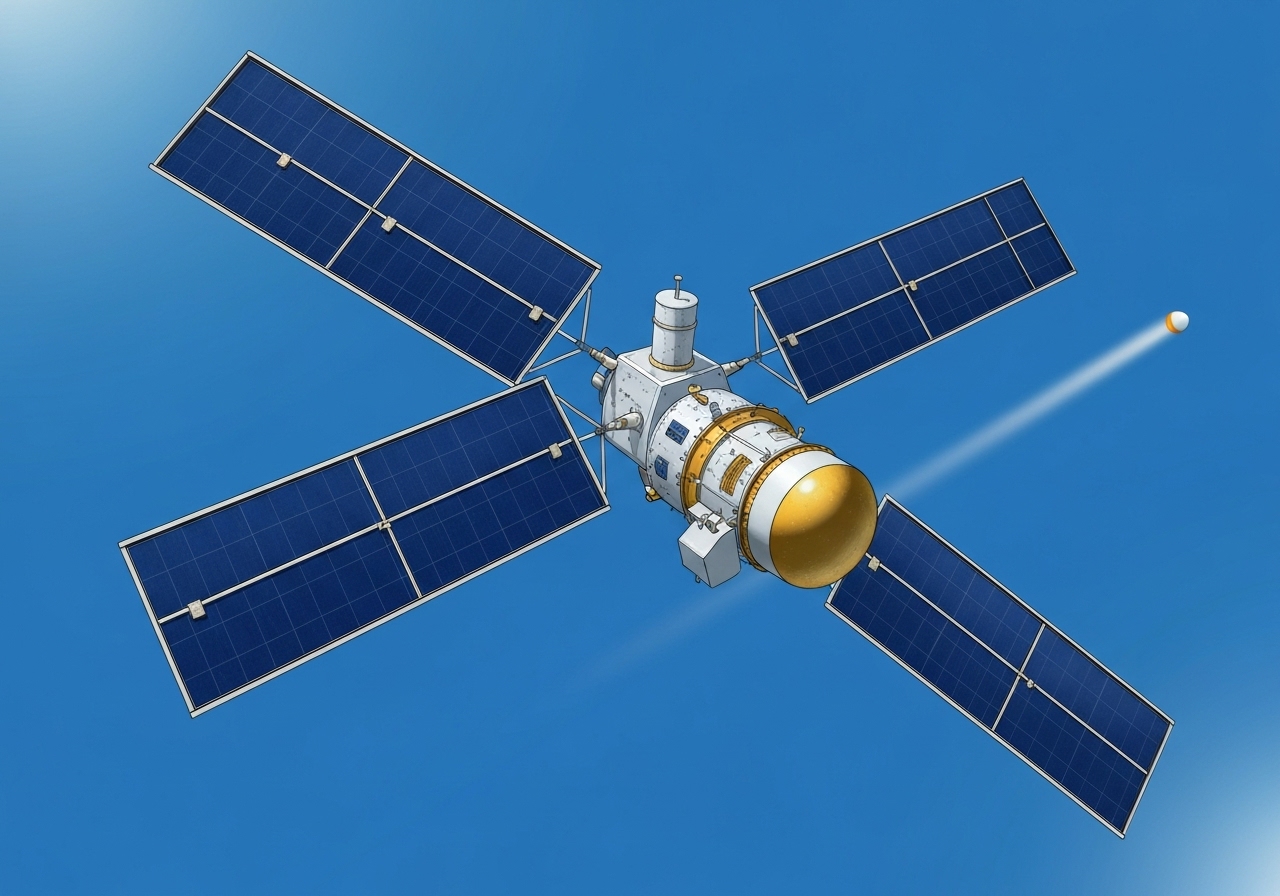
On Jan. 2, 2026, a SpaceX Falcon 9 rocket lifted off from Vandenberg Space Force Base, California, at 9:09 p.m. EST (6:09 p.m. local; 0209 GMT on Jan. 3), carrying an Italian COSMO-SkyMed Second Generation synthetic-aperture-radar satellite. Roughly 4.5 minutes after liftoff the Falcon 9 second stage deployed the spacecraft into low Earth orbit and the booster returned to a successful landing. The mission, flown for the Italian Space Agency (ASI) and the Italian Ministry of Defence, is the first orbital launch of 2026 worldwide and continues an ongoing COSMO-SkyMed constellation buildout.
Key Takeaways
- Launch date and time: Jan. 2, 2026, at 9:09 p.m. EST (6:09 p.m. PT; 0209 GMT on Jan. 3) from Vandenberg Space Force Base, California.
- Vehicle and payload: SpaceX Falcon 9 launched a COSMO-SkyMed Second Generation (SG) radar satellite for the Italian Space Agency and the Italian Ministry of Defence.
- Deployment: The payload separated about 4.5 minutes after liftoff and was placed into low Earth orbit at approximately 385 miles (620 kilometers) altitude.
- Operational capability: The COSMO-SkyMed SG spacecraft use synthetic-aperture radar to image Earth day or night and through clouds for applications from emergency response to maritime surveillance.
- Program cadence: Three COSMO-SkyMed SG satellites have now flown — Dec. 2019 (Soyuz), Jan. 2022 (Falcon 9) and Jan. 2, 2026 (Falcon 9).
- Industry context: This mission was the first global orbital launch of 2026; SpaceX carried out 165 orbital missions in 2025, a company record.
Background
COSMO-SkyMed is an Italian Earth-observation program built around X-band synthetic-aperture-radar satellites intended for civil and defense uses. The Second Generation (SG) series upgrades imaging, revisit rate and data delivery compared with the first-generation constellation, enabling near-real-time radar observations independent of daylight or weather.
The program is co-managed by the Italian Space Agency (ASI) and Italy’s Ministry of Defence, and its data support emergency prevention, land and resource management, maritime monitoring and security tasks. Internationally, COSMO-SkyMed data are used by commercial firms, scientific teams and government agencies for mapping, disaster response and environmental monitoring.
Main Event
The Falcon 9 vehicle rolled out to Vandenberg’s SLC-4E pad and ascended on schedule at 9:09 p.m. EST. Telemetry and publicly shared tracking showed nominal staging and second-stage start sequences. Approximately 4.5 minutes after liftoff the upper stage released the COSMO-SkyMed SG satellite into a planned low Earth orbit near 385 miles (620 kilometers) altitude.
Following separation, Falcon 9’s first stage executed its boost-back and landing profile and touched down successfully, completing a reuse cycle that supports SpaceX’s high-cadence launch model. Ground teams reported successful deployment and initial telemetry from the spacecraft consistent with a healthy insertion into its targeted orbit.
The spacecraft’s onboard synthetic-aperture radar is designed to begin commissioning and calibration in the weeks after launch, after which operational tasking for emergency monitoring, forestry and maritime surveillance will ramp up. ASI and Italy’s defence ministry will manage tasking priorities and data distribution under existing program arrangements.
Analysis & Implications
This launch underscores two converging trends: national investment in resilient Earth-observation capabilities and the increasing reliance on commercial launch providers to meet frequent mission schedules. COSMO-SkyMed SG bolsters Italy’s sovereign capacity to monitor territory and maritime approaches while providing data to international partners and commercial users.
Operationally, SAR-equipped constellations like COSMO-SkyMed offer all-weather, day-and-night coverage that is especially valuable for flood, landslide and oil-spill response where optical sensors may be unusable. Adding an SG satellite improves revisit cadence, shortening the time between successive observations of a given area and enabling more timely decision-making.
For the launch industry, SpaceX delivering the first orbital mission of 2026 demonstrates the company’s continued dominance in cadence and cost-per-launch metrics after a record 165 orbital missions in 2025. High-frequency launch availability can accelerate constellation deployments for both governments and commercial operators but also raises questions about launch-site demand, range scheduling and orbital traffic management.
Comparison & Data
| COSMO-SkyMed SG Launches | Date | Launcher |
|---|---|---|
| SAT-1 (SG) | Dec. 2019 | Soyuz |
| SAT-2 (SG) | Jan. 2022 | Falcon 9 |
| SAT-3 (SG) | Jan. 2, 2026 | Falcon 9 |
This table summarizes the three COSMO-SkyMed Second Generation satellites launched to date and the launch vehicles used. The 2026 satellite continues a mixed-launcher approach for the program and reflects increased international collaboration and commercial-launch integration since the program’s inception.
Reactions & Quotes
“monitor the Earth for the sake of emergency prevention, strategy, scientific and commercial purposes, providing data on a global scale”
European Space Agency (explainer)
The ESA explainer emphasizes the program’s broad civil and commercial mission set, highlighting why SAR capability is prioritized for emergency management and resource monitoring.
“the first of 2026”
Michael Wall / Space.com
Space.com coverage noted that this liftoff marked the global community’s first orbital mission of 2026, placing the flight in a calendar-year context for launch activity.
Unconfirmed
- Whether the 2026 COSMO-SkyMed launch schedule will match the 2019–2026 cadence set so far; future dates and manifest plans have not been publicly detailed by ASI or the Ministry of Defence.
- Projections that SpaceX will attempt to exceed its 165 orbital missions from 2025 are strategic forecasts and have not been confirmed by a company roadmap for 2026.
Bottom Line
The Jan. 2, 2026 Falcon 9 launch placed a COSMO-SkyMed Second Generation satellite into orbit, advancing Italy’s radar imaging capability and marking the first global orbital mission of the year. The flight illustrates how national space programs increasingly rely on commercial launch providers to achieve rapid deployment and operational resilience for Earth observation.
As the new satellite completes commissioning, its radar data should improve response times for emergencies and expand routine monitoring for environmental, maritime and security use cases. For the space industry, the mission highlights both the benefits of frequent, reusable-rocket launches and the growing imperative to coordinate orbital traffic and ground-range resources as launch cadence increases.