
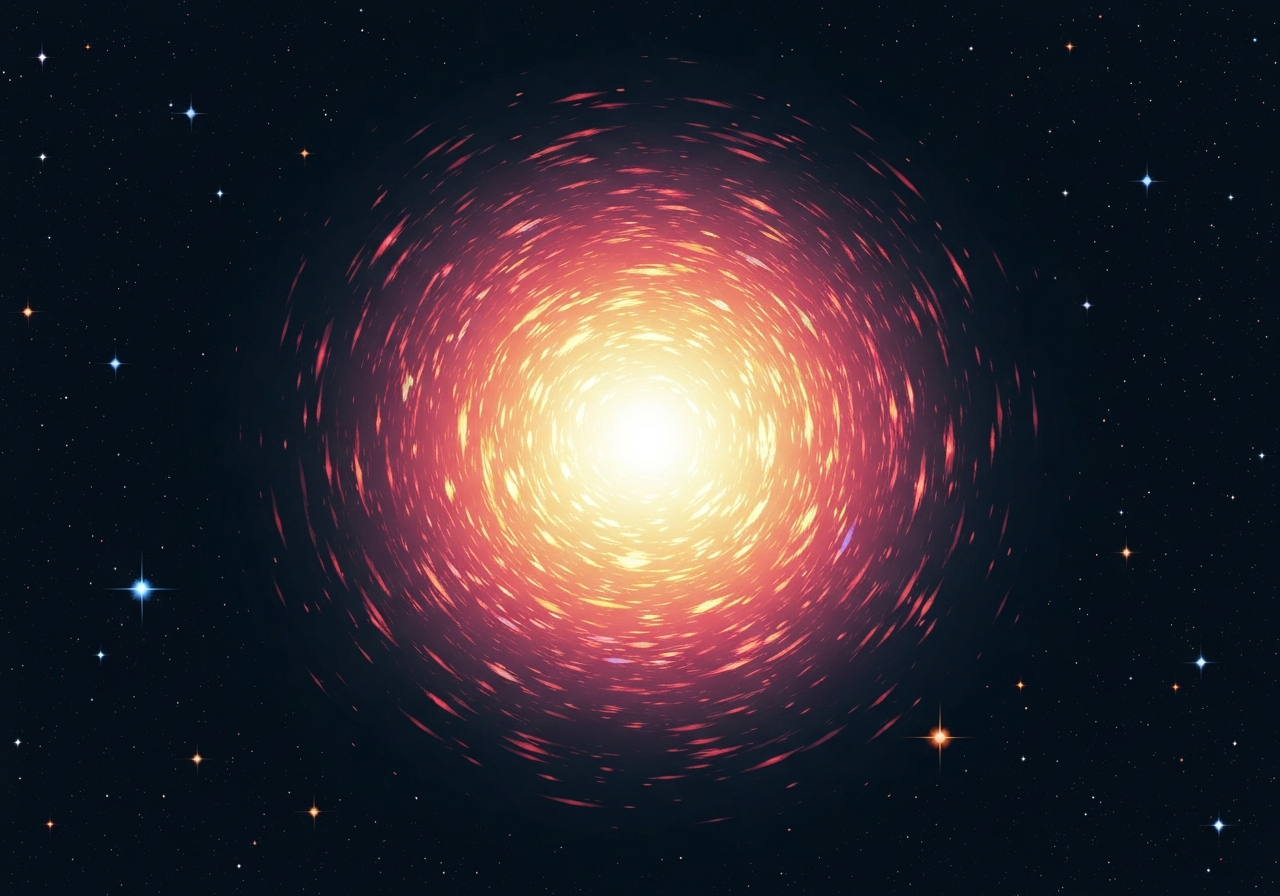
— A new image from NASA’s James Webb Space Telescope shows the spiral galaxy Messier 77 with a nucleus so bright it dominates the view. The picture, released this week from Cape Canaveral coverage, captures the galaxy located about 45 million light‑years away in the Cetus constellation. Webb’s mid‑infrared instrument isolates thermal emission from dust and gas around the active nucleus, powered by a supermassive black hole roughly 8 million times the mass of the Sun. The result is a sharply detailed portrait of an energetic core that outshines the galaxy’s spiral arms.
Key Takeaways
- Messier 77 lies approximately 45 million light‑years away in the Cetus (whale) constellation; a light‑year is about 6 trillion miles.
- The galaxy hosts an active galactic nucleus (AGN) driven by a supermassive black hole estimated at about 8 million solar masses.
- Webb’s mid‑infrared camera (MIRI) produced the image, revealing warm dust and compact emission that optical telescopes often miss.
- The telescope has been operating since its launch in 2021 and continues delivering high‑resolution infrared views of dust‑enshrouded regions.
- The nucleus’ infrared brightness indicates heavy heating from accreting material rather than starlight alone.
- Webb’s observation provides data that can refine models of AGN dust geometry and the feeding of supermassive black holes.
Background
Messier 77 (NGC 1068) has long been known to astronomers as a nearby active galaxy and a prototypical Seyfert galaxy. Earlier optical and radio studies identified a compact, energetic nucleus and extended emission-line regions; however, intervening dust has historically obscured direct views of the immediate surroundings of the black hole. Infrared wavelengths penetrate that dust, allowing instruments like Webb’s MIRI to map warm dust and the inner structure of the AGN more directly. Understanding the geometry and temperature distribution of dust around an AGN is central to tests of unified models that seek to explain different AGN types by orientation and obscuration rather than intrinsic difference.
The Webb image joins decades of ground‑based and spaceborne observations—Hubble, Spitzer and multiple radio arrays—that together build a multiwavelength portrait of M77. Each band reveals complementary physics: radio traces jets and molecular gas, optical maps emission lines and star formation, and mid‑infrared shows heated dust and the torus region around the black hole. Stakeholders in this research include NASA and its Webb science team, university research groups analyzing AGN physics, and instrument teams operating MIRI and supporting calibration. The continued flow of Webb images is driving new proposals for coordinated follow‑ups across X‑ray to radio bands.
Main Event
This week’s release centers on a mid‑infrared image in which the nucleus appears extraordinarily luminous compared with the surrounding disk. Webb’s sensitivity in those wavelengths picks out thermal emission from dust grains heated to hundreds of degrees by the accretion process. The bright core is compact in the image, consistent with emission originating in the inner few parsecs around the black hole rather than from distributed star formation across the spiral arms.
Observing teams report that the pattern of emission shows structure in the warm dust distribution—clumps and filaments—suggesting interaction between the central engine and its immediate interstellar medium. Such structure helps astronomers infer the shape of the obscuring torus and the directionality of radiation escaping from the core. The image release was accompanied by technical notes describing exposure times and instrument settings used to isolate mid‑infrared bands where dust emission is strongest.
Operational context: Webb has been collecting science data since its 2021 launch and continues to schedule observations under competitive proposal cycles. M77 was targeted to probe how moderate‑mass black holes (several million solar masses) influence their host galaxies. The released image is one of several planned observations that will be combined with spectroscopy to measure gas temperatures, composition and motions near the nucleus.
Analysis & Implications
First, the clarity of Webb’s mid‑infrared view tightens constraints on the spatial scale of heated dust structures around the black hole. High angular resolution at these wavelengths reduces model degeneracies that earlier infrared missions left unresolved. That helps distinguish whether the obscuring material is a contiguous torus, a clumpy distribution of clouds, or a combination of both—each scenario implies different accretion and feedback behaviors.
Second, the measured brightness and inferred dust temperatures provide estimates—subject to modeling assumptions—of the accretion luminosity and radiative output of the nucleus. For an 8 million solar‑mass black hole, those numbers inform how efficiently the hole is growing now versus across cosmic time. If accretion is sustained, it could drive outflows that regulate central star formation and redistribute gas in the inner galaxy.
Third, the image encourages coordinated, multiwavelength follow‑ups. X‑ray observations can probe the innermost accretion disk and high‑energy corona, optical/near‑infrared spectroscopy can measure ionized‑gas kinematics, and radio interferometry can trace molecular gas feeding and any compact jets. Together these datasets will test whether the central engine in M77 behaves like other nearby Seyfert nuclei or shows peculiarities tied to its black hole mass and host‑galaxy environment.
Comparison & Data
| Object | Distance (light‑years) | Black Hole Mass (solar masses) | Notable Instrument |
|---|---|---|---|
| Messier 77 (NGC 1068) | 45,000,000 | ~8,000,000 | Webb MIRI (mid‑IR) |
| Milky Way (Sgr A*) | 26,000 | ~4,300,000 | Near‑IR / Radio |
| Messier 87 | 53,000,000 | ~6,500,000,000 | Event Horizon Telescope / Multiwavelength |
The table places M77 in context: its black hole mass (~8 million solar masses) is larger than the Milky Way’s but orders of magnitude below giant ellipticals like M87. Its distance, about 45 million light‑years, makes it a relatively nearby laboratory for detailed study. Webb’s mid‑infrared sensitivity complements radio and X‑ray datasets that target different physical processes; combining them yields a more complete physical model for accretion and feedback.
Reactions & Quotes
“The image highlights Webb’s capacity to penetrate dusty regions and reveal a compact, energetic core,”
NASA / JWST science team (image release)
NASA’s release emphasized instrument performance and the scientific value of mid‑infrared imaging for obscured nuclei. The team framed the image as part of an ongoing program to map AGN environments in nearby galaxies.
“Seeing structured warm dust so close to the nucleus will sharpen tests of AGN models,”
Independent astronomer (unaffiliated comment)
An astronomer not involved in the observation noted that resolved dust structures allow better separation of emission from accretion versus star formation, improving mass‑accretion and feedback estimates.
“Stunning — the core really pops in infrared,”
Public reaction (social media users)
Social posts around the release mixed scientific curiosity with public amazement; outreach teams are using the image to explain AGN basics and Webb’s unique view of the dusty cosmos.
Unconfirmed
- Precise accretion rate onto the Messier 77 black hole has not been published with the image and remains subject to spectroscopic modeling.
- Any short‑term variability of the nucleus tied to recent feeding episodes has not been confirmed without dedicated time‑series monitoring.
- Planned coordinated follow‑up observations across X‑ray and radio bands were announced in concept but specific schedules and targets are not yet publicly detailed.
Bottom Line
Webb’s new mid‑infrared image of Messier 77 provides one of the clearest infrared views to date of a nearby active nucleus, isolating warm dust and compact emission that trace the black hole’s immediate environment. The observation sharpens structural constraints on the obscuring material and supplies data needed to reconcile competing models of AGN geometry. For astronomers, the image is a prompt to undertake coordinated, multiwavelength campaigns that can translate bright mid‑infrared emission into quantitative measures of accretion, outflow and host‑galaxy impact.
For the public, the image underscores Webb’s role as a transformative observatory: by seeing through dust it reveals energetic processes otherwise hidden, and it expands the set of nearby laboratories where black hole growth and galaxy evolution can be studied in detail. Expect additional data releases and peer‑reviewed analyses in the months ahead that will refine numbers cited here and test the emerging interpretations.