
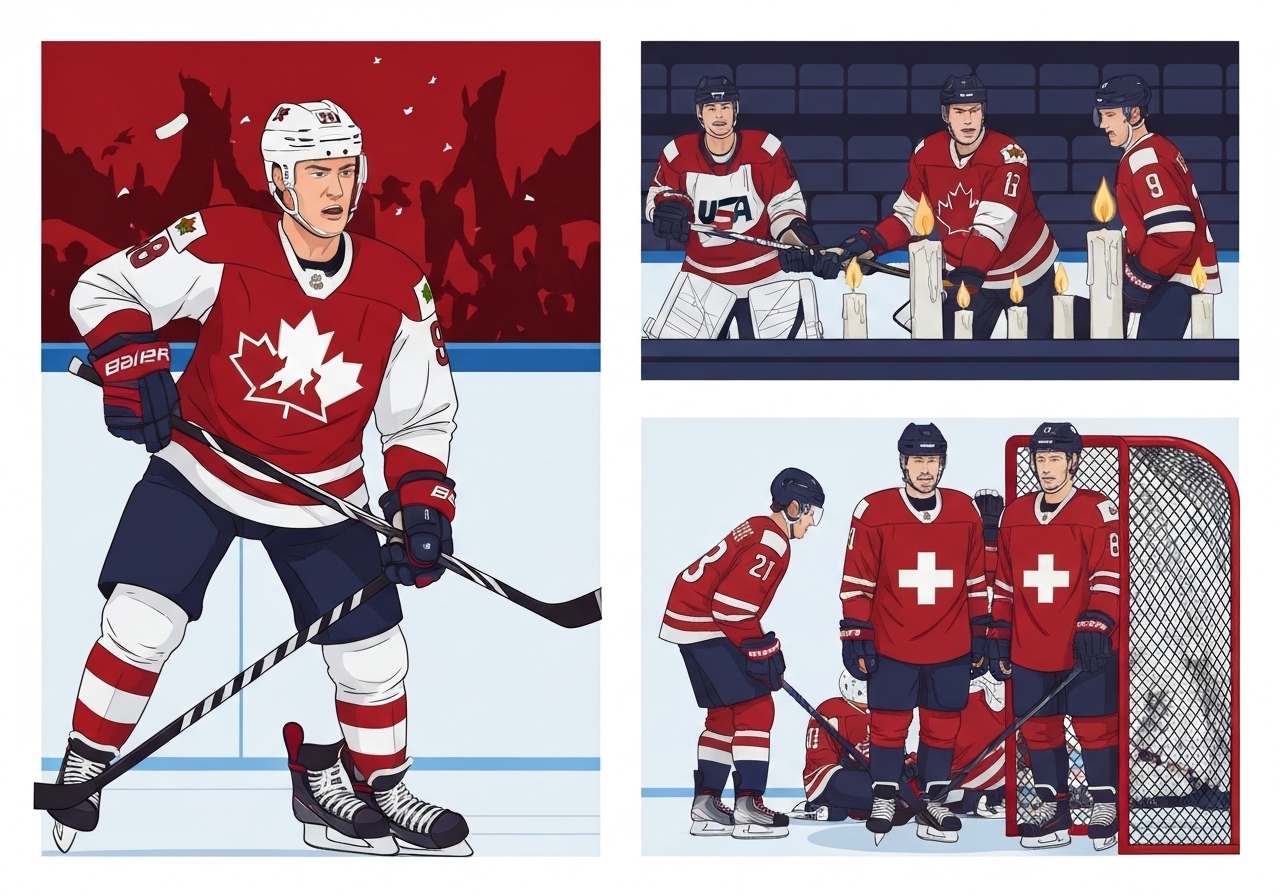
In Minneapolis–St. Paul on Jan. 2, the 2026 World Junior quarterfinals produced shock and statement wins: the United States, host and two-time defending champion, were eliminated 4-3 in overtime by Finland at Grand Casino Arena; Canada crushed Slovakia 7-1 to reach the semifinals; and Switzerland wore black armbands to honor victims of a deadly Crans‑Montana bar fire. The day featured five games including the relegation match, where Germany beat Denmark 8-4 to remain in the top division and send Denmark down. Key players — including goaltender Petteri Rimpinen for Finland and several Canadian forwards — shaped the outcomes that set semifinal matchups for Jan. 4.
Key takeaways
- USA 3, Finland 4 (OT): Finland advanced after Petteri Rimpinen stopped 28 of 31 shots; the win ended the U.S. title defense in front of a sold‑out Grand Casino Arena.
- Canada 7, Slovakia 1: Canada scored seven goals from 14 different scorers and secured a semifinal berth, their first dominant knockout win since 2023.
- Germany 8, Denmark 4 (relegation): Germany recorded its first victory of the tournament and extended its top‑tier run to eight years; Denmark will be relegated and Norway will replace them in 2027.
- Czechia 6, Switzerland 2: The Swiss wore mourning armbands for Crans‑Montana victims; Czechia advanced and will meet Canada in the semifinals.
- Sweden 6, Latvia 3: Anton Frondell scored twice and remained a leading forward in the event, helping Sweden reach the semis.
- Semifinal schedule: Jan. 4 — Sweden vs. Finland at 3:30 p.m. CT; Canada vs. Czechia at 7:30 p.m. CT.
- USA roster struggles: Five first‑round U.S. picks combined for seven goals and 15 points across five games; no skater consistently took over a game.
Background
The 2026 World Junior Championship, hosted across Minneapolis and St. Paul, has featured deep interest because the United States entered as back‑to‑back gold medalists trying to become the first team to win three straight. The tournament format moved from preliminary pools into quarterfinal knockout games on Jan. 2, with relegation also decided the same day. Expectations for the U.S. were high given their home‑ice advantage and a roster featuring several projected high NHL draft picks.
Canada arrived under pressure to reassert itself after uneven recent tournaments; their program has sought to rebuild a dependable depth group since Connor Bedard’s historic 2023 showing. Smaller hockey nations — including Switzerland and Germany — have used this tournament to showcase improving development programs, and relegation battles carried long‑term implications for funding and junior development pathways. The Crans‑Montana fire, which killed more than 40 people and injured over 100 on New Year’s Eve, added an emotional element for the Swiss delegation.
Main event
In the headline game at Grand Casino Arena, Finland defeated the United States 4‑3 in overtime. The match was a rematch of last year’s gold medal game and remained tense through three periods. Petteri Rimpinen, who won the tournament’s top goaltender award last year, made 28 saves on 31 shots and stopped the decisive attempt in extra time. Cole Hutson returned for the U.S., contributing a goal and an assist, but his comeback could not offset missed chances earlier in the tournament.
Canada’s 7‑1 victory over Slovakia was comprehensive. Fourteen different Canadian players recorded points, underlining the roster’s depth. The first line (Tij Iginla, Michael Misa and Porter Martone) grew into a driving force as the tournament progressed, and the fourth pairing of draft‑eligible defenders provided useful minutes in a 12‑forward, 8‑defensemen roster configuration.
Czechia’s 6‑2 win against Switzerland included two points apiece from Vojtech Cihar and Petr Sikora; Sikora celebrated his 20th birthday with a goal and three points. Switzerland led twice in the game but surrendered momentum in the second period before Czechia pulled away. Sweden beat Latvia 6‑3, with Anton Frondell scoring twice and earning player‑of‑the‑game recognition after an active, physical showing.
Analysis & implications
Finland’s victory over the U.S. illustrates how single‑game knockouts can overturn pre‑tournament expectations; Finland’s mix of goaltending stability and opportunistic scoring proved decisive. Rimpinen’s performance reinforced goaltending as a tournament equalizer: a hot netminder can erase talent gaps and swing momentum in sudden‑death play. For the U.S., the loss exposes an inability to find a consistent offensive driver among its touted prospects.
Canada’s rout of Slovakia signals that the program’s depth may be aligning correctly ahead of the semifinals. Spreading production across 14 scorers reduces reliance on a single star and creates matchup problems for opponents. The Canadians now face Czechia, a team that has eliminated Canada in consecutive tournaments; tactical adjustments — including goaltender choice between Carter George and Jack Ivankovic — will be a key coaching decision that could shape the semifinal outcome.
The relegation result benefits Germany’s development trajectory, preserving top‑division exposure for another year. For Denmark, dropping to Division I‑A is both a setback and an opportunity to rebuild: relegation often prompts structural review and increased emphasis on age‑group development. Broader tournament trends show growing parity outside traditional powers, with mid‑tier nations producing competitive results against historically stronger teams.
Comparison & data
| Match | Score | Notable stat |
|---|---|---|
| USA vs. Finland | 3–4 (OT) | Rimpinen 28 saves on 31 shots |
| Canada vs. Slovakia | 7–1 | 14 Canadian scorers |
| Germany vs. Denmark (relegation) | 8–4 | Germany’s 1st tournament win |
The table highlights the day’s decisive numbers: Finland’s goaltending, Canada’s scoring depth and Germany’s breakthrough victory. Those figures help explain why favorites fell and why tournament seeding and momentum shifted sharply heading into Jan. 4.
Reactions & quotes
After the overtime loss, U.S. head coach Bob Motzko captured the emotional toll of the defeat when addressing the press, reflecting on how narrow margins define knockout hockey.
“That one hurts. On so many levels. We were this close from playing a perfect game. … But that’s sports. It rips your bloody heart out.”
Bob Motzko, USA head coach
Finland’s Petteri Rimpinen described his long‑running personal focus on performing at the World Juniors and the significance of advancing from a rematch of last year’s final.
“I waited for this the whole year…Just wanting to go far. It’s a once and a lifetime experience.”
Petteri Rimpinen, Finland goaltender
Swiss coach Jan Cadieux explained the team’s decision to wear mourning armbands and link the team’s play to support for victims and families from Crans‑Montana.
“We wanted to send our emotions and energy to all of the people and families who are touched by this. The province where it happened is a hockey province with lots of people who love this sport.”
Jan Cadieux, Switzerland head coach
Unconfirmed
- Any final decision on Canada’s starting goalie for the semifinal (Carter George vs. Jack Ivankovic) remained unannounced at the time of reporting and is subject to coach selection.
- Ongoing investigations into the Crans‑Montana bar fire may change official casualty counts or cause determinations; current counts reported more than 40 dead and 100 injured.
Bottom line
Jan. 2 reshaped the final phase of the 2026 World Juniors: Finland’s goaltending and opportunistic play knocked out the hosts, Canada’s balanced attack reasserted its status as a title contender, and off‑ice tragedy gave the tournament a solemn context for the Swiss team. The results set up Sweden–Finland and Canada–Czechia semifinals on Jan. 4 and leave several strategic questions — notably goaltender choices and match‑up plans — for coaching staffs to solve during the day off on Jan. 3.
Fans and scouts should watch how teams adjust: momentum in short tournaments is fragile, and the next round will reward both hot goaltenders and teams that can sustain scoring depth under pressure. The tournament’s outcomes will also influence development narratives in the participating countries and the pathway for several high‑profile draft prospects.